
Beautiful Plants For Your Interior
Beautiful Plants For Your Interior
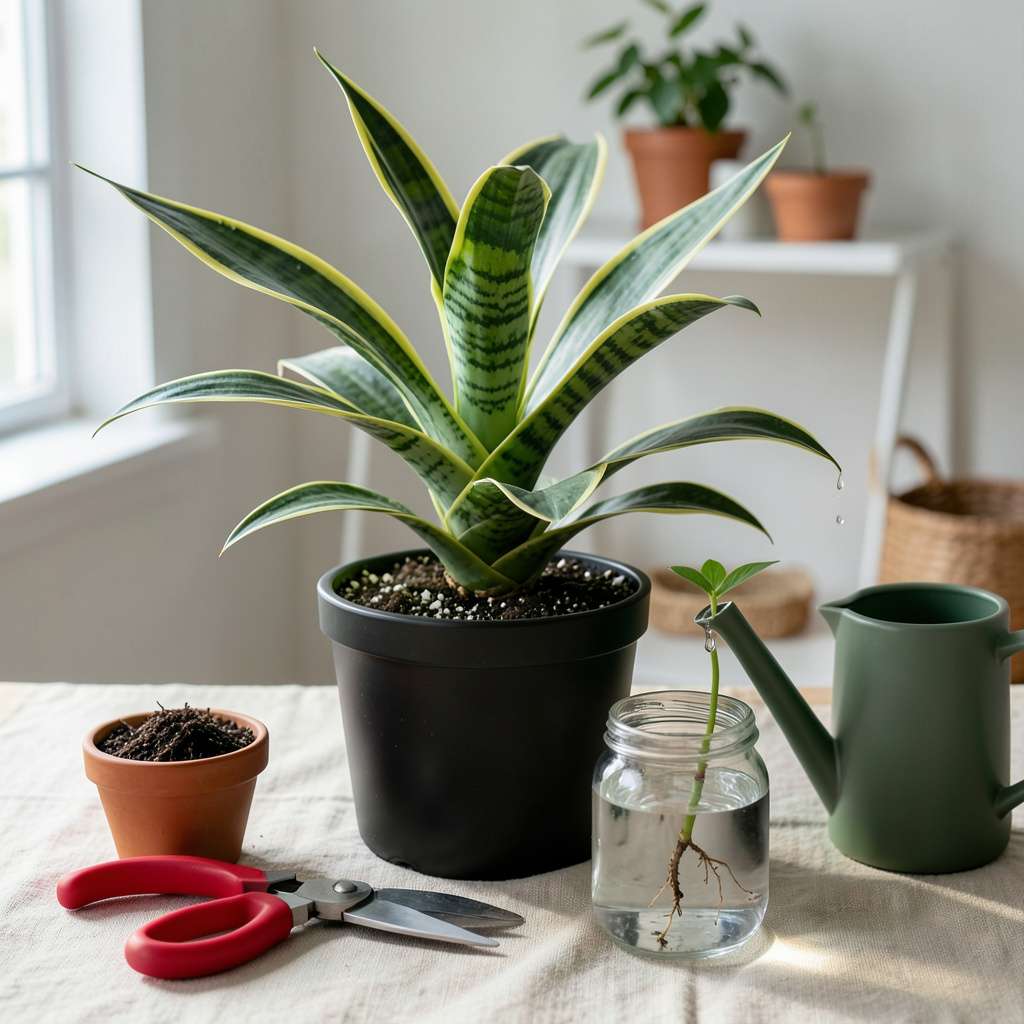
Yes, snake plants propagate easily through leaf cuttings, division, or rhizome separation. These low-maintenance plants root quickly in water or soil, making them perfect for beginners to expand their collection.
I’ve found snake plants to be one of the most forgiving houseplants when it comes to creating new growth. 🌱 Their natural resilience comes from specialized cells that regenerate roots even from small cuttings. What’s particularly fascinating is how different methods yield results—leaf cuttings produce identical plants, while division creates mature-looking specimens right away.
Through years of experimenting, I’ve learned that water propagation lets you watch roots develop, which is great for beginners wanting visual confirmation. Soil propagation, while less visible, often results in stronger root systems from the start. The key is choosing healthy parent plants and being patient during the initial rooting phase.
💡 In This Article
Snake plants propagate so successfully because of their specialized underground stems called rhizomes. These horizontal stems store water and nutrients, allowing the plant to survive drought conditions and regenerate new growth from cuttings. When you separate a rhizome section, it already contains dormant buds ready to sprout new shoots within 2-4 weeks under proper conditions.
🌱
The magic happens at the cellular level with plant hormones called auxins. When you take a leaf cutting, the wound triggers auxin production at the cut site, stimulating root formation. Snake plants have particularly high auxin sensitivity, which is why even 2-3 inch cuttings can develop roots in water or soil.
The cuttings don’t need leaves to photosynthesize immediately—they rely on stored energy in their thick, succulent leaves during early root development.
What makes snake plants uniquely resilient is their CAM photosynthesis process. Unlike most plants that open stomata during daylight, snake plants open theirs at night to conserve water. This adaptation means cuttings lose minimal moisture during propagation, giving them a survival advantage.
I’ve seen cuttings left unattended for weeks still root successfully once placed in water or soil.
The vascular system in snake plant leaves contains specialized fibrous bundles that transport water efficiently. When propagating in water, you’ll notice roots emerging from these vascular points along the leaf edges. Soil propagation works differently—the cuttings first develop tiny hair-like roots that seek moisture, then establish thicker structural roots within 4-6 weeks. ✨
Temperature plays a crucial role in propagation speed. Snake plants root fastest between 70-90°F, with ideal humidity around 40-50%. The rhizomes contain natural antifungal compounds, which is why snake plants rarely rot during propagation compared to other succulents. This biological defense system makes them perfect for beginners experimenting with plant propagation.
One fascinating aspect is how leaf cuttings maintain the exact variegation pattern of the parent plant. The variegated cells contain different pigment concentrations that replicate identically in new growth. This genetic consistency means your propagated plants will look exactly like the original—whether it’s a classic Sansevieria trifasciata or a rare cultivar like ‘Moonshine’.
The rooting process differs slightly between methods:
This biological resilience explains why snake plants can propagate from even damaged leaves.
I’ve successfully rooted pieces that were accidentally broken during repotting—nature’s way of ensuring survival. The plant’s ability to regenerate from various parts makes it one of the most foolproof houseplants for propagation experiments. 💫
Water propagation typically shows roots in 3-4 weeks, while soil propagation takes 4-6 weeks. Rhizome division establishes fastest—usually within 2 weeks—since it already has root structures. Temperature and light conditions affect timing, with warmer environments speeding up the process.
This happens because variegation is genetically unstable in leaf cuttings. The new growth reverts to the plant’s dominant green genes. To preserve variegation, use rhizome division instead. Some varieties like ‘Laurentii’ are more prone to this than others.
Snake plants are remarkably resilient. Even accidentally broken leaves can root if placed in water or soil. Just ensure the broken end is clean and calloused before propagating. I’ve successfully rooted pieces as small as 2 inches long.
Spring and early summer are ideal when plants are actively growing. Winter propagation works but takes about 50% longer. If propagating in cooler months, keep cuttings in warmer spots (like near a fridge) and be extra patient with root development.
Water-propagated cuttings need 2-3 inch roots before soil planting. Soil cuttings are ready when you see new leaf growth. For rhizome divisions, wait until you see new shoots emerging. Always transplant gently and reduce watering for the first two weeks.
