
Beautiful Plants For Your Interior
Beautiful Plants For Your Interior
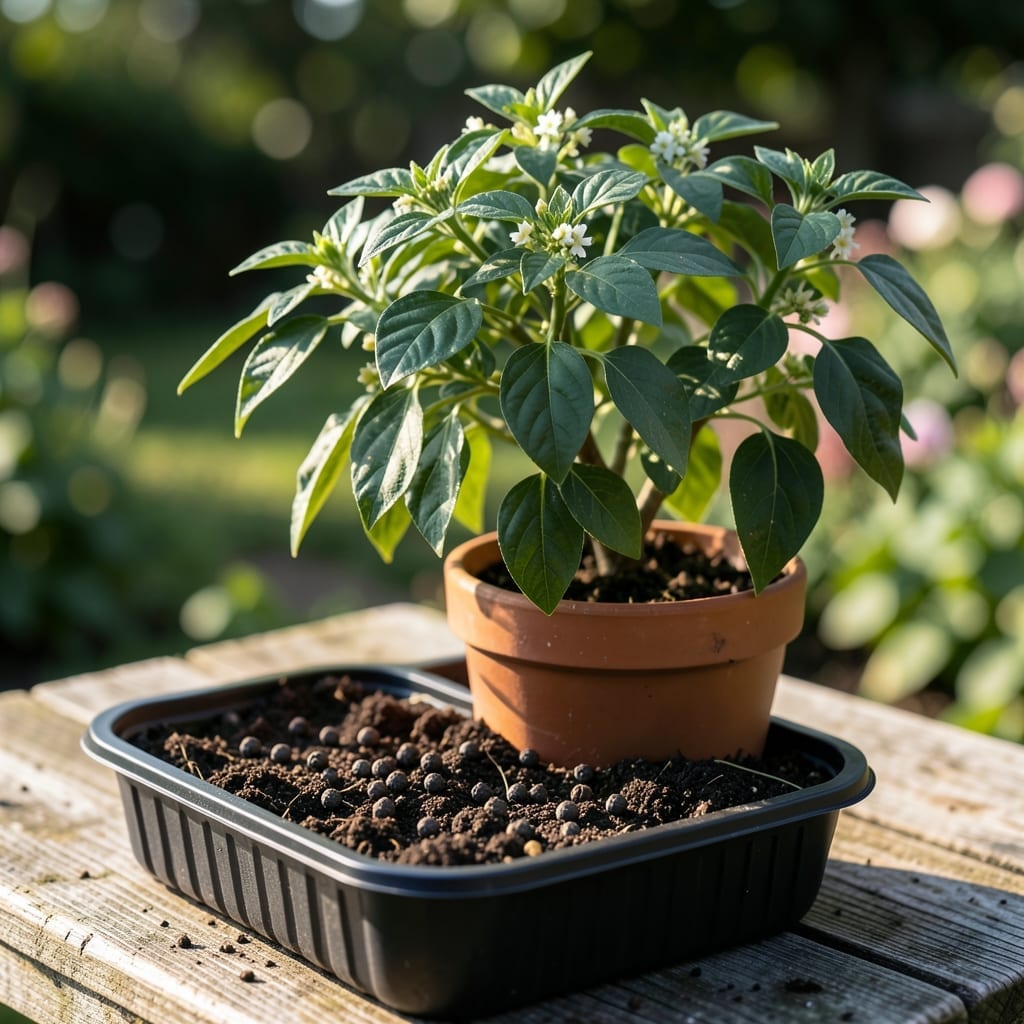
You’ve probably stared at those tiny peppercorns in your spice rack and wondered if they could become thriving 🌶️ Pepper plants. It seems like a simple garden experiment, but the reality is more complicated than you might expect.
Those dried peppercorns from the store aren’t the same as fresh seeds. Processing and age often strip them of their ability to sprout, making your dream of homegrown Peppers from grocery store finds a long shot.
That doesn’t mean it’s impossible, though. With the right conditions and a bit of patience, you might just coax life from those tiny specks. I’ll walk you through what works and what doesn’t.
Discover why most attempts fail and how to give yourself the best chance of success with Pepper plants.


I get this question a lot from curious gardeners. The short answer is no, you can’t reliably grow pepper plants from store-bought peppercorns. Those tiny black or white spheres aren’t actually seeds at all—they’re dried berries from the Piper nigrum vine.
Commercial peppercorns have been processed, dried, and often irradiated, which destroys any germination potential. Even if you find unprocessed ones, their viability drops significantly after drying and aging during storage.
| Factor | Detail |
|---|---|
| Peppercorn Type | Dried berry, not true seed |
| Processing Effect | Drying/irradiation kills viability |
| Germination Rate | Near 0% for store-bought |
| Age Impact | Older peppercorns lose all viability |
For the rare chance of success, you’d need fresh black pepper berries straight from the vine, which isn’t what you’ll find in grocery stores. These berries contain the actual pepper seed inside their hard shell.
Even with fresh berries, the germination process is notoriously difficult. The outer shell is extremely hard, and the embryo inside may already be dormant or damaged. Most gardeners report 0% success with store-bought varieties.
If you’re determined to try, you’ll need to scarify the seeds by soaking them in warm water for 24-48 hours. This softens the outer layer slightly, though it’s still a long shot for sprouting to occur.
The temperature needs are also very specific. Pepper plants thrive in warm conditions (70-85°F), and the seeds require consistent moisture and humidity to even consider germinating.
Most commercial peppercorns come from tropical regions where the climate is ideal for Piper nigrum vines. These conditions are nearly impossible to replicate in home gardens, especially for a plant that’s not native to most areas.
I always recommend starting with actual pepper seeds from a reputable nursery. These are bred for garden cultivation and have a much higher chance of producing healthy plants that will thrive in your garden.
The time investment for attempting to grow from peppercorns rarely pays off. You’ll spend weeks waiting for sprouts that never appear, while proper seeds can show germination in 7-14 days under ideal conditions. 🌱
I know you’re determined to test this, so let’s talk about the germination process. First, you’ll need to pre-soak your peppercorns in lukewarm water for about 24-48 hours to soften the outer shell.
Use a well-draining seed mix and plant them ¼ inch deep in small pots. Keep the soil consistently moist but not soggy, and maintain a warm temperature around 70-80°F. ☀️
Place your pots in a spot with bright, indirect light. Direct sunlight can dry out the soil too quickly. Be patient—germination, if it happens, can take 2-4 weeks or longer. 🌱
Remember, the success rate is low. Most store-bought peppercorns are dried and processed, which greatly reduces their viability. Don’t be discouraged if nothing sprouts; it’s a common outcome.
If you do see tiny sprouts, celebrate! Keep them in a warm environment and gradually introduce more light. Once they develop true leaves, you can transplant them to larger pots.
This method is more of a fun experiment than a reliable way to grow Peppers. For better results, consider using fresh pepper seeds from a trusted source. 🌿