
Beautiful Plants For Your Interior
Beautiful Plants For Your Interior
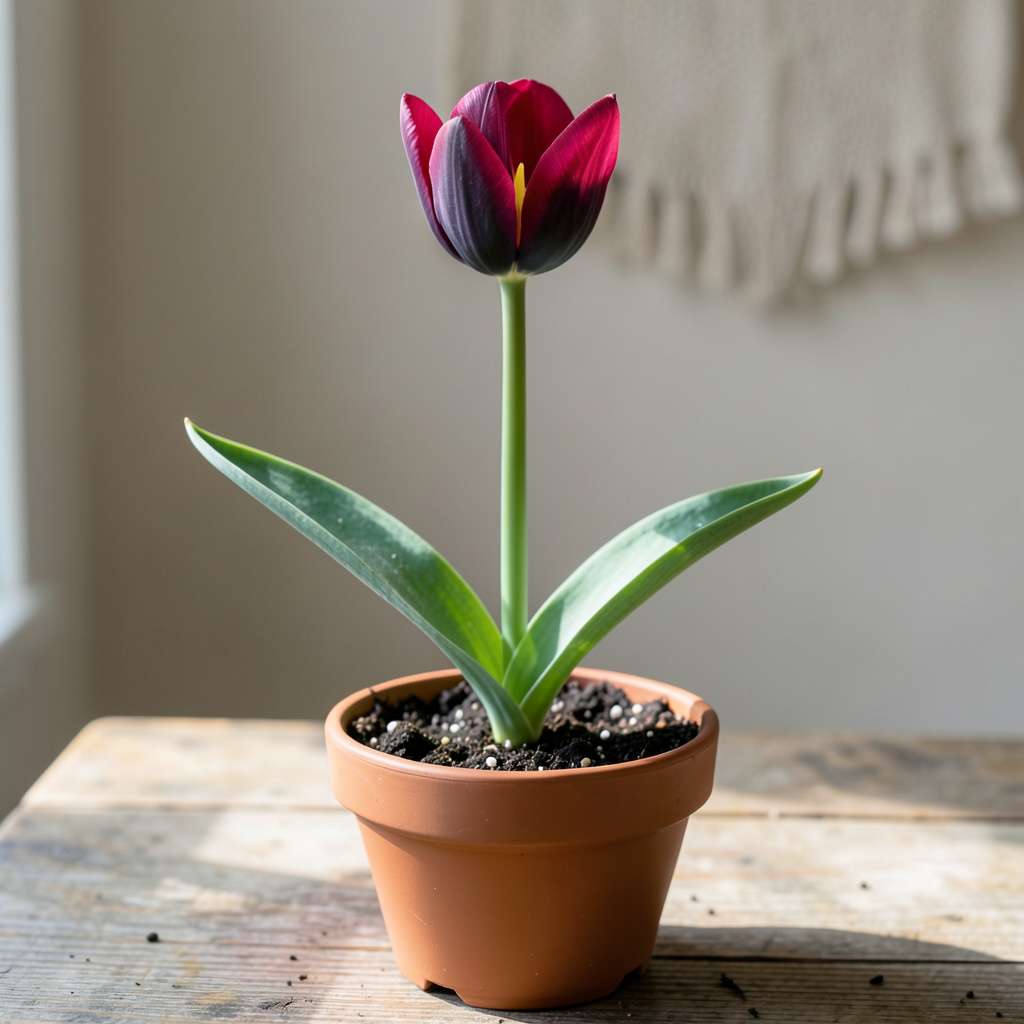
Tulips cannot regrow from cut flowers because the stems lack the bulb needed for regeneration. However, you can sometimes propagate new plants from the original bulb if it remains intact and healthy after cutting.
What many gardeners don’t realize is that tulip bulbs act like underground energy banks, storing everything needed for next year’s blooms. 🌱 When you snip just the stem, you’re removing the flower but leaving the bulb’s potential intact—if you handle it right. I’ve had success saving bulbs by letting the foliage die back naturally after cutting, which allows the bulb to recharge. The key is timing: cut too early, and you starve the bulb; cut too late, and you risk rot during storage.
💡 In This Article
Tulips rely entirely on their underground bulbs for energy storage and regeneration. These bulbs contain all the nutrients and embryonic structures needed to produce new stems, leaves, and flowers each season. When you cut a tulip flower, you’re removing only the reproductive part of the plant—the stem and bloom—while the bulb remains the true powerhouse.
Without this bulb, the cut stem has no energy reserves or growth meristems to regenerate. 🌱
The biology is clear: tulip stems are essentially hollow tubes designed to transport water and nutrients from the bulb to the flower. They lack the specialized cells (meristematic tissue) required for new root or shoot development.
Even if placed in water, cut tulip stems will only absorb moisture to prolong the flower’s vase life—they cannot develop roots or grow into new plants. This is fundamentally different from plants like willow or coleus that can propagate from stem cuttings.
What many gardeners overlook is the bulb’s role in the plant’s lifecycle. After flowering, tulip bulbs enter a critical phase where they absorb nutrients from the dying foliage to recharge for next year. Cutting the stem too early (before the leaves yellow) interrupts this process, potentially weakening the bulb.
However, if you leave at least two healthy leaves when cutting, the bulb can still photosynthesize enough to store energy for future growth. ✨
The only exception to this rule occurs with bulbils—tiny secondary bulbs that sometimes form along tulip stems. These rare structures can potentially grow into new plants if planted, but they’re not present on most commercial tulip varieties. Even then, they require specific conditions (moisture, temperature, and time) to develop into mature bulbs.
For the average gardener, the cut stem itself remains biologically incapable of regeneration.
Compare this to plants like African violets or begonias, which can regrow from leaf cuttings because their cells retain totipotency—the ability to dedifferentiate and form new organs. Tulip cells in the stem have lost this capability, making them dependent on the bulb for all propagation.
This is why commercial tulip growers always start with bulbs, never cut flowers. 💡
The practical takeaway? Enjoy your cut tulips in vases knowing they’re a one-time display, but focus your propagation efforts on the bulbs still in the ground. With proper care, those same bulbs can produce beautiful blooms for years to come—just not from the stems you’ve already cut.
The real magic happens beneath the soil surface, where the bulb’s energy reserves determine next season’s success.
No, tulip stems won’t develop roots in water. Unlike pothos or mint that can propagate from cuttings, tulips lack the cellular structure needed for regeneration. The stems are simply transport systems for water and nutrients—they have no growth nodes or stored energy to create new plants.
With proper care, tulip bulbs can regrow for 3-5 years after cutting. The key is leaving at least two healthy leaves to photosynthesize and recharge the bulb. In warmer climates (zones 8+), bulbs may decline faster and need replacement every 2-3 seasons.
After foliage dies back, dig up bulbs and let them dry in a ventilated area at 60-70°F for 2-3 days. Store in mesh or paper bags (never plastic) in a cool, dark place. Check monthly for mold or softness—discard any damaged bulbs immediately to prevent spread.
This usually happens when bulbs weren’t allowed to fully recharge. Cutting stems too early or removing foliage prematurely starves the bulb. Hybrid varieties (like Parrot tulips) are especially prone to this—consider replanting fresh bulbs annually for consistent large blooms.
Store-bought cut tulips are typically forced bulbs that have exhausted their energy. Even if planted, they rarely regrow. For best results, purchase fresh bulbs in fall from reputable nurseries. Look for firm, heavy bulbs without soft spots or mold.
