
Beautiful Plants For Your Interior
Beautiful Plants For Your Interior
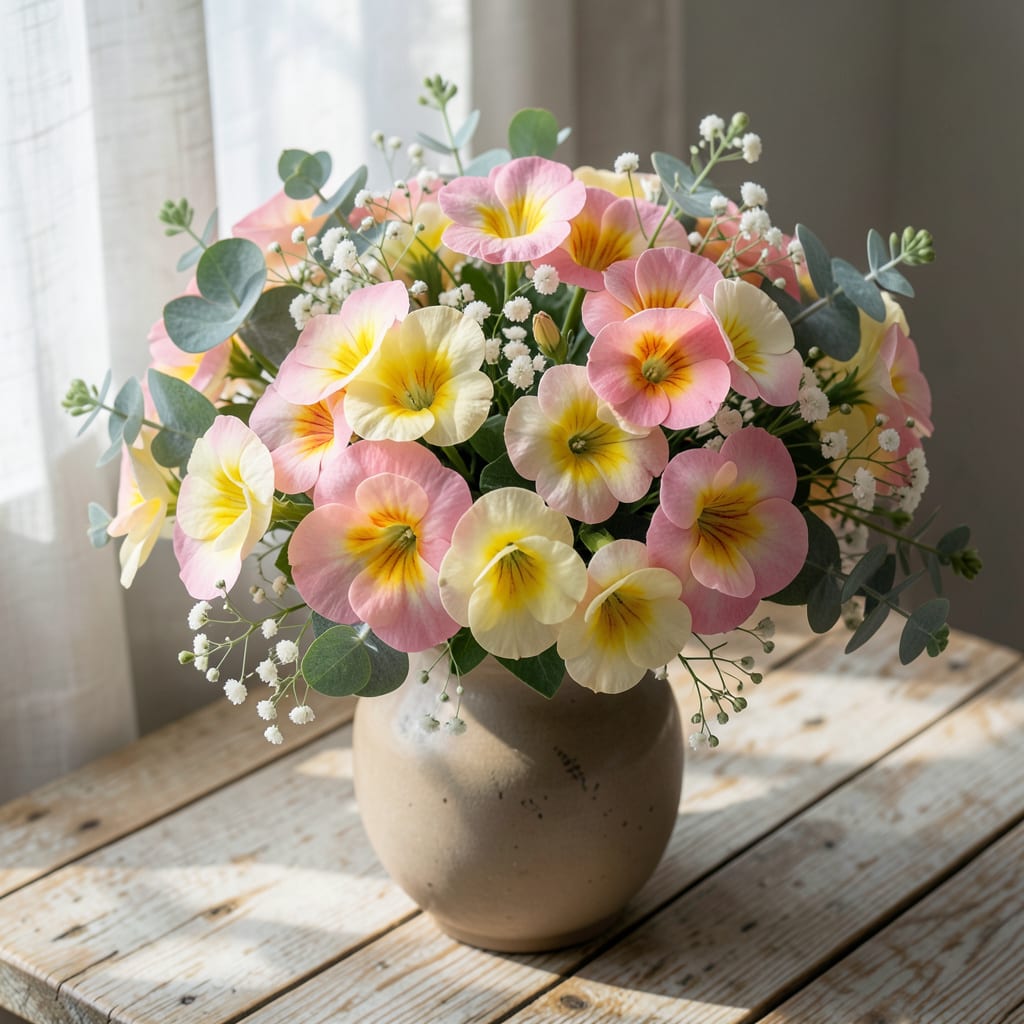
I fell for Calibrachoa ‘Chameleon Double Pink Yellow’ the first time I saw its bicolor blooms dancing in the breeze. These little powerhouses pack a punch with their pink and yellow petals, looking like they’ve been hand-painted.
They thrive in full sun and bloom nonstop from spring until frost. Perfect for hanging baskets or garden edges, they’ll turn any space into a vibrant showstopper with almost zero fuss.
📚 In This Guide
This method delivers vibrant, bicolor blooms that thrive from spring through the first frost.
Select a spot with full sun to partial shade, as these plants need 6-8 hours of sunlight daily to produce their signature double blooms. I prefer hanging baskets or containers with good drainage—at least 10-12 inches in diameter for each plant. Terra cotta pots work well but dry out faster, so keep that in mind.
Ensure your containers have drainage holes to prevent root rot. If you’re reusing pots, scrub them with a bleach solution first to eliminate any lingering pathogens. This step is non-negotiable for keeping your plants healthy.
Fill your containers with a well-draining potting mix designed for container gardening. I like to amend mine with 20% perlite or vermiculite to improve aeration. Avoid garden soil—it’s too dense and can compact, suffocating the roots.
The ideal mix should feel light and fluffy, holding moisture without becoming soggy. Test it by squeezing a handful: it should hold its shape briefly, then crumble. If it stays in a tight ball, add more perlite.
Gently remove the plant from its nursery pot and loosen the roots if they’re tightly bound. Place it in the container so the top of the root ball sits about ½ inch below the rim. This prevents water from spilling over the edge when you water.
Water thoroughly after planting until you see it drain from the bottom. After that, water when the top inch of soil feels dry to the touch. Overwatering is a common mistake—these plants are drought-tolerant but will rot in soggy conditions.
Calibrachoa are heavy feeders. Start fertilizing 2 weeks after planting with a balanced, water-soluble fertilizer like 10-10-10. I use half the recommended strength every 7-10 days during the growing season. This keeps the blooms coming without burning the roots.
If you notice the flowers slowing down, it’s often a sign they need more food. Yellowing leaves, on the other hand, can mean you’re overdoing it—flush the soil with water to remove excess salts.
Pinch back the tips of the stems when the plants are 4-6 inches tall to encourage branching. Use your fingers or clean pruning shears. This might feel counterintuitive, but it results in a fuller, more floriferous plant.
Deadhead spent blooms regularly to redirect energy into new flowers. With Calibrachoa, this is easy—just snip off the faded blossoms at the base. You’ll see fresh buds forming within days.
Small adjustments make a big difference in growing these stunning bicolor blooms.
Sunlight Strategy: Those 6-8 hours of sunlight daily are non-negotiable for vibrant double blooms. If your space only gets partial shade, position containers where they’ll catch morning sun and afternoon shade. I’ve found east-facing balconies work surprisingly well.
Drainage Non-Negotiable: In Step 1, don’t skip checking for drainage holes—even the prettiest container will kill your plants without them. For hanging baskets, ensure water can flow out freely; they dry faster than ground pots. Terra cotta looks beautiful but demands more frequent watering.
Soil Test: When preparing your growing medium in Step 2, here’s what nobody tells you—the squeeze test matters. If your amended mix stays in a tight ball when squeezed, add more perlite. The perfect blend should crumble easily after holding its shape briefly.
Watering Wisdom: The top inch of soil rule in Step 3 is your best guide. Stick your finger in—if it comes out clean, it’s time to water. Overwatering is the fastest way to lose these plants, as they’re far more drought-tolerant than they appear.
Keep it in full sun (6+ hours/day) and well-draining soil. Water when the top inch is dry, and fertilize weekly with a balanced liquid feed. Deadhead spent blooms to encourage continuous flowering.
This variety blooms profusely from late spring until the first frost, offering vibrant pink-yellow bicolor flowers all season long with proper care.
Absolutely! It thrives in hanging baskets, pots, or window boxes. Use a lightweight, well-draining potting mix and ensure containers have drainage holes.
Overwatering or poor drainage is the usual culprit. Let the soil dry slightly between waterings, and check for root rot if the issue persists.
Try Petunias (similar care, bold colors) or Lantana (drought-tolerant, sunny blooms). Both offer vibrant, long-lasting flowers for gardens or containers.
