
Beautiful Plants For Your Interior
Beautiful Plants For Your Interior
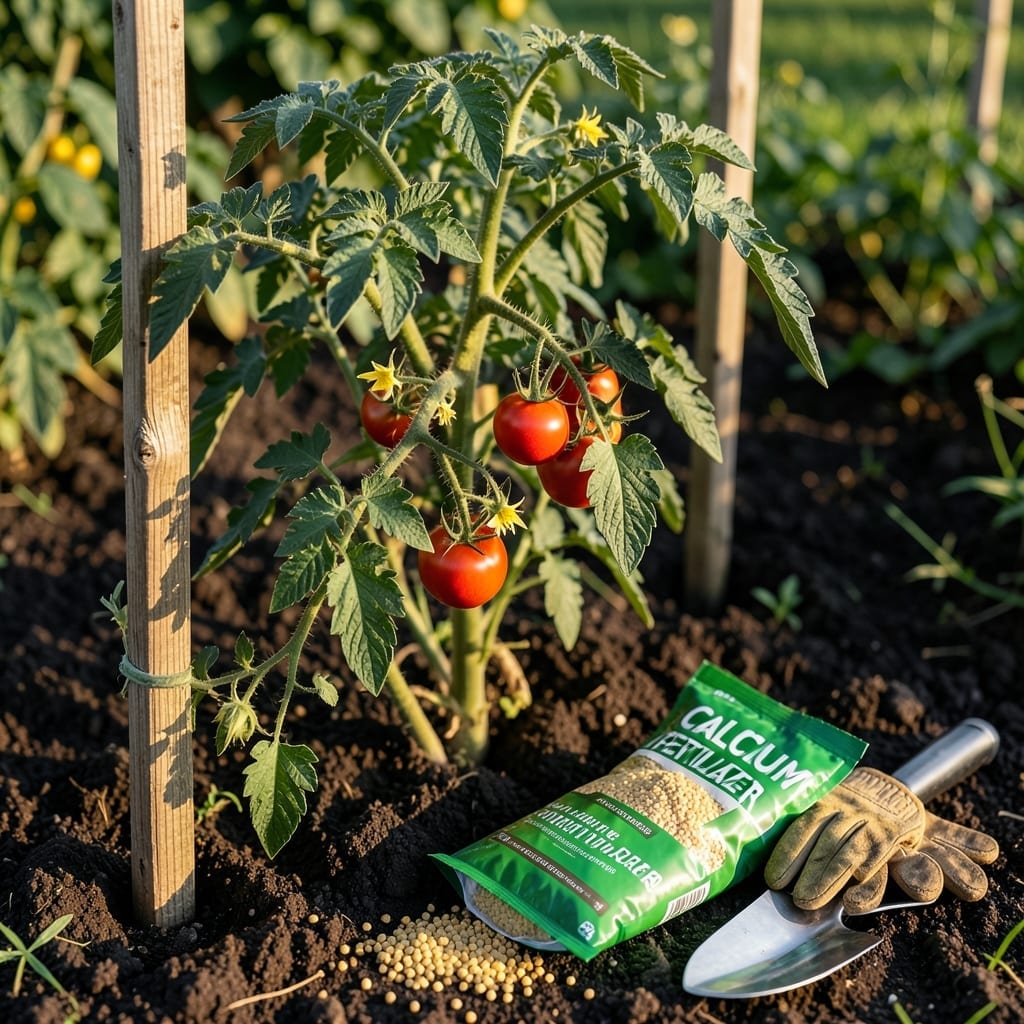
Nothing ruins a Tomato harvest faster than blossom end rot—a frustrating condition that calcium fertilizer can prevent and reverse. I’ve seen this problem derail too many gardens, but the solution is simpler than you think.
Calcium is the unsung hero for stronger plant cell walls and healthier fruit development. Without it, your 🍅 plants struggle, no matter how much you water or fertilize otherwise.
Discover how to spot the early warning signs and the exact steps to ensure your plants get what they need. Your best harvest starts with this one nutrient.
I’ve learned through experience that calcium is the backbone of healthy tomato plants. It strengthens cell walls, ensuring your plants can support heavy fruit loads without wilting or disease.
Without enough calcium, tomatoes develop blossom end rot, a telltale brown, sunken spot on the fruit’s bottom. This isn’t just unsightly—it ruins your harvest.
| Deficiency Sign | Description |
|---|---|
| Blossom End Rot | Brown, sunken spots on fruit bottoms |
| Stunted Growth | Slow development, weak stems |
| Yellow Leaves | Chlorosis, especially on new growth |
| Poor Fruit Set | Flowers drop before fruiting |
Another red flag is stunted growth. If your plants look smaller than expected or have weak, spindly stems, calcium deficiency might be the culprit. I always check for this early in the season.
Yellowing leaves, particularly on new growth, can also signal a lack of calcium. Unlike nitrogen deficiency, which affects older leaves first, calcium issues show up in the newest foliage.
You might also notice poor fruit set. Flowers drop before they can develop into tomatoes, leaving you with a sparse harvest. This often happens when calcium is locked out due to pH imbalances.
Soil testing is your best defense. I recommend testing your soil’s pH level before planting. Tomatoes thrive in slightly acidic soil, ideally between 6.0 and 6.8. 🌱
If your soil is too acidic, calcium becomes less available. Adding lime can help raise the pH, but it’s a slow process. For immediate results, I use foliar sprays with calcium nitrate.
Remember, even with perfect soil, inconsistent watering can cause calcium uptake issues. Tomatoes need steady moisture to absorb nutrients effectively. Mulching helps maintain that consistency.
In my garden, I’ve found that gypsum works wonders for a quick calcium boost. It’s easy to apply and doesn’t alter soil pH. Just sprinkle it around the base of your plants and water it in. ☀️
Prevention is always better than cure. Start with a balanced fertilizer at planting and supplement with calcium as needed. Your tomatoes will thank you with a bountiful, rot-free harvest. 🪴
I’ve tested countless calcium sources in my garden, and each has its place. Eggshells are a classic organic option—simply crush and mix them into your soil at planting time.
For a faster fix, gypsum provides an immediate calcium boost without altering soil pH. It’s perfect for quick corrections when you spot early deficiency signs.
| Calcium Source | Best For | Application |
|---|---|---|
| Eggshells | Slow-release, organic | Crush, mix into soil |
| Lime | Raises pH, long-term | Work into soil pre-planting |
| Gypsum | Fast-acting, pH neutral | Sprinkle, water in |
| Calcium Nitrate | Immediate foliar feed | Dissolve, spray leaves |
Lime is another great choice, but it’s slower acting. It’s ideal for pre-season soil prep when you have time to let it work into the earth.
If you prefer liquid options, calcium nitrate delivers fast results. I use it as a foliar spray for quick absorption, especially when plants show stress.
For synthetic options, calcium chloride is potent but use sparingly—it can burn plants if over-applied. Always follow label instructions.
My go-to is a combo approach: eggshells at planting, gypsum mid-season, and foliar sprays as needed. This covers all bases for healthy tomato growth. 🌱