
Beautiful Plants For Your Interior
Beautiful Plants For Your Interior
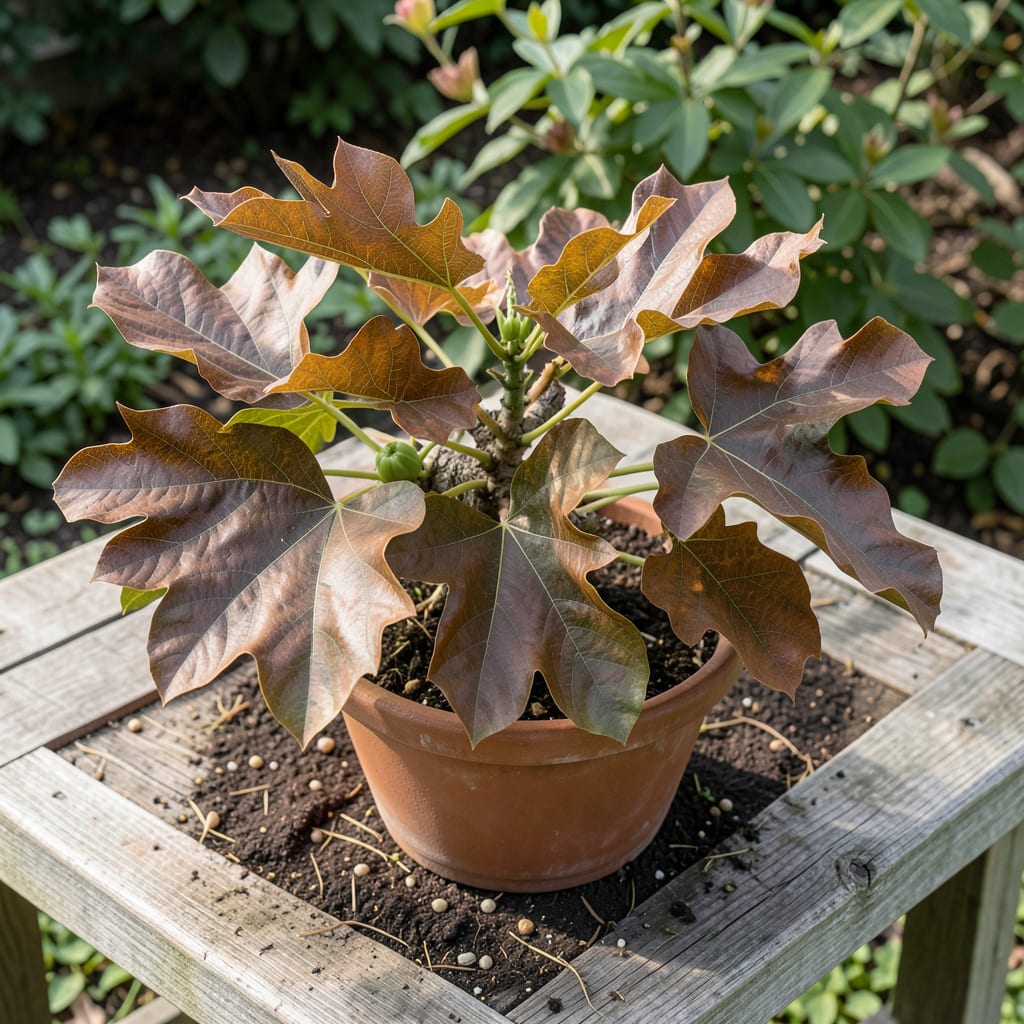
Brown leaves on your fig tree are trying to tell you something. I’ve seen this exact issue in my own garden, and the solution often comes down to just a few common culprits.
Whether it’s inconsistent watering, a sneaky pest, or environmental stress, diagnosing the problem early can save your tree. Simple adjustments usually bring those leaves back to their vibrant green within a few weeks.
📚 In This Guide
Here’s the method I use to diagnose and treat leaf browning on fig trees.
Begin by checking the soil moisture at a depth of 2-3 inches from the trunk. Both underwatering and overwatering cause brown leaves, but they present differently. Dry, crispy edges mean the tree needs deep watering—soak until water runs 6-8 inches deep into the soil.
If the soil feels soggy or smells sour, you’re dealing with root asphyxiation. Stop watering immediately and let the top 4-6 inches dry completely. I’ve saved several trees by simply adjusting my watering schedule based on these sensory checks.
Brown spots with yellow halos often indicate fungal infections like leaf blight. Look for tiny black dots (fungal spores) on the brown areas. Remove affected leaves immediately and dispose of them in sealed bags—never compost diseased material.
For pest issues, check leaf undersides for scale insects or spider mites, which appear as white webbing or brown bumps. A strong spray from the hose can dislodge many pests, but severe infestations may require horticultural oil applications.
Fig trees develop brown leaves when exposed to extreme temperature swings. Check if your tree endured a recent frost or heatwave above 90°F. Late frosts in spring can damage new growth, while summer heat scalds leaves if the tree lacks afternoon shade.
Also consider nutrient deficiencies. Yellowing between veins with brown edges suggests magnesium deficiency, common in sandy soils. I’ve corrected this with a foliar spray of Epsom salts mixed at 1 tablespoon per gallon of water.
Gently dig around the root zone to check for girdling roots or compacted soil. Brown leaves often appear when roots can’t access water or nutrients. If you find circling roots, make vertical cuts with clean shears to encourage outward growth.
Test soil pH—figs prefer 6.0-6.5. Extreme pH levels lock out nutrients. I use a simple soil test kit and amend with lime or sulfur as needed. Remember, soil amendments take 2-3 months to fully integrate and affect pH.
Finally, look for signs of root rot: black, mushy roots with a foul odor. If present, you’ll need to prune affected roots and repot in fresh, well-draining soil.
These practical insights will help you accurately diagnose and address leaf browning issues.
Water Stress Diagnosis: In Step 1, when checking soil moisture at that 2-3 inch depth, remember that dry, crispy edges indicate underwatering while soggy, foul-smelling soil signals overwatering. The 6-8 inch deep watering for dry soil is non-negotiable—shallow watering encourages shallow roots that can’t sustain the tree during dry spells.
Disease Identification: For Step 2, that yellow halo around brown spots is your telltale sign of fungal infection. Don’t just look at the tops of leaves—flip them over to check for those tiny black spores that confirm leaf blight. Immediate removal of affected leaves prevents the fungus from spreading to healthy foliage.
Environmental Assessment: Step 3’s 90°F threshold is critical. Afternoon shade isn’t just a preference for fig trees—it’s a necessity when temperatures climb. I’ve seen trees recover dramatically simply by adding a shade cloth during peak heat hours. Also, that magnesium deficiency pattern (yellowing between veins with brown edges) is unmistakable once you know what to look for.
Soil Evaluation: The 6.0-6.5 pH range mentioned in Step 4 isn’t just ideal—it’s essential for nutrient uptake. And remember that 2-3 month timeline for soil amendments to take effect. Too many gardeners expect immediate results and give up too soon. Also, those girdling roots can strangle a tree over time—those vertical cuts you make will redirect growth outward where it belongs.
Brown leaves often signal underwatering, overwatering, or fungal diseases like leaf spot. Check soil moisture—it should be damp but not soggy—and inspect for dark spots or mold. Adjust watering habits or treat with fungicide if needed.
Prune brown or damaged leaves in late winter or early spring before new growth starts. This helps the tree focus energy on healthy foliage. Use clean, sharp tools to avoid spreading disease.
Unfortunately, once leaves turn yellow or brown, they won’t regain their green color. Identify the cause (e.g., nutrient deficiency, pests) and address it to prevent further damage to new growth.
For fungal issues, try a baking soda solution (1 tsp baking soda + 1 quart water + a drop of dish soap) sprayed weekly. Neem oil can also deter pests. Always test a small area first to avoid leaf burn.
Water deeply once a week during dry spells, allowing the top inch of soil to dry out between waterings. Young trees may need more frequent watering, while established trees are more drought-tolerant.
