
Beautiful Plants For Your Interior
Beautiful Plants For Your Interior
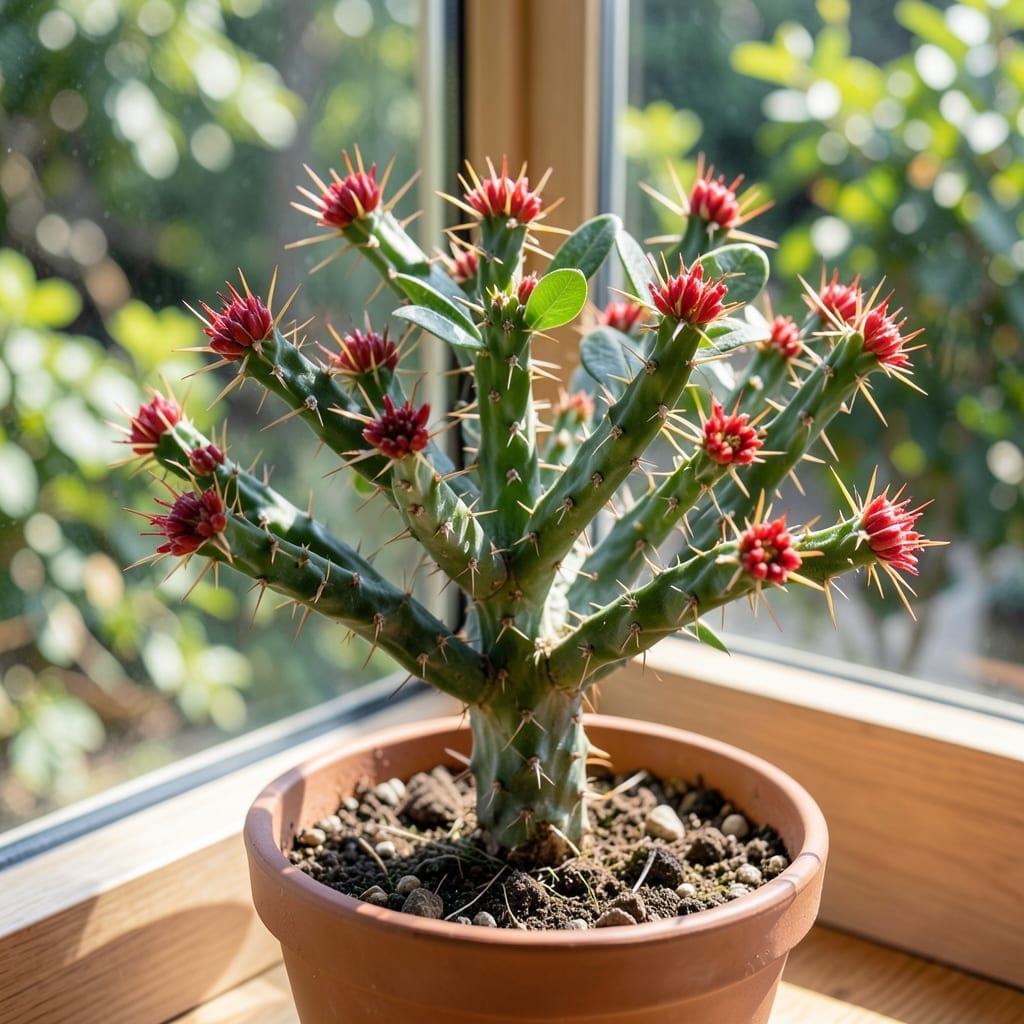
Brown tips on your crown of thorns usually mean it’s screaming for help. I’ve seen this happen most often with underwatering or when the air gets too dry, especially in winter when heaters run nonstop.
Overwatering can do it too—root rot sets in fast with these plants. The fix starts with checking the soil: if it’s bone dry an inch down, it needs water. If it’s soggy, you’re loving it to death.
Boost humidity with a pebble tray or move it away from vents. You’ll see new growth replacing those crispy tips within 2-3 weeks of consistent care. The plant bounces back surprisingly fast.
Prevention is simpler than the cure. Water only when dry, maintain steady temps, and give it bright light. This plant wants to thrive, not just survive.
The unsightly brown tips on your Crown of Thorns are usually a cry for help. This hardy plant signals distress through color changes, and the culprits are often tied to its care routine or surroundings. Below are the most common causes, explained simply but grounded in plant science.
Euphorbia milii (Crown of Thorns) is a succulent, meaning it stores water in its stems. Overwatering leads to root rot, which prevents the plant from absorbing nutrients, causing the tips to brown and die. Conversely, underwatering starves the plant of moisture, leading to dehydration and tip burn. The soil should dry out completely between waterings—stick your finger an inch deep to check.
While Crown of Thorns thrives in bright light, intense, direct sunlight (especially during peak afternoon hours) can scorch the tips, turning them brown. This is essentially a “sunburn” for plants, where excessive light damages the chlorophyll and cell structure. If your plant is near a south-facing window without filtering, this could be the issue.
This tropical native prefers temperatures between 60–85°F (15–29°C). Exposure to cold drafts (below 50°F/10°C) or heat sources (like radiators) can shock the plant, leading to tip browning. Even sudden temperature swings can trigger stress responses, so keep it in a stable environment.
Crown of Thorns needs well-draining soil to prevent waterlogging. Compact or water-retentive soils suffocate the roots. Additionally, a lack of essential nutrients (particularly potassium or magnesium) can cause tip necrosis. Use a cactus/succulent mix and fertilize lightly every 4–6 weeks during the growing season.
Restoring your crown of thorns to its vibrant self starts with targeted fixes. Below are practical solutions for each common cause, paired with prevention tips to keep those brown tips at bay.
If the soil is bone-dry, give your plant a deep watering until water drains from the bottom. For overwatered plants, stop watering immediately and let the soil dry out completely. Check the top 1-2 inches of soil—water only when it feels dry. Prevention tip: Use a well-draining soil mix and a pot with drainage holes. 🌱
Move your plant to a spot with bright, indirect light. If the leaves show signs of scorching, filter the light with a sheer curtain. Crown of thorns thrives in 4-6 hours of sunlight, but harsh midday rays can cause browning. Prevention tip: Rotate the plant occasionally for even light exposure. 💡
Keep your plant in a room with consistent temperatures between 65-80°F (18-27°C). Avoid placing it near drafts, heaters, or AC vents. If the air is too dry, use a humidity tray or a light misting (but avoid soggy foliage). Prevention tip: Monitor indoor climate changes, especially during seasonal transitions. ✨
Use a balanced, water-soluble fertilizer (10-10-10 or 20-20-20) diluted to half strength, applied every 4-6 weeks during the growing season. Yellowing tips may signal a lack of magnesium or potassium—try a fertilizer rich in these. Prevention tip: Flush the soil with water every 2-3 months to prevent salt buildup. 🎯
Check the plant for spider mites, mealybugs, or scale. Wipe leaves with a damp cloth or use insecticidal soap for mild infestations. For stubborn pests, apply neem oil weekly until they’re gone. Prevention tip: Isolate new plants for a few weeks to avoid spreading pests. 🛡️
Water only when the top 1-2 inches of soil are completely dry. This typically means every 2-3 weeks, but adjust based on your home’s humidity and light conditions. Overwatering is the most common mistake.
No, once tips turn brown they won’t recover. However, the plant will grow new healthy tips within 2-3 weeks once you correct the care issue. Simply trim the brown parts with clean scissors.
Provide bright, indirect light for 4-6 hours daily. A south or west-facing window with a sheer curtain works perfectly. Too much direct sun scorch tips, while too little causes weak growth.
Light misting can help in dry environments, but avoid getting the stems wet. Better to use a humidity tray with pebbles and water. This plant prefers 40-50% humidity for optimal health.