
Beautiful Plants For Your Interior
Beautiful Plants For Your Interior
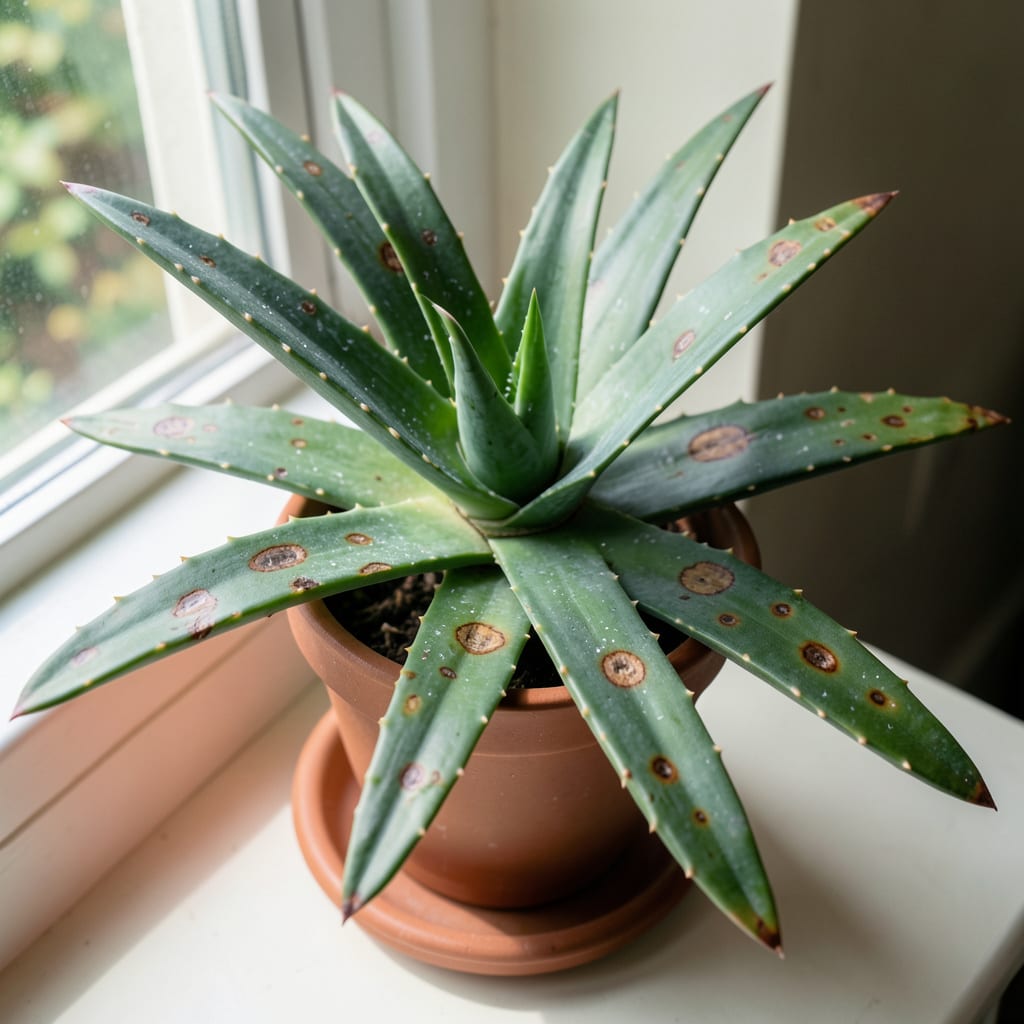
Those brown spots on your aloe aren’t just ugly—they’re a distress signal. I’ve nursed dozens of aloe plants back from the brink, and the causes are usually simpler than you think.
Overwatering, harsh sunlight, or fungal issues create most brown spot problems. The good news? Each has a foolproof fix once you identify the culprit. My own aloe went from spotted to spotless in 2 weeks with the right approach.
You’ll learn to read your plant’s specific symptoms and apply targeted solutions. No guesswork, no wasted time—just clear steps that restore your aloe’s vibrant green health.
Works for indoor and outdoor aloe plants alike. Let’s diagnose and treat this together.
Brown spots on your aloe plant can be frustrating, but understanding the root causes helps you fix the issue fast. Here’s why it happens:
Aloe plants thrive in bright, indirect light, but intense direct sunlight can scorch their leaves, leading to brown, dry patches. This is essentially a “sunburn” for your plant, where excessive UV radiation damages the cell structure. If your aloe sits in a south-facing window or outdoors under harsh sun, it’s likely the culprit.
Aloe plants are succulents and hate soggy roots. Overwatering or using a pot without drainage holes can cause root rot, which manifests as brown, mushy spots on the leaves. The excess moisture suffocates the roots, preventing them from absorbing oxygen, and fungal infections often follow.
Pathogens like Alternaria or Pythium thrive in damp conditions, leading to dark brown or black spots with yellow halos. These infections spread quickly if left untreated, often starting at the base of the leaves and moving upward.
Extreme temperatures—either too hot or too cold—can stress your aloe. If exposed to frost or temperatures below 50°F (10°C), the leaves may develop brown, water-soaked spots. Conversely, heat stress from radiators or vents can also cause discoloration.
Using harsh chemicals, such as pesticides, fertilizers, or even tap water with high chlorine/fluoride, can burn the leaves, creating brown patches. Aloe plants are sensitive to salts and chemicals, so always use diluted, plant-safe products.
Brown spots on your aloe plant can be frustrating, but most causes are easy to treat with a few simple adjustments. Below are targeted solutions for the most common issues, along with prevention tips to keep your plant thriving. 🌱
If soggy soil is the culprit, stop watering immediately and let the soil dry out completely. Remove the plant from its pot, inspect the roots for rot (mushy, black roots), and trim any damaged sections with clean scissors. Repot in fresh, well-draining cactus or succulent mix and water only when the top 1-2 inches of soil are dry. Prevention: Use a pot with drainage holes and water sparingly—aloe plants prefer neglect over too much attention! 💡
If your aloe has crispy brown patches from too much direct sun, move it to a spot with bright, indirect light. East- or north-facing windows are ideal. For severe burns, trim the damaged leaves to encourage new growth. Prevention: Gradually acclimate your aloe to brighter light over a week to avoid shock. ✨
For pest-related spots, isolate the plant and gently wipe leaves with a damp cloth or cotton ball dipped in rubbing alcohol. For stubborn infestations, use neem oil spray (mix 1 tsp oil + 1 tsp mild soap + 1L water) every 5-7 days until pests are gone. Prevention: Inspect new plants before bringing them home and keep leaves dust-free. 🎯
If cold drafts or heat sources caused brown spots, move your aloe to a stable environment (65–80°F). Avoid placing it near AC units, heaters, or drafty windows. Prevention: Keep it in a consistent spot away from temperature extremes. 🌡️
Yellowing with brown spots may signal a need for nutrients. Use a diluted succulent fertilizer (half-strength) once in spring and summer. Avoid over-fertilizing, as aloe plants don’t need much. Prevention: Repot every 2–3 years with fresh soil to replenish nutrients. 🌿
Yes, remove severely damaged leaves with clean scissors. This prevents the spread of disease and allows the plant to focus energy on healthy growth. Trim at the base where the leaf meets the stem.
If caused by pests or fungal infections, yes. Isolate the affected aloe immediately and treat with neem oil or rubbing alcohol. Avoid sharing tools between plants until the issue is resolved.
Water only when the top 1-2 inches of soil are completely dry. Overwatering worsens most brown spot issues. In doubt? Wait another 2-3 days.
Existing spots won’t disappear, but new growth will be healthy if you fix the underlying cause. The damaged leaves can be removed once they’re fully brown and dry.
