
Beautiful Plants For Your Interior
Beautiful Plants For Your Interior
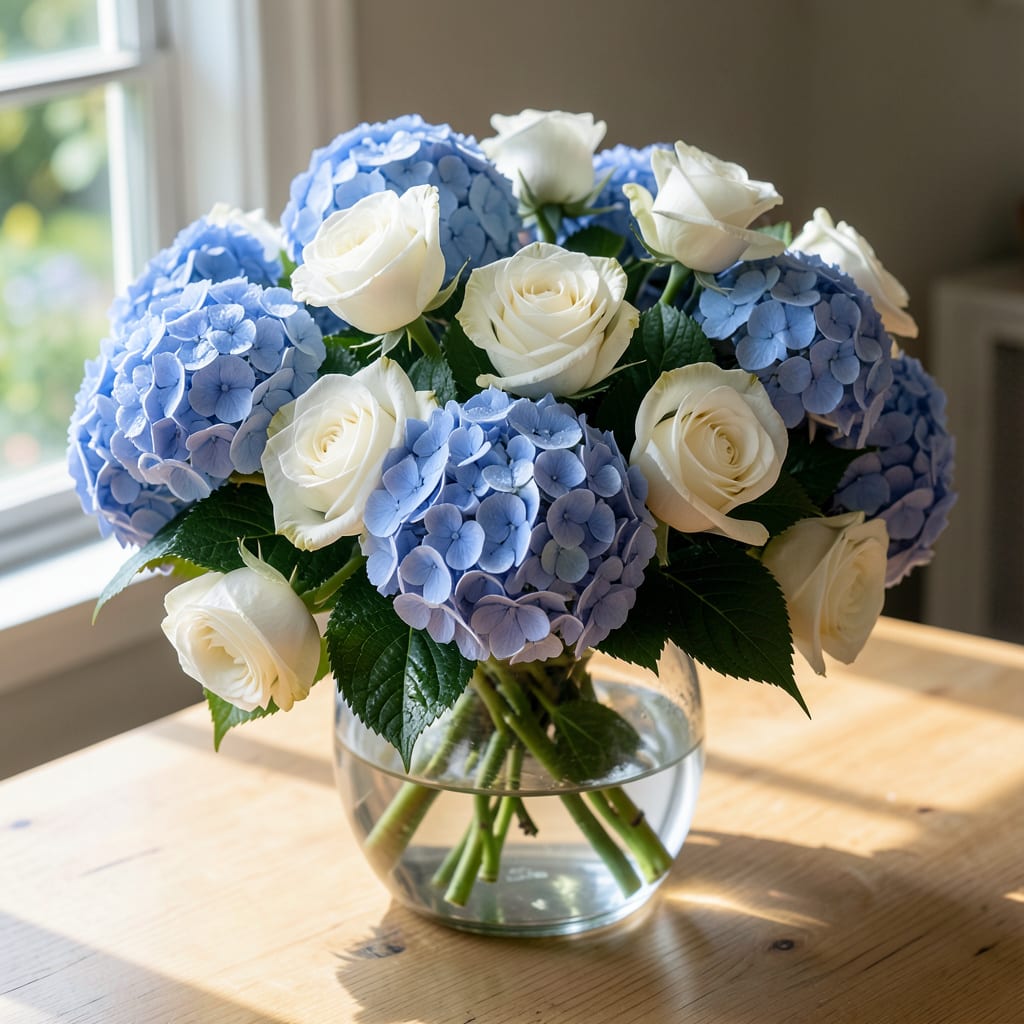
There’s something magical about pairing blue hydrangeas with white roses. This combination creates a timeless elegance that works in any garden style, from cottage to formal.
I’ve seen this duo transform boring corners into showstopping focal points. The hydrangeas’ large blooms contrast beautifully with roses’ delicate petals, and the color scheme stays fresh through multiple seasons.
📚 In This Guide
This romantic pairing thrives with careful spacing and complementary care for years of elegant blooms.
Select a site with partial morning sun and afternoon shade—hydrangeas scorch in hot afternoon light, while roses need at least 4-6 hours of sun daily. Test your soil pH: hydrangeas need acidic soil (5.0-5.5) for blue flowers, while roses tolerate a wider range but prefer slightly acidic (6.0-6.5).
Amend the planting area with 2-3 inches of compost worked into the top 12 inches of soil. This improves drainage for roses and provides the organic matter hydrangeas crave. Remove any weeds or debris that could compete for nutrients during establishment.
Dig holes twice as wide as the root ball but no deeper. Place hydrangeas 18-24 inches apart to allow for mature spread. Position the plant so the root flare sits 1-2 inches above soil level—burying it too deep causes stem rot.
Backfill with native soil mixed with compost, watering as you go to eliminate air pockets. Create a shallow basin around each plant to direct water to the roots. Hydrangeas need consistent moisture, especially during their first season as they establish.
Plant roses 12-18 inches from hydrangeas to prevent root competition while maintaining the intimate pairing. For climbing roses, place them 6-8 inches from a support structure like a trellis or fence. Dig the hole deep enough to accommodate the graft union 2-3 inches below soil level in cold climates.
Space hybrid tea roses 2-3 feet apart and floribundas 3-4 feet apart. After planting, prune any damaged canes and water thoroughly. The contrast of white roses against blue hydrangea blooms creates a stunning visual effect that intensifies as plants mature.
Water both plants deeply 2-3 times per week during the first growing season, ensuring the soil stays evenly moist but not waterlogged. Hydrangeas wilt dramatically when thirsty, while roses show stress through yellowing leaves or bud drop.
Fertilize hydrangeas in early spring with a balanced 10-10-10 formula, then again after flowering. Feed roses every 4-6 weeks during the growing season with a rose-specific fertilizer. Avoid high-nitrogen fertilizers late in summer, as they promote leafy growth at the expense of blooms.
Prune hydrangeas immediately after flowering—most blue varieties bloom on old wood. Remove dead or weak stems at the base and shape the plant as needed. For roses, prune in late winter or early spring before new growth appears, removing one-third of the oldest canes to encourage vigorous blooming.
Monitor for pests like aphids or powdery mildew, which affect both plants. A sharp blast of water often dislodges aphids, while proper spacing and air circulation prevent fungal issues. This pairing rewards patience, with both plants reaching peak beauty in their second or third year.
Here’s how to sidestep the most frequent pitfalls when planting this pairing.
Sunlight Strategy: In Step 1, the 4-6 hours of sun requirement for roses must be morning light. Afternoon sun will scorch hydrangeas, even if roses could tolerate it. Position your planting site carefully to balance both needs.
Soil Depth Matters: For Step 2, that 1-2 inches of root flare above soil level isn’t optional. Burying hydrangeas too deep leads to stem rot, which can kill the plant. I learned this the hard way after losing two hydrangeas to this mistake.
Spacing Wisdom: The 12-18 inches between roses and hydrangeas in Step 3 prevents root competition while maintaining the visual intimacy. For climbing roses, that 6-8 inches from support ensures they have room to establish before reaching upward.
Watering Precision: Step 4’s 2-3 times per week watering schedule works best with a moisture meter. Hydrangeas wilt dramatically when thirsty, but overwatering causes root rot. The soil should feel like a wrung-out sponge—moist but not soggy.
Yes! Blue hydrangeas and white roses make excellent companions. Both thrive in well-draining soil, though hydrangeas prefer slightly acidic conditions (pH 5.2–5.5) for vibrant blue blooms. Ensure the bed gets partial sun to full sun for best results.
Early spring or fall is ideal for planting. This gives roots time to establish before extreme heat or cold. Hydrangeas prefer cooler temps, while roses are hardy but benefit from mild seasons for stress-free growth.
Try pink or purple hydrangeas for a soft contrast with white roses. Alternatively, pair white roses with delphiniums or lavender for a similar romantic, cottage-garden aesthetic.
This usually means the soil pH is too high (alkaline). Test your soil and amend it with aluminum sulfate or sulfur to lower the pH. Consistent moisture and a balanced fertilizer can also help maintain vibrant blue hues.
