
Beautiful Plants For Your Interior
Beautiful Plants For Your Interior
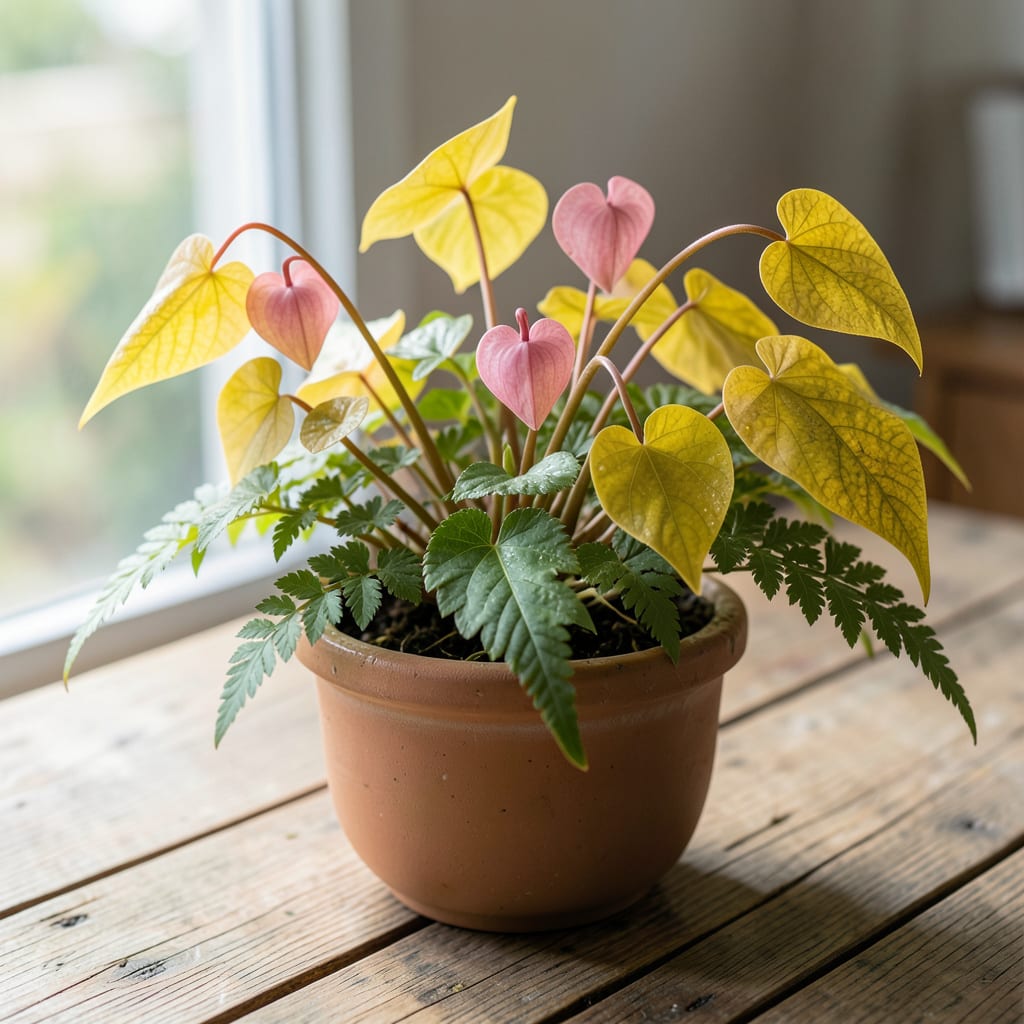
Yellow leaves on your bleeding heart can be alarming. I’ve been there, staring at my once-vibrant plants wondering what went wrong.
Usually, it’s not one thing but a combination of factors like overwatering, poor drainage, or nutrient deficiency. The good news is, most issues are fixable with simple adjustments to your care routine.
You’ll often see improvement within 1-2 weeks of addressing the root cause. The key is identifying which problem you’re dealing with and acting quickly to restore your plant’s health.
Prevention is easier than cure. With the right knowledge, you can keep your bleeding hearts thriving and avoid the yellow leaf problem altogether.
Yellow leaves on your bleeding heart plant (Dicentra spectabilis) are often a cry for help. Here’s why it happens and how to address the root issues:
Nitrogen, iron, or magnesium shortages can turn leaves pale or yellow. Nitrogen deficiency starts with older leaves yellowing uniformly, while iron deficiency causes interveinal chlorosis (yellowing between veins). A soil test will confirm which nutrient is lacking. Fix it with a balanced fertilizer or targeted supplements like chelated iron.
Soggy roots suffocate and rot, preventing nutrient uptake. Bleeding hearts prefer moist but well-drained soil. If the soil stays waterlogged, roots can’t absorb oxygen, leading to yellowing leaves and wilting. Check drainage and adjust watering—let the top inch of soil dry between waterings.
These shade-loving plants scorch in direct, intense sunlight. Photooxidative stress breaks down chlorophyll, causing yellow or brown patches. Move the plant to a spot with dappled shade or morning sun only. If grown indoors, keep it away from harsh afternoon rays.
After flowering, bleeding hearts often enter dormancy in summer. Yellowing leaves at this stage are normal—the plant conserves energy. Cut back foliage once it dies back completely; new growth returns in cooler months.
Tackle yellowing leaves on your bleeding heart plant with these targeted fixes for each common cause. Act fast to restore its vibrant health!
Let the top inch of soil dry out between waterings. Ensure pots have drainage holes, and empty saucers after watering to prevent root rot. Prevention tip: Use a moisture meter to avoid guesswork.
Give the plant a deep watering until water runs out the drainage holes. If the soil is extremely dry, submerge the pot in water for 10 minutes to rehydrate the root ball. Prevention tip: Check soil moisture weekly and water when the top 1-2 inches feel dry.
Use a balanced, water-soluble fertilizer (10-10-10) every 4-6 weeks during the growing season. For iron deficiency (yellow leaves with green veins), apply chelated iron. Prevention tip: Refresh potting soil annually to replenish nutrients.
Move the plant to a spot with consistent temperatures between 55-75°F (13-24°C). Avoid drafts, heaters, or AC vents. Prevention tip: Keep it indoors if outdoor temps fluctuate wildly.
Spray leaves with a mix of water and mild soap to remove aphids or spider mites. For severe cases, use neem oil. Prevention tip: Inspect leaves weekly and isolate new plants before introducing them.
Trim yellow or brown leaves at the base to encourage new growth. Prevention tip: Regularly deadhead spent blooms to redirect energy to healthy foliage.
Water when the top 1-2 inches of soil feel dry. Typically, this means 1-2 times per week depending on weather. Always check soil moisture first to avoid overwatering.
A balanced 10-10-10 liquid fertilizer works well. For iron deficiency, use chelated iron. Apply every 4-6 weeks during active growth.
Yes, trim yellow leaves at the base to redirect energy. But first check for treatable issues like pests or water stress. Never remove more than 1/3 of foliage at once.
While these plants love shade, complete darkness weakens them. Aim for bright, indirect light or morning sun. Adjust if you notice pale, weak growth.
