
Beautiful Plants For Your Interior
Beautiful Plants For Your Interior
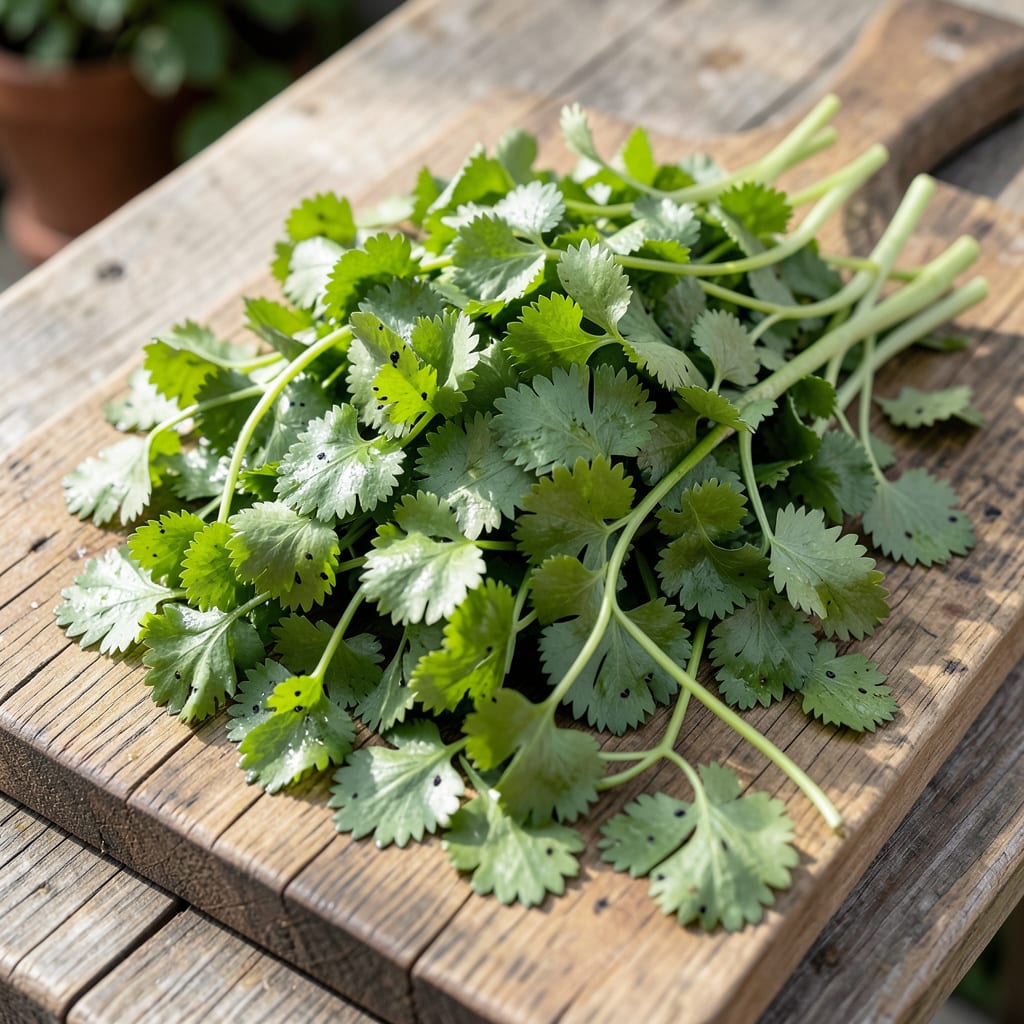
Those black spots on your cilantro aren’t just ugly—they’re a warning sign. I’ve lost entire patches overnight when I ignored the first dark speckles, only to watch them spread like wildfire across leaves and stems.
Most cases come down to three culprits: too much moisture, poor air flow, or sneaky fungal spores. The good news? Catching it early means you can often reverse the damage with simple fixes like better spacing, morning watering, or a homemade baking soda spray.
Left unchecked, you’ll watch your plants yellow, wilt, and eventually collapse. But with the right approach, new growth comes in clean and healthy within 7-10 days. Your cilantro can bounce back stronger than before.
Works for container gardens, raised beds, or in-ground patches. Here’s how to diagnose and fix it fast.
Black spots on cilantro leaves are often a sign of underlying issues that can be environmental, fungal, or pest-related. Here’s a breakdown of the most common causes:
Fungi like Cercospora or Alternaria thrive in damp, poorly ventilated conditions. These pathogens produce dark, circular lesions on leaves, often with a yellow halo. Overwatering or high humidity creates the perfect breeding ground for spores to spread.
Sap-sucking pests such as aphids, spider mites, or whiteflies can weaken cilantro plants, leaving behind dark spots where they’ve fed. Their piercing mouthparts damage leaf tissue, and their sticky honeydew residue can also promote sooty mold growth, which appears as black patches.
Inconsistent watering—either too much or too little—can stress cilantro, leading to leaf discoloration. Overwatering suffocates roots and encourages rot, while underwatering causes leaf edges to darken and crisp. Poor drainage exacerbates these issues.
Extreme temperatures, especially sudden heatwaves or cold snaps, can shock cilantro, resulting in black or brown spots. Additionally, nutrient deficiencies (like calcium or magnesium) may manifest as dark, irregular patches on leaves.
Identifying the root cause early helps you take targeted action to restore your cilantro’s health.
Dealing with black spots on cilantro leaves? Here’s how to tackle each common cause with simple, effective fixes.
If the spots are soft, spreading, or accompanied by a musty smell, a fungus may be the culprit.
Tiny bugs like aphids or spider mites can cause dark spots from their feeding or the sooty mold they leave behind.
Root rot or leaf spot diseases thrive in soggy conditions.
Extreme heat, cold, or nutrient deficiencies can stress cilantro, leading to discoloration.
Generally, small black spots are safe if washed, but avoid eating heavily damaged leaves. Fungal spots may cause mild stomach upset, while pest-related spots could carry bacteria. When in doubt, remove affected leaves before use.
Yes, fungal spores and pests can jump to nearby herbs. Isolate affected cilantro and inspect neighbors like parsley or basil. Improve airflow between plants to reduce risk of contamination.
Prune all damaged leaves and stems immediately. If over 50% is affected, it’s best to remove the plant to protect others. Healthy roots may regrow clean foliage within 2-3 weeks.
Inspect daily during warm, humid weather. Early morning is ideal—look for new dark speckles or sticky residue from pests. Catching issues within 24-48 hours prevents major outbreaks.
