
Beautiful Plants For Your Interior
Beautiful Plants For Your Interior
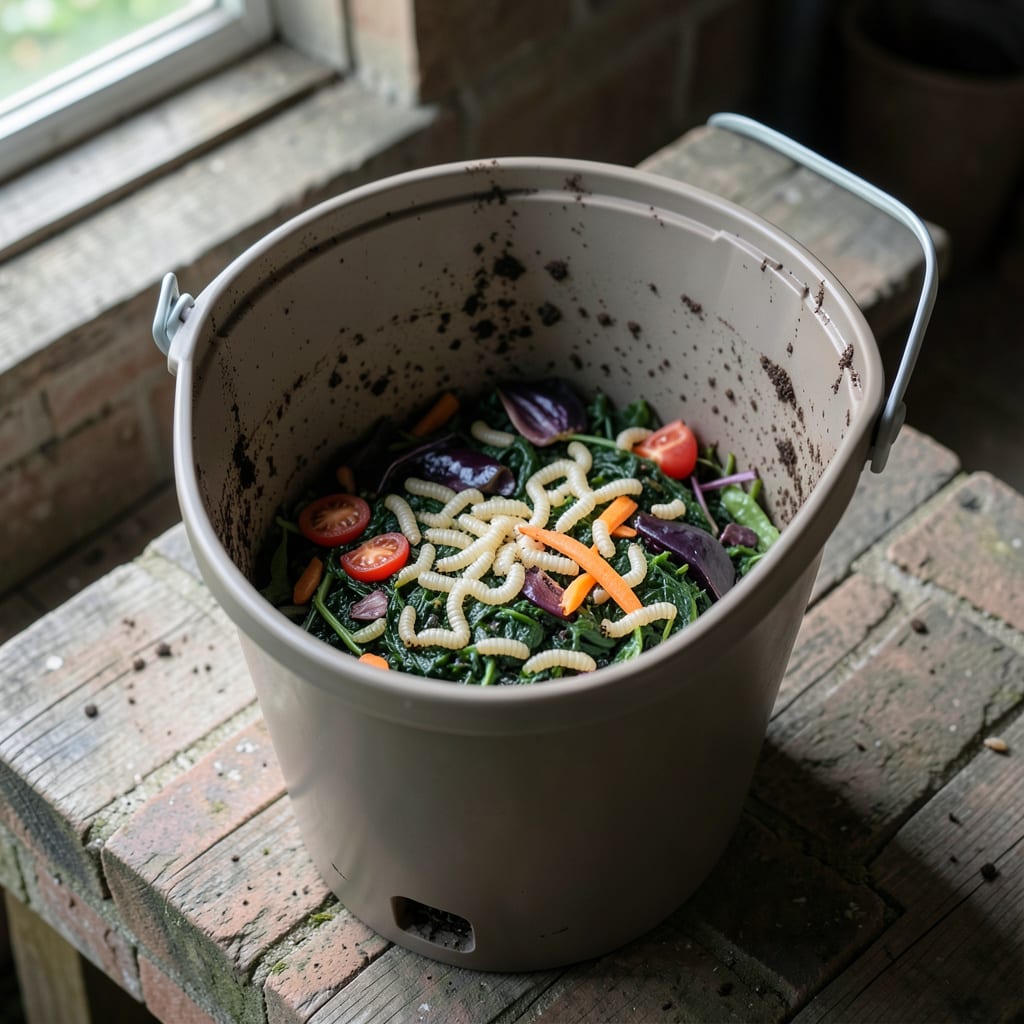
I turned my compost pile into a protein factory for my plants. Black soldier fly larvae break down kitchen scraps faster than traditional composting, creating rich fertilizer in weeks instead of months.
This method cuts waste, boosts soil health, and gives plants the nutrients they crave. Once you see the dark, crumbly results, you’ll never go back to regular composting.
📚 In This Guide
Here’s the method I use to turn kitchen scraps into rich compost with black soldier fly larvae.
Choose a container with a lid and drill 10-12 small holes in the bottom for drainage. I use a 5-gallon bucket because it’s easy to move and holds enough scraps for a family of four. Place the container on bricks or a stand to allow airflow underneath.
Line the bottom with a 1-inch layer of coarse material like twigs or straw to improve drainage. This prevents the larvae from drowning in excess moisture, which is a common mistake. The bin should be placed in a shaded area to avoid overheating, as larvae thrive best at 70-85°F.
Start adding kitchen scraps like fruit and vegetable peels, coffee grounds, and grains. Avoid meat, dairy, or oily foods, as these can attract pests or create odors. Chop the scraps into small pieces to speed up the process—larvae can consume waste twice their body weight daily.
To introduce larvae, place a small handful of compost or manure near the scraps. Adult black soldier flies will naturally lay eggs nearby, and larvae will appear within 4-7 days. If you’re impatient, you can also purchase larvae from a gardening supply store to jumpstart the process.
Keep the bin moist but not soggy. If it smells bad, it’s too wet—add dry materials like shredded newspaper or cardboard to balance it. Stir the contents lightly every 2-3 days to aerate and distribute the larvae evenly. You’ll notice the scraps disappearing quickly as the larvae grow.
Within 2-3 weeks, the larvae will reach their prepupal stage and crawl out of the bin to pupate. This is your sign that the composting cycle is complete. The leftover material will be a dark, crumbly compost ready for your garden.
Once the larvae have migrated out, the remaining compost is safe to use immediately. It’s rich in nitrogen, phosphorus, and potassium, perfect for amending garden soil or brewing compost tea. I spread it directly around my plants or mix it into potting soil for an extra nutrient boost.
To reuse the bin, simply add a new layer of scraps. Any remaining larvae or eggs will restart the process. This creates a continuous cycle of composting with minimal effort on your part.
Here’s what I’ve learned through trial and error to make this process seamless.
Bin Setup Wisdom: In Step 1, those 10-12 small holes in the bottom of your container are non-negotiable for drainage. I once skipped them, and the larvae nearly drowned in the excess moisture. Also, that 1-inch layer of coarse material like twigs or straw isn’t just for show—it prevents soggy conditions that can kill your larvae.
Temperature Control: Keep your bin in a shaded area to maintain that ideal 70-85°F range. I placed mine in direct sunlight once, and the heat slowed the larvae’s activity dramatically. A simple thermometer near the bin helps you monitor the environment.
Moisture Management: In Step 3, if your bin starts to smell, it’s a sign it’s too wet. Balance it by adding dry materials like shredded newspaper or cardboard. Stirring every 2-3 days keeps the larvae active and evenly distributed, which speeds up the composting process.
Patience Pays Off: The 4-7 days for larvae to appear can feel like forever, but resist the urge to disturb the bin. I checked mine daily at first and ended up delaying the process. Trust the timeline, and you’ll see results.
BSF larvae can break down organic waste in 2-4 weeks, depending on temperature, moisture, and waste type. Warmer conditions (80–90°F) speed up the process, while cooler temps slow it down. Ideal for rapid nutrient cycling!
Yes! The nutrient-rich frass (larvae waste) is great for most plants, including vegetables, flowers, and houseplants. Avoid using it on very young seedlings, as it may be too strong. Dilute with soil if needed.
Avoid meat, dairy, oily foods, citrus, or salty/sugary items, as these can harm the larvae or attract pests. Stick to fruits, veggies, grains, and coffee grounds for best results.
Not when managed properly! A well-maintained bin with the right moisture and airflow should have minimal odor. A foul smell usually means overfeeding or poor ventilation—adjust as needed.
Yes, but they’re less active in cold temps (below 50°F). Move your bin indoors or to a warmer spot to keep them thriving. Alternatively, use traditional composting during colder months.
