
Beautiful Plants For Your Interior
Beautiful Plants For Your Interior
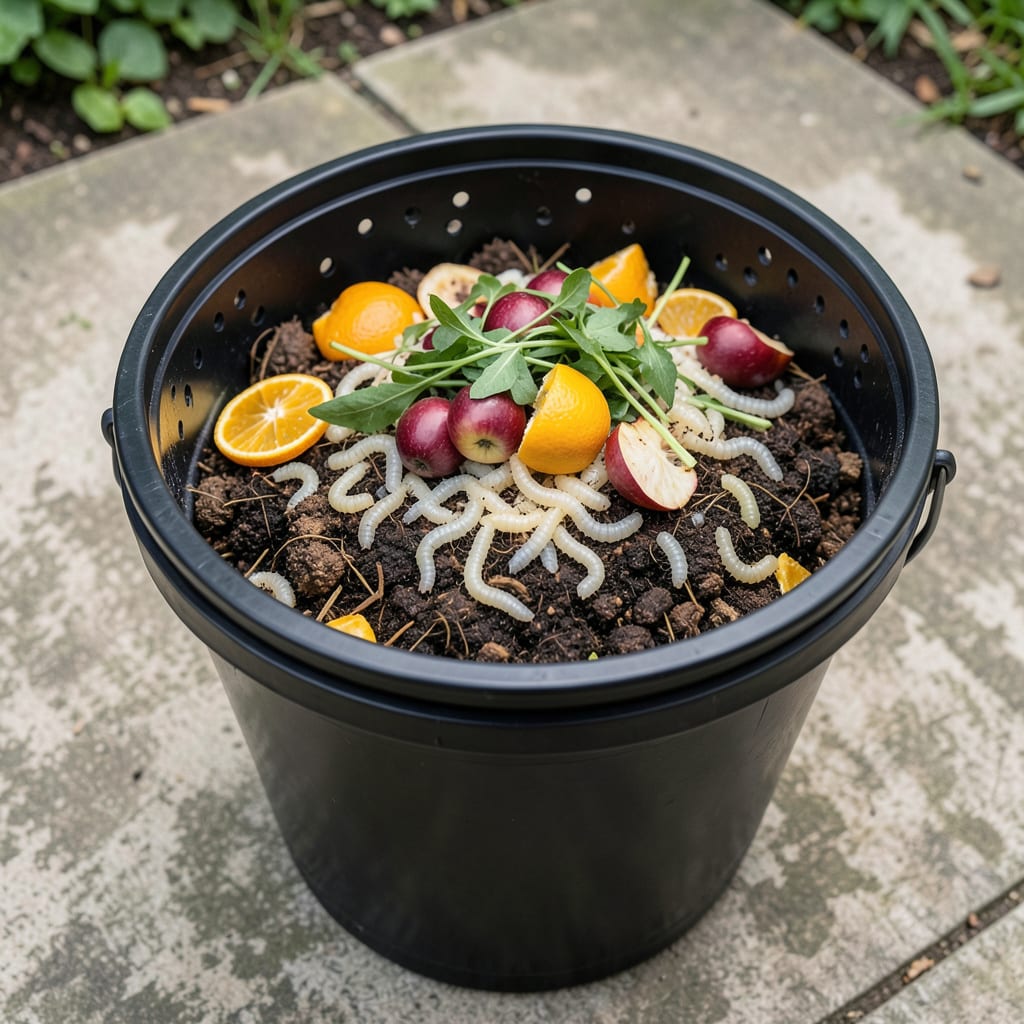
I turned my compost game upside down with black soldier fly larvae. This isn’t your average compost—it’s a nutrient powerhouse that transforms scraps into plant gold faster than anything I’ve tried.
Plants respond with shocking vigor to this stuff. The soil stays loose, retains moisture better, and the roots grow like they’re on a mission. Best part? It’s completely sustainable and cuts waste to nearly zero.
📚 In This Guide
Here’s how I set up my system to turn kitchen scraps into rich compost using black soldier fly larvae.
Choose a 5-gallon bucket or similar container with a tight-fitting lid. Drill ¼-inch holes around the upper sides for ventilation—this keeps the larvae healthy and prevents odors. I place mine in a shaded spot because direct sun can overheat the bin and kill the larvae.
Start with a base layer of damp cardboard or shredded paper to provide initial moisture and structure. The larvae need a moist environment, so I mist the bedding until it feels like a wrung-out sponge. This is where the magic begins.
Feed the larvae a mix of fruit and vegetable scraps, avoiding anything oily, salty, or acidic like citrus. I chop larger pieces into 1-inch chunks to speed up decomposition. The larvae consume scraps at an astonishing rate—often halving the volume within 24-48 hours.
If you don’t have larvae yet, place a piece of raw chicken or fish near the bin to attract adult black soldier flies. They’ll lay eggs nearby, and within 3-4 days, tiny larvae will appear. Once they’re active, add scraps daily but avoid overloading the bin.
Check the bin every 2-3 days to ensure the bedding stays moist but not soggy. If it’s too dry, mist with water. If it’s too wet, add dry bedding like shredded newspaper. The larvae need oxygen, so I fluff the bedding gently with a fork to prevent compaction.
You’ll notice the larvae migrating upward as they consume the scraps. This is normal—they’re self-harvesting. Once most have moved to the top, it’s time to collect them and start a new batch. The remaining material is your nutrient-rich compost.
After 2-3 weeks, the scraps will have turned into dark, crumbly compost. I sift it through a ½-inch mesh to remove any remaining large pieces. The compost is ready to use immediately—mix it into potting soil or top-dress garden beds for a nutrient boost.
To reuse the larvae, transfer them to a new bin with fresh bedding and scraps. They’ll continue the cycle, and you’ll have a steady supply of compost. I keep a second bin going so there’s always one active while the other finishes.
Here are practical insights to help your compost system thrive without common hiccups.
Container Selection: A 5-gallon bucket works perfectly, but ensure it has a tight-fitting lid with those ¼-inch ventilation holes. I learned the hard way that too few holes traps moisture and creates odors, while too many lets in pests.
Moisture Balance: In Step 3, when you check every 2-3 days, remember that damp bedding should feel like a wrung-out sponge. If it’s too wet, add dry shredded newspaper immediately—larvae can’t breathe in soggy conditions.
Feeding Strategy: Those 1-inch scraps in Step 2 decompose faster, but avoid overloading. The larvae can halve the volume within 24-48 hours, so start small and add more as they process what’s there.
Location Matters: Direct sun kills larvae, so that shaded spot in Step 1 isn’t just a suggestion. I keep mine under a tree where it gets dappled light at most—consistent shade is key.
BSFL typically break down organic waste in 2-4 weeks, depending on temperature, moisture, and waste type. Warmer conditions (77–86°F) speed up the process, while cooler temps slow it down.
Yes! BSFL compost is safe for most plants, including veggies, flowers, and herbs. Its balanced nutrients (N-P-K) improve soil health without burning roots. Avoid overuse on sensitive seedlings.
Traditional composting, worm castings, or manure are great alternatives. However, BSFL compost is richer in protein and breaks down faster, making it a top choice for quick nutrient cycling.
BSFL escape if their environment is too wet, dry, or lacks food. Ensure proper moisture (60–70%) and provide enough organic waste. Cover bins with breathable mesh to contain them.
