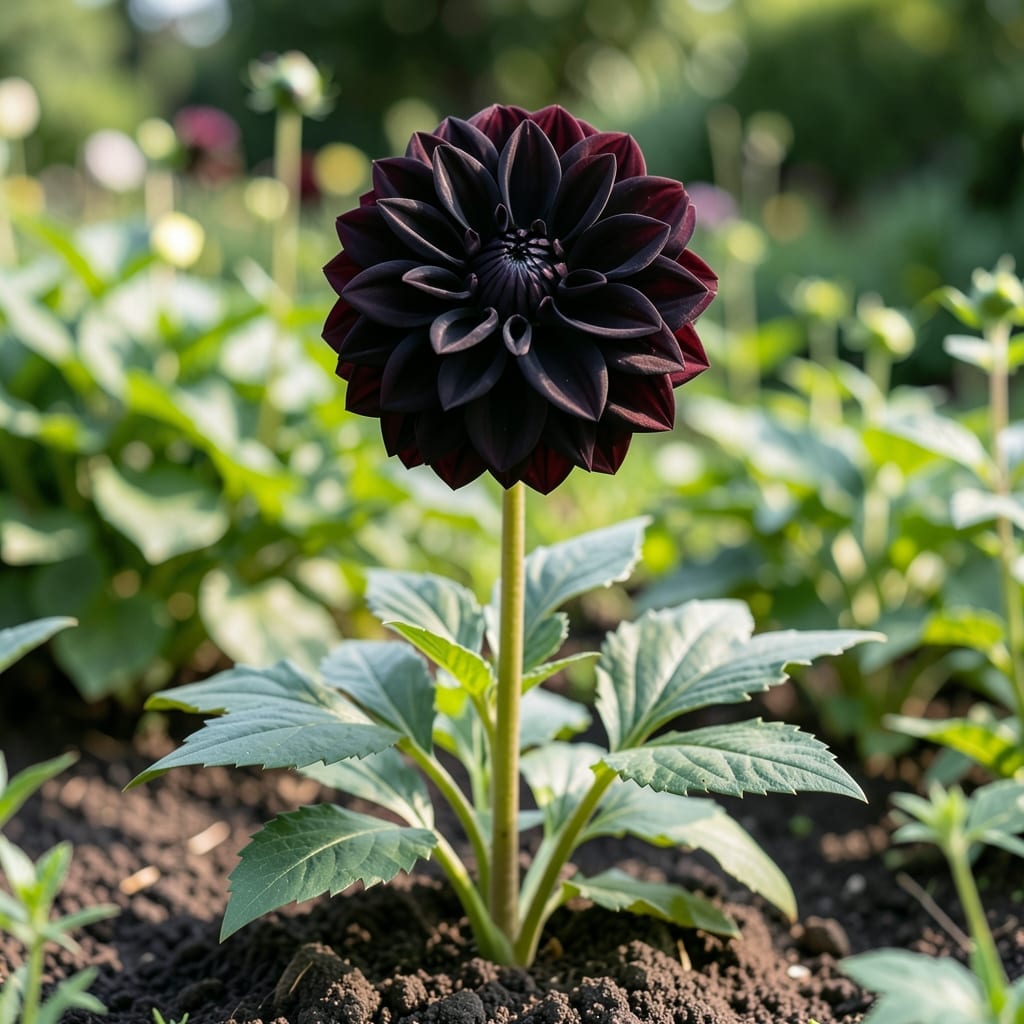
For garden design, I recommend spacing Black Satin Dahlias about 2 feet apart to accommodate their mature size. This gives enough room for air circulation while creating a lush display.
If you’re growing in containers, expect slightly less height due to root restrictions. Use large pots (at least 12-inch diameter) for best results.
Remember that pinching back early stems can encourage bushier growth but may reduce final height slightly. I find this trade-off worth it for more blooms.
The flower stems themselves can add another 12-18 inches above the foliage, making the total visual height even more impressive in bloom.
This variety’s height makes it ideal for cutting gardens, as the long stems are perfect for arrangements. Just be sure to provide support as the season progresses.
Key Factors That Influence Black Satin Dahlia Growth Height
Several key factors determine how tall your Black Satin Dahlia will grow. I’ve found that sunlight exposure is the most critical, with plants in full sun often reaching the maximum 4-5 feet. 🌼
Soil quality also plays a huge role. Rich, well-draining soil with plenty of organic matter supports stronger stem growth and greater height potential.
✨ Key Growth Influencers
- Full sun (6+ hours) maximizes height
- Rich soil boosts stem strength
- Consistent watering prevents stunted growth
- Regular feeding supports tall stems
- Proper spacing reduces competition
Watering practices affect height more than you might think. Deep, regular watering encourages strong root development, which in turn supports taller growth. I recommend 1-2 inches per week. ✂️
Fertilization is another game-changer. Using a balanced fertilizer (5-10-10) every 4-6 weeks during the growing season provides the nutrients needed for maximum height. Avoid over-fertilizing with nitrogen, as this can lead to weak stems.
Pruning techniques can help control height. Pinching back early growth encourages bushier plants but may slightly reduce final height. I find this trade-off worthwhile for more blooms on slightly shorter stems.
Finally, wind protection is often overlooked. Tall dahlias can be susceptible to wind damage, so consider planting near a fence or wall or using windbreaks in exposed areas. This helps prevent stem breakage and allows the plant to reach its full height potential.
★★★★★4.7(9 reviews)