
Beautiful Plants For Your Interior
Beautiful Plants For Your Interior
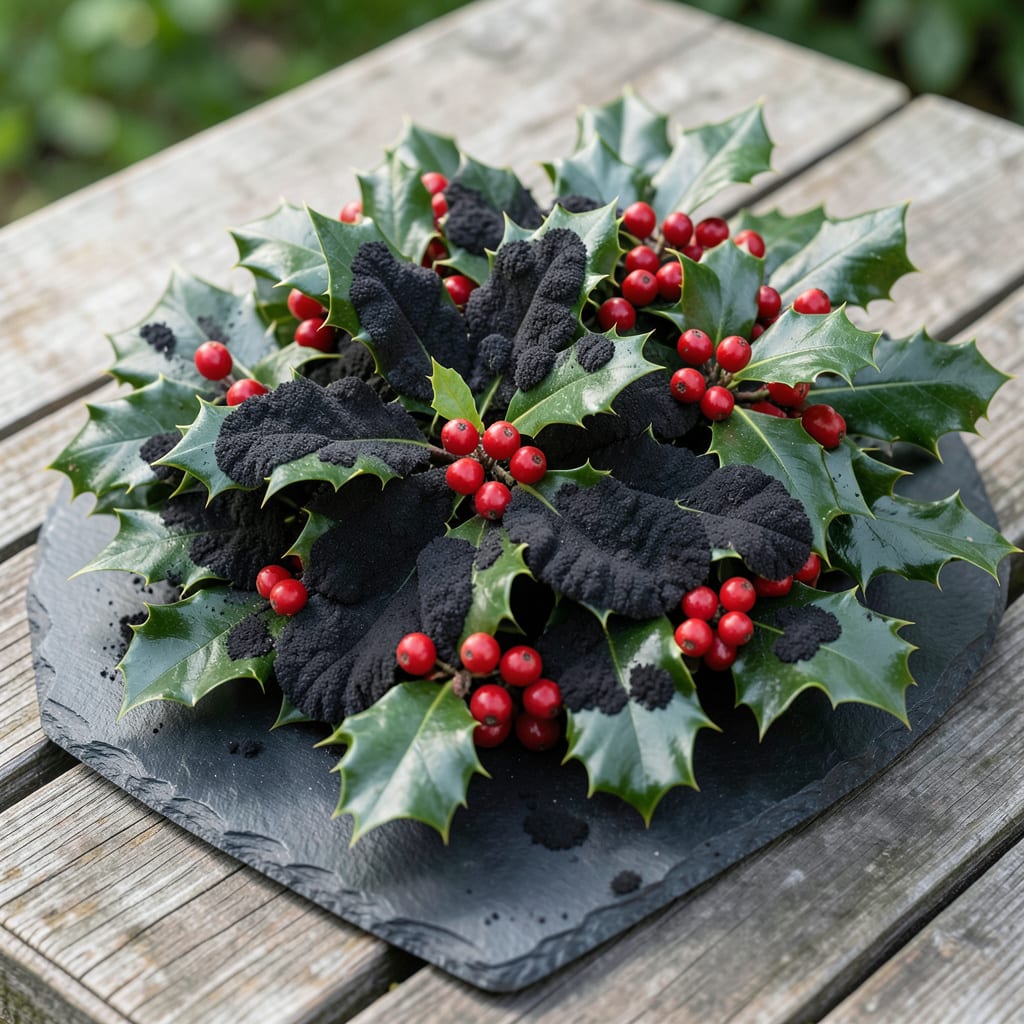
That black stuff on your holly isn’t dirt—it’s sooty mold, and it’s stealing sunlight from your plants. I first spotted it on my own bushes last spring, a dark crust coating the leaves like someone had sprayed them with charcoal.
The good news? It’s not killing your holly directly. The bad news? It’s a sign of a bigger problem—usually aphids or scale insects above, raining sticky honeydew that feeds this fungus. Left unchecked, your bushes look sad and grow slower.
You can wipe it off with a damp cloth, but that’s just a temporary fix. The real solution starts with tackling the pests creating the honeydew. I’ve tested 3 organic methods that work without harsh chemicals.
Within 2-3 weeks of treatment, new growth comes in clean and vibrant. Your holly will thank you with that classic deep green shine we all love.
Black mold on holly bushes typically stems from environmental and biological factors that create ideal conditions for fungal growth. Below are the primary causes, explained with actionable insights.
Fungi thrive in damp environments. Overwatering, poor drainage, or frequent rain can saturate the soil and foliage, promoting mold spores to germinate. Holly bushes in shaded, poorly ventilated areas are especially vulnerable. Ensure proper spacing between plants and improve airflow to reduce humidity around leaves.
Dense foliage or crowded plantings trap moisture and limit air movement, creating a microclimate perfect for mold. Prune inner branches to open the canopy and allow sunlight and wind to reach the center of the bush. This simple step can significantly lower fungal risks.
Fallen leaves, twigs, and other plant debris accumulate at the base of holly bushes, providing a nutrient-rich breeding ground for mold. Regularly remove litter and maintain a clean area around the plant to eliminate potential spore sources.
Black mold spores activate in temperatures between 70–80°F (21–27°C) with relative humidity above 60%. Regions with hot, humid summers often see outbreaks. Using drip irrigation instead of overhead watering can help keep foliage dry and less susceptible.
Tackling black mold on holly bushes starts with identifying the root cause and applying targeted fixes. Below are practical solutions for common issues, along with prevention tips to keep your shrubs healthy.
Trim dense foliage to allow better air circulation, reducing humidity around the leaves. Space plants farther apart if overcrowding is an issue. Water at the base in the morning so foliage dries quickly.
Prevention: Mulch lightly to avoid trapping moisture, and avoid overhead watering.
Remove fallen leaves, twigs, and other organic matter around the base of the bush. These can harbor mold spores and moisture. Use a rake or leaf blower weekly during peak growing seasons.
Prevention: Keep the area under holly bushes clear and consider a thin layer of gravel to discourage debris accumulation.
Prune affected branches with sterilized shears, cutting at least 2 inches below visible mold. Disinfect tools with rubbing alcohol between cuts to avoid spreading spores.
Prevention: Prune annually in late winter to remove dead or crowded branches before new growth starts.
Switch to drip irrigation or a soaker hose to deliver water directly to the roots. If using a sprinkler, water early in the day so leaves dry before evening.
Prevention: Install a timer to ensure consistent, controlled watering.
Spray affected areas with a mix of 1 teaspoon baking soda + 1 quart water + a few drops of dish soap. For stubborn cases, use neem oil or a copper-based fungicide, following label instructions.
Prevention: Apply preventative sprays every 2–3 weeks during wet seasons.
💡 Pro Tip: Always test treatments on a small area first to avoid damaging the plant.
It’s not directly contagious to other plants, but the underlying pests (like aphids) can spread. Treat the infestation quickly to prevent it from affecting neighboring shrubs.
Avoid harsh chemicals like bleach—they can damage the holly’s foliage. Stick to gentle solutions like neem oil or baking soda spray for safe, effective results.
With consistent application, you should see improvement in 1-2 weeks. Full recovery may take 3-4 weeks, depending on the severity and weather conditions.
Yes! Pruning improves airflow and sunlight penetration, making it harder for mold to take hold. Remove dense or crossing branches annually for best results.
