
Beautiful Plants For Your Interior
Beautiful Plants For Your Interior
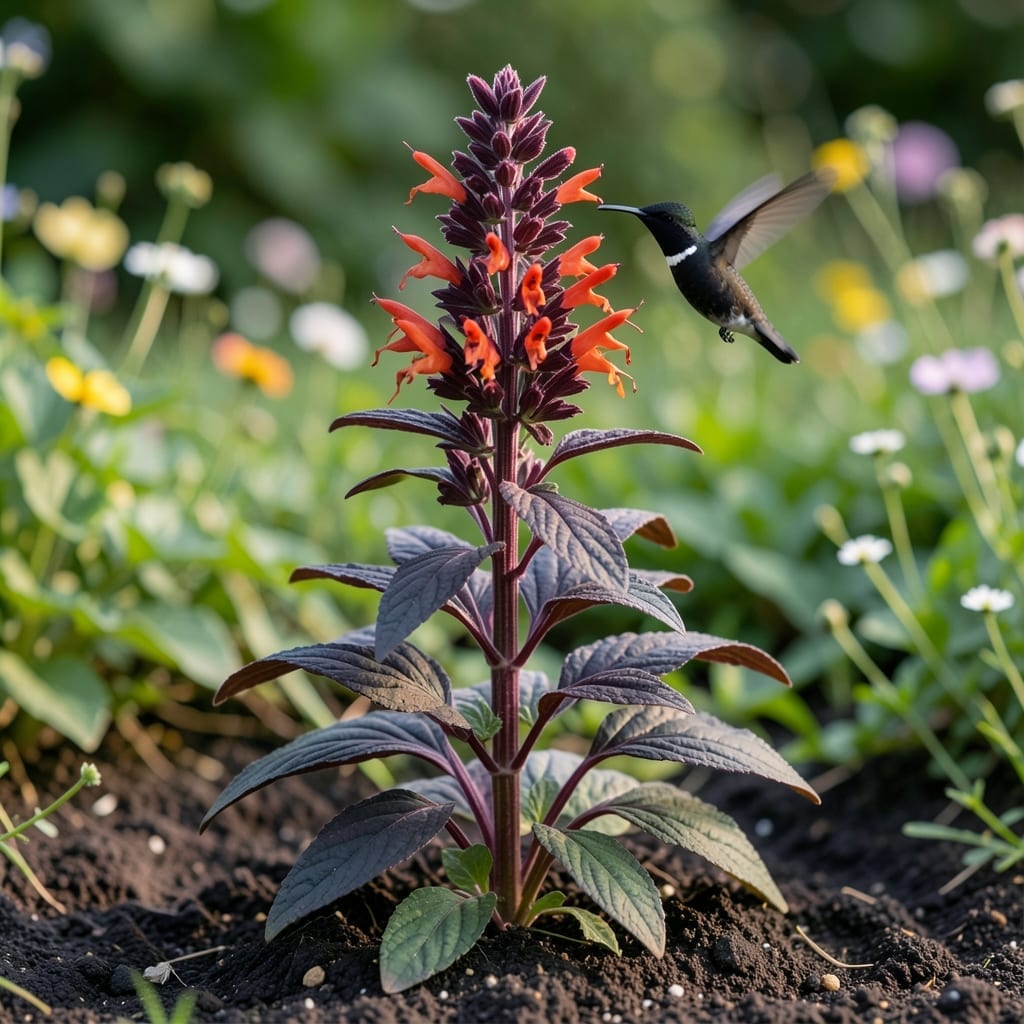
The black head hummingbird is a striking species with iridescent green bodies and dark heads, commonly found in open woodlands and gardens across western North America.
I love how their metallic green feathers shimmer in sunlight, creating a dazzling effect that catches your eye instantly. 🔥 These tiny birds are particularly drawn to areas with abundant flowering plants, and their dark heads contrast beautifully against their vibrant bodies. They play a vital role in pollination while adding life to any garden they visit.
💡 In This Article
These tiny birds measure just 3.5-4 inches long, with wingspans of 4.3-4.7 inches, making them slightly larger than a sparrow. The males display a striking deep purple-black throat patch called a gorget that shimmers in sunlight, while females have more subdued grayish throats with subtle streaking.
Their iridescent green backs and crowns appear to change color as they move, a result of light refracting through the microscopic structure of their feathers. ✨
The species exhibits sexual dimorphism beyond just coloration. Males have slightly curved bills measuring about 0.7-0.9 inches, perfectly adapted for accessing nectar deep within tubular flowers. Females tend to have longer bills, up to 1.1 inches, allowing them to reach nectar in different flower types. This adaptation helps reduce competition between sexes for food resources.
🔥
Behaviorally, they’re known for their aggressive territorial defense. Males perform dramatic dive displays to ward off rivals, reaching speeds of 60 mph during these aerial maneuvers. Their wings beat at an astonishing 50-80 times per second, creating the characteristic hum that gives them their name.
This rapid wing movement enables them to hover precisely while feeding. 💫
Vocalizations differ between sexes too. Males produce a loud, buzzy “zeeee” sound during courtship dives, while females make softer chipping calls when communicating with their young. Their tiny size belies their boldness – they’ll fearlessly challenge much larger birds that approach their feeding territories. ⚡
What truly sets them apart is their metabolism. Their heart rate can reach 1,260 beats per minute – about 20 times faster than a human’s. This incredible metabolic rate requires them to consume their body weight in nectar daily, visiting hundreds of flowers each day to meet their energy needs. 🌟
Their iridescent feathers contain microscopic structures that refract light differently as they move, creating shifting colors from green to black. This effect is most visible on their throat patches and backs.
Males have a deep purple-black throat patch called a gorget, while females have grayish throats with subtle streaking. Males also have slightly curved bills.
Native nectar-rich varieties like bee balm, columbine, and salvias are their favorites. Group these in visible clusters to create “feeding stations” that catch their attention.
Replace the solution every 3-4 days in warm weather. Use a 1:4 sugar-to-water ratio and avoid honey or artificial sweeteners, which can harm them.