
Beautiful Plants For Your Interior
Beautiful Plants For Your Interior
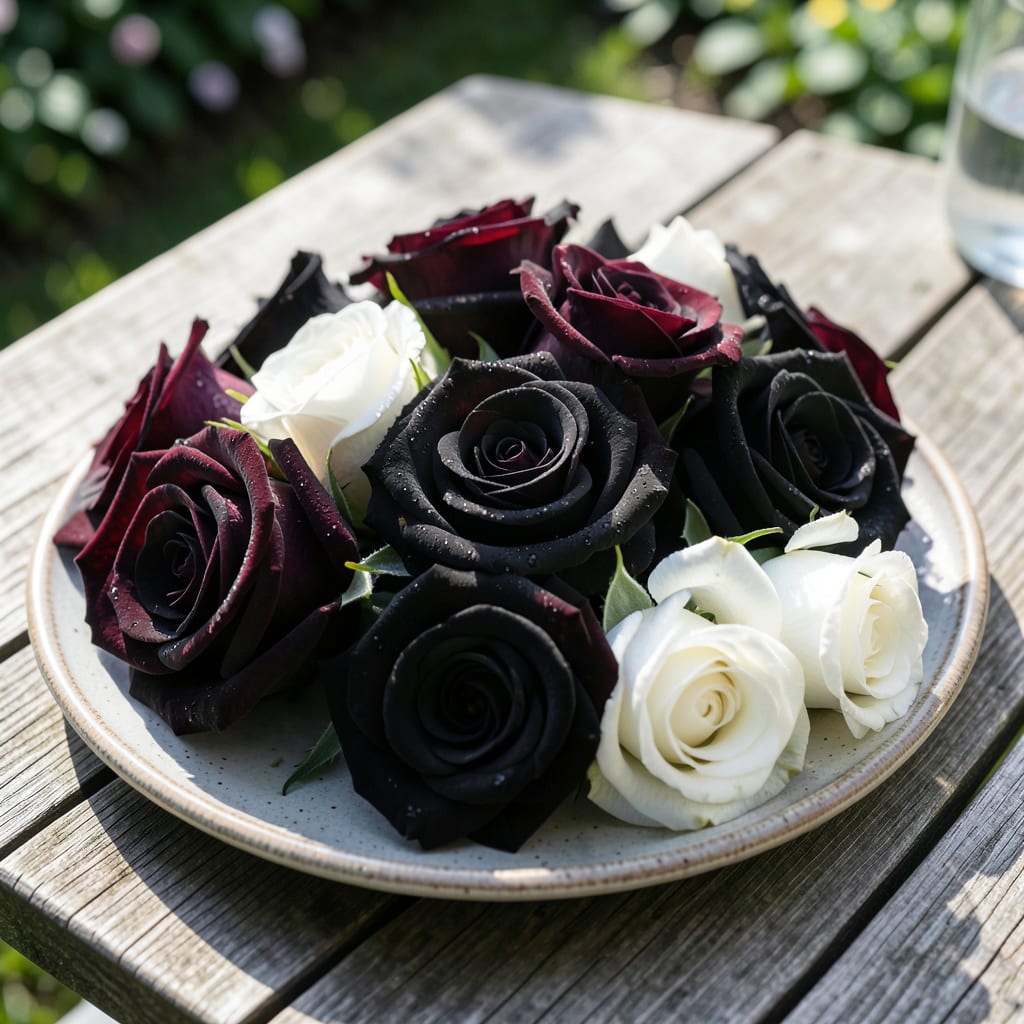
These roses stop people in their tracks. I planted my first Black Fire and Ice bush three years ago, and the contrast between deep burgundy petals and crisp white edges still takes my breath away every bloom season.
They thrive in full sun with well-draining soil, rewarding you with dramatic bicolor flowers that last from late spring through fall. The fragrance is light but sweet, and they resist most common rose diseases better than many varieties I’ve tried.
📚 In This Guide
Here’s the method I use to grow these striking bicolor roses with bold contrast and reliable blooms.
Select a spot with full sun—at least 6-8 hours of direct sunlight daily. These roses thrive in bright, open areas where their deep burgundy and white petals can truly stand out. Avoid low-lying spots where cold air settles, as this can damage the delicate blooms.
Soil should be well-draining and rich in organic matter. If your soil is heavy clay or sand, amend it with compost to improve texture and fertility. I always test drainage by digging a 12-inch hole and filling it with water—if it drains within 1 hour, you’re good to go.
Dig a hole that’s twice as wide and just as deep as the root ball. This gives the roots plenty of room to spread out. Gently remove the rose from its container and loosen any tightly bound roots to encourage outward growth.
Place the plant in the hole so the graft union (the swollen bump near the base) sits 1-2 inches below ground level in cold climates or at ground level in warmer areas. Backfill with soil, pressing lightly to eliminate air pockets. Water deeply right after planting to help settle the soil around the roots.
Water your roses 2-3 times per week for the first month after planting, then reduce to 1-2 times per week once established. Always water at the base to keep foliage dry and prevent disease. A deep soak is better than frequent light watering.
Apply a 2-3 inch layer of organic mulch around the base of the plant, keeping it a few inches away from the stem to prevent rot. Mulch helps retain moisture, suppress weeds, and regulate soil temperature—all critical for these roses to thrive.
Feed your roses with a balanced, slow-release fertilizer in early spring and again in mid-summer. I use one with an N-P-K ratio of 10-10-10 or similar, following the package instructions for application rates. Avoid over-fertilizing, which can lead to excessive foliage and fewer blooms.
Prune in late winter or early spring, just as new growth begins. Remove dead, diseased, or crossing branches first. Then, shape the plant by cutting back one-third of the previous year’s growth. This encourages strong, healthy stems and more abundant flowers.
Keep an eye out for common rose pests like aphids, thrips, and Japanese beetles. I check the leaves and stems weekly, especially on the undersides where pests like to hide. A strong blast of water can dislodge many of these invaders.
For persistent issues, use an organic insecticidal soap or neem oil, applying in the early morning or late evening when bees are less active. Regularly removing spent blooms (deadheading) also keeps the plant focused on producing new flowers rather than seeds.
These small details make a big difference in growing healthy, vibrant roses.
Sunlight Essentials: The 6-8 hours of daily direct sunlight isn’t just a suggestion—it’s critical for those dramatic bicolor blooms. I’ve tried shadier spots, and the contrast between the deep burgundy and white petals fades significantly. If your garden has partial shade, prioritize morning sun over afternoon.
Drainage Test: That 1-hour drainage test with a 12-inch hole is your best insurance against root rot. If water lingers longer, mix in more compost or consider raised beds. Trust me, I learned this the hard way after losing two plants to soggy soil.
Planting Depth: Placing the graft union 1-2 inches below ground level in cold climates protects it from winter die-back. In warmer areas, keep it at ground level to prevent suffocation. This single step determines whether your rose survives its first season.
Watering Wisdom: The shift from 2-3 times per week to 1-2 times after establishment is key. Overwatering established roses leads to weak roots and disease. I use my finger to test soil moisture—if the top inch is dry, it’s time to water deeply at the base.
Plant in well-draining soil with full sun to partial shade. Water regularly but avoid soggy roots. These dramatic roses thrive in USDA zones 6-9 and benefit from occasional pruning to encourage vibrant bicolor blooms.
Expect stunning blooms from late spring to fall, with peak flowering in summer. Deadheading spent flowers can extend the blooming season and promote healthier growth.
Try ‘Black Baccara’ for deep black-red tones or ‘Iceberg’ for crisp white blooms. Both offer striking contrasts and are easier to source at local nurseries.
Inconsistent coloring may result from poor light or nutrient deficiencies. Ensure 6+ hours of sunlight daily and use a balanced fertilizer to enhance the dramatic fire-and-ice contrast.
