
Beautiful Plants For Your Interior
Beautiful Plants For Your Interior
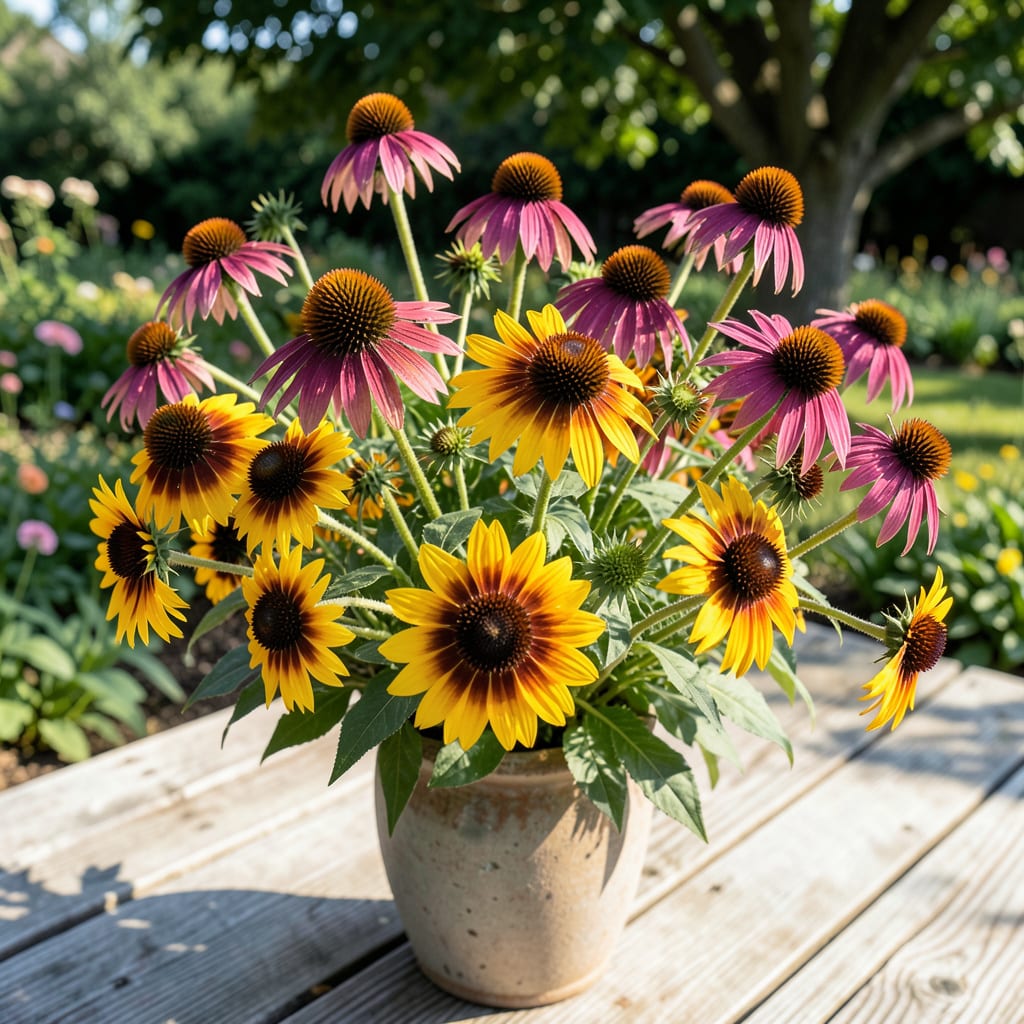
This dynamic duo brings nonstop color and buzzing life to any garden. I planted my first pair three summers ago, and the pollinators haven’t left since.
Both thrive in full sun with well-draining soil, asking little while giving so much. You’ll get golden-yellow blooms alongside purple-pink daisy-like flowers from early summer through fall, with almost zero maintenance.
📚 In This Guide
Pairing these perennials creates a vibrant, low-maintenance pollinator haven with complementary bloom times.
Select a location with full sun to partial shade, as both species thrive in 6+ hours of direct sunlight daily. Black eyed Susans (Rudbeckia hirta) tolerate a wider range, but coneflowers (Echinacea purpurea) demand well-drained soil to prevent root rot. I always test drainage by digging a 12-inch hole, filling it with water, and checking that it drains completely within 4 hours.
Avoid low-lying areas where water pools after rain. These plants prefer slightly acidic to neutral soil (pH 6.0-7.0). If your soil is heavy clay, amend with compost to improve structure before planting.
Loosen the soil to a depth of 12-15 inches using a garden fork, breaking up any large clumps. Mix in a 2-3 inch layer of organic matter like compost or aged manure to boost fertility and drainage. This step ensures roots can spread easily and access nutrients.
Remove all weeds and debris from the area, as these will compete with your new plants for water and nutrients. I’ve found that a thorough initial weeding saves hours of maintenance later. Smooth the surface with a rake, but don’t compact the soil—keep it loose for optimal root growth.
Space black eyed Susans 12-18 inches apart and coneflowers 18-24 inches apart to allow for mature spread. Plant them in clusters of 3-5 for visual impact rather than single specimens. Dig holes just as deep as the root ball but twice as wide to encourage outward root growth.
Place each plant so the crown sits slightly above soil level to prevent rot. Backfill with native soil, pressing gently to eliminate air pockets. Water thoroughly after planting to settle the soil around roots. You’ll see the soil level drop slightly—this is normal and means water is reaching the roots properly.
Water deeply 1-2 times per week for the first month, then reduce to once weekly unless rainfall is less than 1 inch. Both plants are drought-tolerant once established, but coneflowers may need extra water during extreme heat. Mulch with a 2-inch layer of organic material to retain moisture and suppress weeds.
Deadhead spent blooms regularly to encourage continuous flowering. For black eyed Susans, cut back stalks to the base in late fall. Coneflowers benefit from being left standing through winter to provide seed for birds. Watch for powdery mildew on coneflowers in humid weather—space plants properly to improve air circulation.
Small adjustments in site selection and care make a big difference for these pollinator favorites.
Site Selection: In Step 1, that 6+ hours of direct sunlight is non-negotiable for coneflowers, though black eyed Susans are more forgiving. I learned this the hard way when my first coneflower planting struggled in partial shade—they simply refused to thrive until I moved them to a sunnier spot.
Drainage Test: That 4-hour drainage test from Step 1 is your best insurance against root rot. If water lingers beyond 4 hours in your test hole, consider raised beds or amending with extra compost. I’ve seen coneflowers wilt dramatically in poorly drained soil, even with perfect sunlight.
Planting Depth: In Step 3, planting with the crown slightly above soil level prevents crown rot—a common beginner mistake. I’ve lost several plants by burying them too deep, thinking it would provide stability. Pressing gently to eliminate air pockets is sufficient for support.
Plant them in early spring or fall for the best results. Both thrive in well-drained soil and full sun, establishing strong roots before extreme temperatures arrive.
Water them weekly during dry spells, but avoid overwatering. Deadhead spent blooms to encourage more flowers, and fertilize lightly in spring for vibrant, long-lasting color.
Yes! Choose large pots with drainage holes and use a quality potting mix. They’ll need more frequent watering than in-ground plants but can thrive with proper care.
This could be due to overwatering, poor drainage, or fungal diseases like powdery mildew. Ensure good airflow, avoid wet foliage, and remove affected leaves promptly.
