
Beautiful Plants For Your Interior
Beautiful Plants For Your Interior
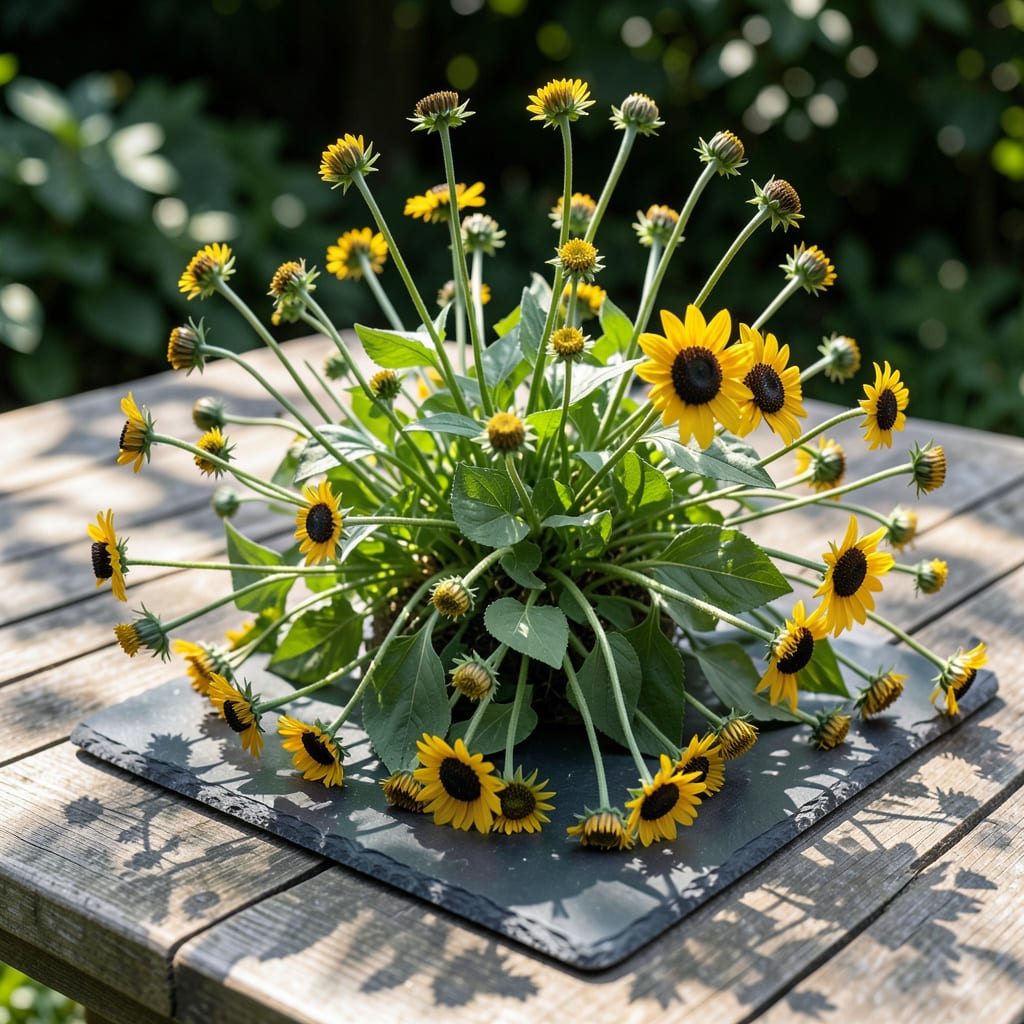
Strong stems are the backbone of every vibrant Black Eyed Susan. I’ve learned that healthy growth starts with sturdy support, preventing floppy plants that can’t hold their golden blooms upright.
With proper care, these stems will produce dozens of flowers all season. The key is consistent watering, full sun, and occasional pruning to encourage bushier, more resilient growth.
📚 In This Guide
Here’s the method I use to keep these vibrant perennials standing tall through wind, rain, and heavy blooms.
Begin by examining your black eyed susan plants in early spring as new growth emerges. Look for stems that appear thin, weak, or prone to flopping—these are the ones that will need support. I check each clump carefully, noting which varieties naturally grow taller or produce heavier flower heads.
You’ll want to identify plants that typically reach 2-3 feet in height, as these are most vulnerable to stem breakage. The ‘Goldsturm’ cultivar, for example, often benefits from early intervention. This assessment helps you determine which plants need staking and which can stand on their own.
Set up your support structures when plants are about 12-18 inches tall, before they begin to flop. I use different methods depending on the planting situation: individual stakes for single plants, circular cages for clumps, or a grid system for large drifts. The key is getting supports in place before stems become top-heavy with buds.
For individual plants, I insert a ½-inch thick bamboo stake about 6 inches from the base of the plant, driving it 12 inches into the soil for stability. For group plantings, I prefer the subtle support of a circular tomato cage that allows the plant to grow through naturally. This early intervention prevents damage to developing root systems.
As stems grow and begin to develop flower buds, I attach them to the support system using soft, flexible ties. I’ve found that green garden twine or strips of old nylon stockings work best—they’re strong enough to hold stems but gentle enough to avoid cutting into the plant tissue as it thickens.
Tie stems loosely to allow for natural movement and growth. I create a figure-eight pattern around the stem and support, which provides stability while preventing the tie from slipping down. Check these ties every 2-3 weeks throughout the growing season, adjusting as needed to accommodate new growth.
For extensive plantings, I use a more comprehensive approach. I install a grid of stakes connected with twine or wire at 12-inch intervals above the plants. This creates a framework that supports multiple stems without detracting from the natural appearance of the planting.
The grid should be positioned about ⅔ of the way up the expected plant height—typically 18-24 inches above the ground for most black eyed susan varieties. This method works particularly well for border plantings or when you have a dozen or more plants in close proximity. The support becomes nearly invisible once the plants reach full size.
As the season progresses and flower heads develop, I keep a close eye on stem stability. Heavy rain or strong winds can test even the best support systems. After storms, I check for any stems that may have slipped from their ties or become tangled in the support structure.
I also watch for signs of stress where ties might be too tight. If I notice a stem beginning to girdle, I immediately loosen or reposition the tie. This ongoing attention ensures that your support system continues to protect your plants without causing damage as they grow and change throughout the season.
Small details make the difference between drooping stems and vibrant, upright blooms.
The Timing Factor: Install supports when plants reach 12-18 inches tall, as specified in Step 2. Waiting until stems begin to flop risks damaging developing roots. I learned this the hard way after losing several clumps to broken stems during a summer storm.
Stake Placement: For individual plants, follow Step 2 precisely: position the ½-inch bamboo stake 6 inches from the base and drive it 12 inches deep. This depth anchors the stake against wind, while the distance prevents root disturbance as the plant matures.
Tie Technique: In Step 3, use the figure-eight pattern with green garden twine or nylon strips. This method distributes pressure evenly and prevents the tie from sliding down as the stem thickens. Check these ties every 2-3 weeks as the instructions recommend—stems grow faster than you think.
Grid System Wisdom: For large plantings, the Step 4 grid at 12-inch intervals and 18-24 inches high works perfectly for most varieties. Position it at two-thirds the expected height to support stems where they need it most without obstructing growth.
Weak stems can result from over-fertilization, too much shade, or insufficient water. Ensure they get full sun (6+ hours) and stake tall varieties for extra support. Proper spacing (12-18 inches apart) also improves airflow and stem strength.
Cut stems in the early morning when buds are just beginning to open. Use sharp shears and place them in water immediately. This timing helps flowers last longer in bouquets (up to 10 days!) and prevents wilting.
Yes! Try peony rings, tomato cages, or even DIY solutions like bamboo tepees. Group planting with sturdy neighbors (e.g., coneflowers) can also provide natural support without stakes.
Pinch back stems by 1/3 in late spring to encourage bushier growth. If they’re already leggy, trim them back and improve light conditions. Regular deadheading also redirects energy to stronger, compact growth.
They’re generally low-maintenance but watch for powdery mildew (from poor airflow) or aphids. Space plants properly, avoid overhead watering, and treat issues early with neem oil or insecticidal soap.
