
Beautiful Plants For Your Interior
Beautiful Plants For Your Interior
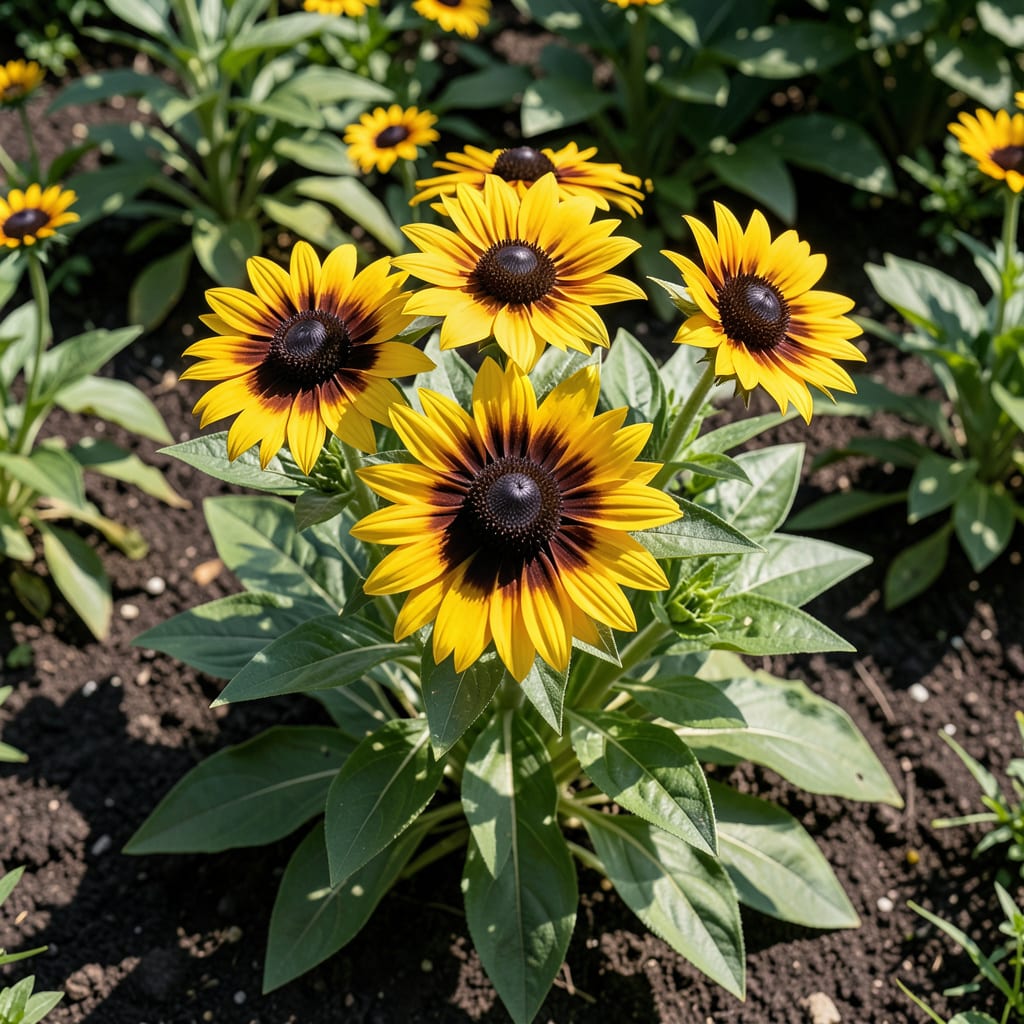
Black Eyed Susans light up summer gardens like nothing else. I’ve seen these golden blooms turn even the plainest patch of dirt into a pollinator paradise with almost no effort.
Give them full sun and well-draining soil, and they’ll reward you with months of cheerful color. They’re drought-tolerant once established, making them perfect for beginners or busy gardeners.
📚 In This Guide
Here’s how I consistently grow vibrant black eyed susans that bloom nonstop through summer.
Select a site with full sun—at least 6-8 hours of direct light daily. These plants thrive in bright, open spaces. I test the spot by placing a stick and tracking its shadow; if it moves significantly, the sun exposure is sufficient.
Work the soil to a depth of 12-15 inches, removing rocks and breaking up clumps. Black eyed susans prefer well-draining soil but tolerate most types as long as they’re not waterlogged. Amend heavy clay with compost to improve drainage and fertility.
Dig holes slightly wider than the root ball but no deeper. Place each plant so the crown sits 1/4 inch above soil level to prevent rot. Backfill with native soil, pressing gently to remove air pockets.
Space plants 18-24 inches apart. This allows air circulation and prevents foliage diseases. I always err on the wider side—crowded plants compete for resources and produce fewer blooms.
Water deeply immediately after planting, soaking the soil to a depth of 6-8 inches. This encourages roots to grow downward. You’ll know it’s sufficient when the top 2-3 inches of soil feel moist but not soggy.
For the first 2-3 weeks, keep soil consistently moist but not waterlogged. After establishment, black eyed susans are drought-tolerant—I cut back to watering only when the top 1 inch of soil feels dry to the touch.
Deadhead spent flowers regularly by pinching off the faded blooms at the base of the stem. This prevents seed formation and redirects energy into producing more flowers. I use sharp pruners for a clean cut that won’t damage the plant.
Apply a 2-3 inch layer of mulch around the base to retain moisture and suppress weeds. Keep mulch 1 inch away from the stems to prevent rot. Organic mulches like shredded bark break down over time, adding nutrients to the soil.
Watch for signs of stress like wilting or yellowing leaves. If this happens, check soil moisture first—both over- and under-watering cause similar symptoms. I stick my finger 2 inches into the soil; if it feels dry, it’s time to water.
Fertilize lightly with a balanced, slow-release product in early spring if growth seems sluggish. Avoid high-nitrogen fertilizers, which promote leafy growth at the expense of blooms. Black eyed susans generally don’t need much feeding to thrive.
Small adjustments in your approach make a world of difference for these sun-loving plants.
The Sun Factor: That 6-8 hours of full sun isn’t just a suggestion—it’s essential. I’ve found plants getting only 5 hours tend to flop over and produce fewer blooms. If your yard has partial shade, prioritize morning sun over afternoon, as it’s gentler on the foliage.
Planting Depth Secret: The 1/4 inch above soil level crown placement in Step 2 prevents rot more effectively than you’d expect. I learned this the hard way after losing three plants my first season. Press the soil gently but firmly to eliminate air pockets that could stress the roots.
Watering Wisdom: During those first 2-3 weeks after planting, consistency is key. The 6-8 inch deep watering in Step 3 trains roots to grow downward, making plants more drought-resistant later. I use a moisture meter to confirm the top 2-3 inches stay damp but not soggy.
Mulch Strategy: That 2-3 inch layer of mulch in Step 4 works double duty—it retains moisture and blocks weeds. Here’s what nobody tells you: organic mulches like shredded bark actually improve soil as they break down, while inorganic options just sit there looking pretty.
Black eyed Susans typically reach 1–3 feet in height within one growing season. They’re fast growers, often blooming in as little as 10–12 weeks from seed if planted in warm soil and full sun.
Plant seeds in early spring after the last frost, or in fall for cooler climates. For best results, aim for soil temperatures around 70°F to encourage quick germination.
While they tolerate partial shade, these sun-loving perennials thrive in full sun (6+ hours daily). Too much shade can lead to leggy stems and fewer blooms.
Common causes include over-fertilizing (they prefer lean soil), insufficient sunlight, or overwatering. Deadhead spent blooms to encourage continuous flowering.
Yes! Try Mexican sunflower, coneflower, or blanket flower for comparable vibrant, daisy-like blooms that attract pollinators.
