
Beautiful Plants For Your Interior
Beautiful Plants For Your Interior
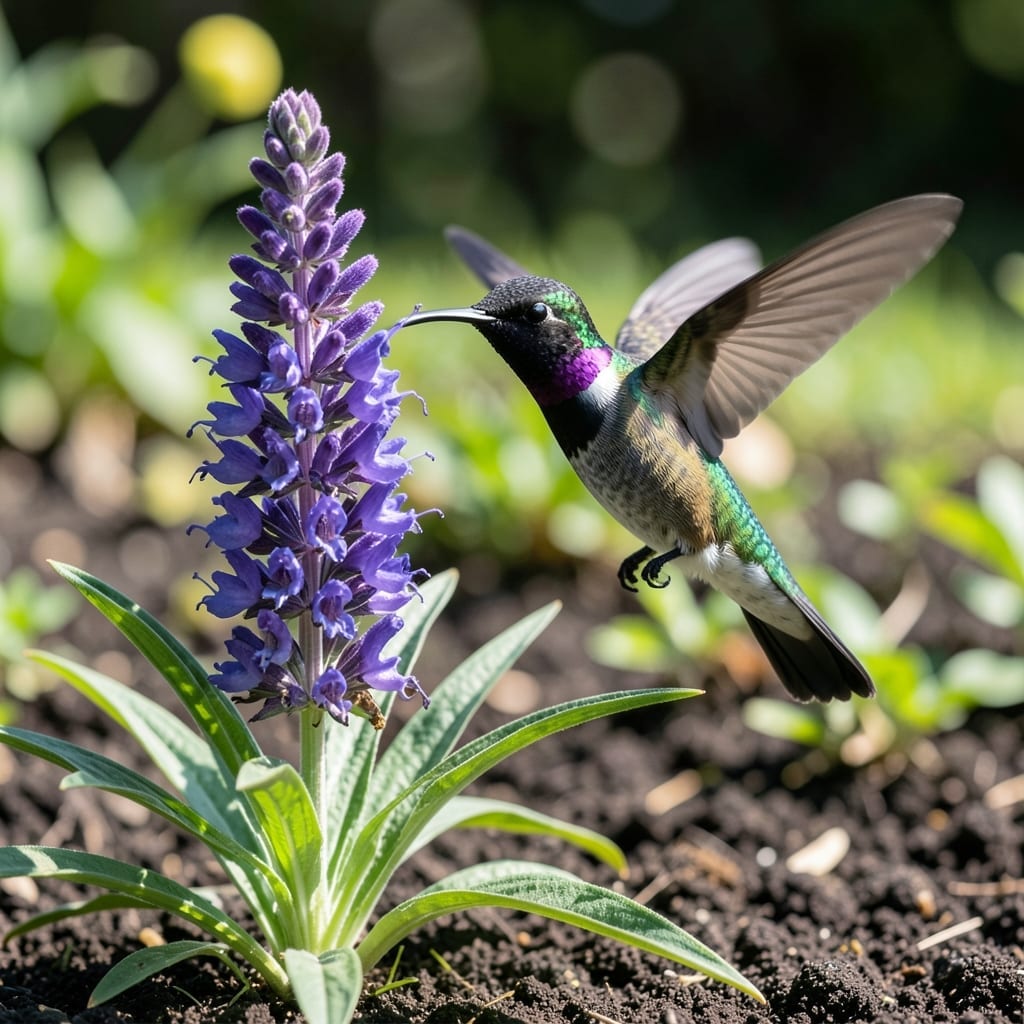
Male black-chinned hummingbirds have a distinctive black chin with an iridescent purple throat band, metallic green back and sides, and white chest. They are small, measuring about 3.5 inches long with a slender, straight bill.
I find their iridescence captivating—the purple gorget shimmers in sunlight like a tiny jewel, while the green plumage offers perfect camouflage among leaves. Their 3.5-inch size makes them agile fliers, darting between flowers with precision. Watching one hover reveals how their wings beat up to 50 times per second, a marvel of nature’s engineering. ✨
💡 In This Article
The male’s iridescent purple gorget isn’t just colorful—it’s structural. Tiny, light-refracting platelets in the feathers create this shimmering effect through interference, not pigment. This throat patch, called a gorget, appears deep black in shadow but explodes with violet hues in direct sunlight, serving as a visual signal to females during courtship displays. 🌟
Their metallic green back and sides come from melanin combined with those same light-reflecting structures. This coloration provides excellent camouflage against foliage while feeding. The contrast between the vibrant green and the stark white chest makes males instantly recognizable to both mates and rivals. 💫
Size matters in identification. At just 3.5 inches long and weighing about 0.1 ounces, they’re slightly smaller than a sparrow. Their wingspan reaches approximately 4.5 inches, enabling those signature 50 beats-per-second wing flaps that produce the characteristic humming sound. ⚡
Compare this to females, which lack the purple gorget entirely, instead featuring a pale throat with subtle streaking. Juvenile males may show only a few iridescent feathers until their first molt. The bill’s straight, slender shape—perfectly adapted for accessing nectar—remains consistent across ages and sexes. 🔥
Regional variations exist too. Western populations often display a more vivid purple in their gorgets compared to their eastern counterparts. This color intensity can also shift slightly based on the angle of sunlight, making identification a dynamic, ever-changing challenge for birdwatchers. ✨
Look for the iridescent purple throat band—only males have this vivid gorget. Females feature a pale throat with light streaking and lack the striking coloration. Males also have a darker, more uniform black chin.
The gorget’s color depends on light angles. In shadow or certain views, the iridescent feathers appear black. Direct sunlight reveals the vibrant purple hues. This structural coloration uses light interference, not pigment.
Shoot in early morning or late afternoon when sunlight hits the gorget directly. Use a fast shutter speed to freeze their motion. Position yourself so the light reflects off their throat at a slight angle.
They don’t sing but perform dramatic dives and loops during courtship. The purple gorget flashes brilliantly during these displays to catch a female’s attention. Their wing hums create a soft buzzing sound.