
Beautiful Plants For Your Interior
Beautiful Plants For Your Interior
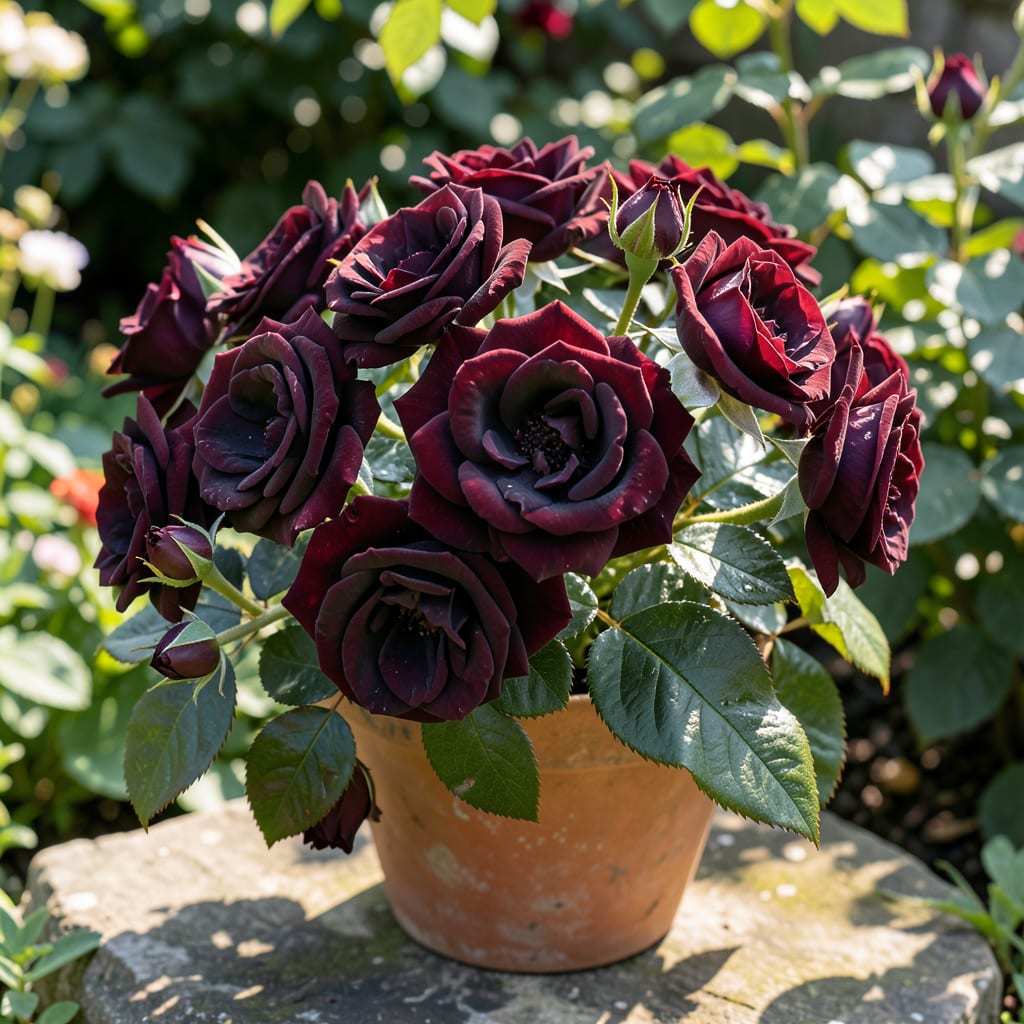
The first time I saw Black Cherry in full bloom, I understood the hype. Deep maroon petals so rich they look black in shade, with a fragrance that stops people mid-step.
This floribunda delivers season-long color with minimal fuss—plant in full sun, give it consistent moisture, and you’ll get clusters of velvety blooms from late spring until frost. It’s the kind of rose that makes neighbors ask for cuttings.
📚 In This Guide
Here’s the method I’ve refined over years to ensure these deep burgundy blooms thrive from spring to frost.
Choose a location with full sun (at least 6-8 hours daily) and well-draining soil. Black Cherry roses perform best in slightly acidic to neutral soil with a pH of 6.0-6.5. Test your soil with a kit if you’re unsure—this step prevents nutrient lockout and yellowing leaves.
Loosen the soil to a depth of 18-24 inches and mix in 2-3 inches of organic compost to improve fertility and drainage. Remove any weeds or debris, as they compete for nutrients and water. The bed should be wide enough to accommodate the mature spread of 3-4 feet per plant.
Dig a hole twice as wide and just as deep as the root ball. For container-grown roses, gently tease the roots apart if they’re circling the pot—this encourages outward growth. Place the rose in the hole so the graft union (the swollen area near the base) sits 1-2 inches below soil level in cold climates or at soil level in warmer zones.
Backfill the hole with the amended soil, firming it gently around the roots to eliminate air pockets. Water deeply with 1-2 gallons of water to settle the soil and hydrate the roots. You’ll know it’s done right when the soil feels damp 6 inches down.
Apply a 2-3 inch layer of organic mulch (such as shredded bark or straw) around the base, keeping it 2 inches away from the stem to prevent rot. Mulch conserves moisture, suppresses weeds, and insulates roots from temperature swings.
Water newly planted roses 2-3 times per week for the first 4-6 weeks, ensuring the soil stays consistently moist but not soggy. After establishment, reduce to 1-2 inches of water per week. Check soil moisture by sticking your finger 1 inch into the soil—if it feels dry, it’s time to water.
Feed your Black Cherry rose with a balanced, slow-release fertilizer (e.g., 10-10-10) in early spring as new growth emerges. Apply again after the first bloom cycle to encourage continuous flowering. Always follow the package instructions for amounts, as over-fertilizing leads to weak, leggy growth and fewer blooms.
Prune in late winter or early spring before new growth starts, removing dead, diseased, or crossing canes. Open up the center to improve air circulation, which reduces the risk of fungal diseases like powdery mildew. Use clean, sharp pruners and make cuts at a 45-degree angle just above an outward-facing bud.
Deadhead spent blooms regularly by snipping just above a 5-leaflet leaf to encourage new flower production. This rose is repeat-blooming, so consistent deadheading ensures waves of velvety, deep red-purple flowers all season.
Watch for common pests like aphids or Japanese beetles. A strong blast of water often dislodges aphids, while hand-picking or neem oil can control beetles. If black spot appears (dark spots on leaves), remove affected foliage and apply a fungicide as needed.
These insights will help you avoid the pitfalls I encountered while perfecting my rose planting technique.
The Sunlight Factor: That 6-8 hours daily of full sun isn’t just a suggestion—it’s critical for the deep burgundy blooms this variety is known for. I learned this the hard way when my first plant only managed 4 hours of sun and produced pale, lackluster flowers. Position your rose where it gets morning sun if possible, as this helps dry dew from leaves quickly, reducing disease risk.
Soil Preparation Matters: When loosening soil to 18-24 inches depth in Step 1, don’t rush this process. I’ve found that taking the time to properly amend with 2-3 inches of organic compost makes all the difference in drainage and nutrient availability. The bed width is equally important—those 3-4 feet of mature spread need room to thrive without competition.
Planting Depth Secret: For Step 2, that 1-2 inches below soil level placement for the graft union in cold climates is your insurance against winter dieback. In warmer zones, keeping it at soil level prevents suckering. I always double-check the graft union position before backfilling, as getting this wrong can stunt growth or kill the plant.
Watering Wisdom: The 1-2 gallons of water immediately after planting in Step 2 should penetrate 6 inches down—this is your first test of proper drainage. During those first 4-6 weeks of 2-3 times weekly watering in Step 3, resist the urge to overwater. Soggy soil is just as harmful as dry soil for establishing roots.
Water deeply 2-3 times a week, ensuring the soil stays moist but not soggy. During hot spells, increase frequency. Mulching helps retain moisture.
Prune in late winter or early spring, just as new growth begins. Remove dead or weak canes and shape the bush to encourage airflow and blooming.
Pair with low-growing perennials like lavender, catmint, or salvia. These complement the rose’s deep red blooms and help deter pests.
Yellow leaves often signal overwatering, nutrient deficiency, or fungal disease. Check soil drainage, fertilize with a balanced rose food, and treat with fungicide if needed.
Yes! Choose a large pot (at least 18 inches deep) with drainage holes. Use quality potting mix and ensure it gets 6+ hours of sunlight daily.
