
Beautiful Plants For Your Interior
Beautiful Plants For Your Interior
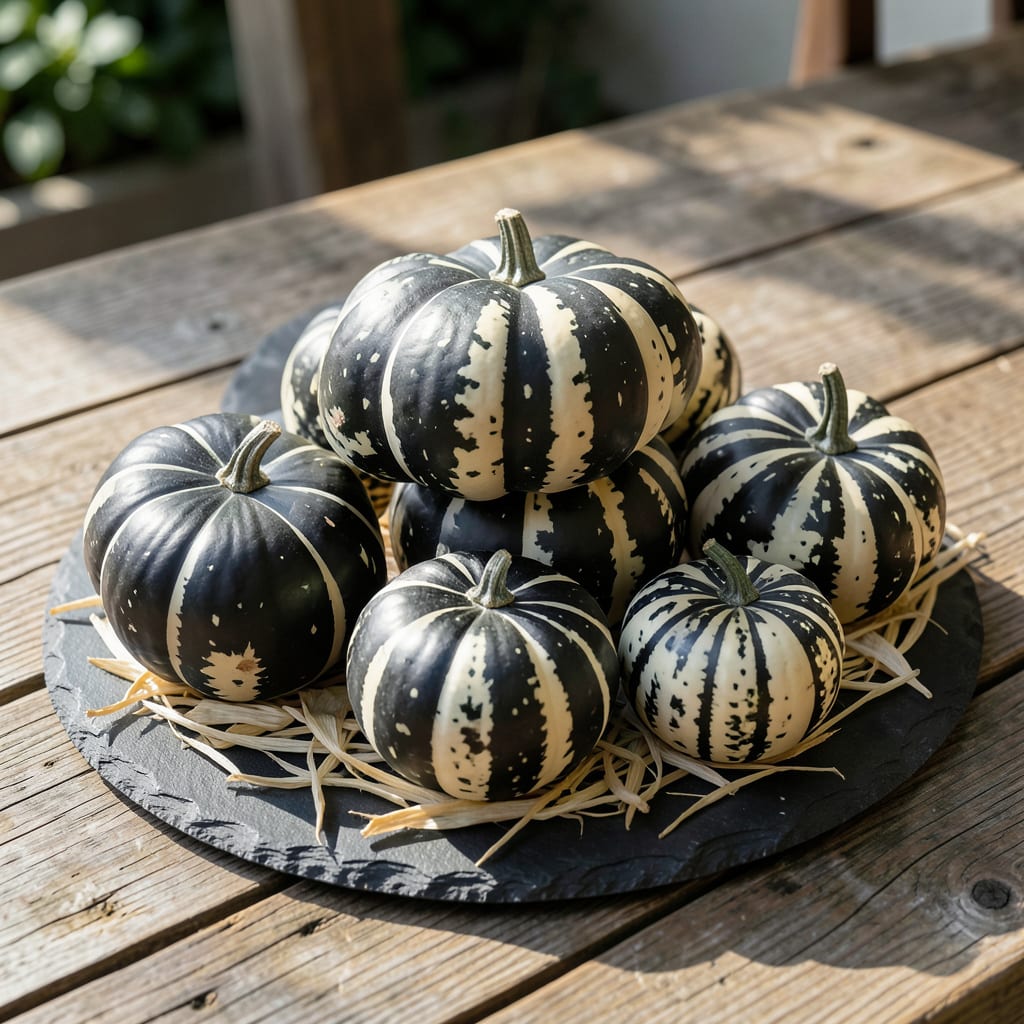
I fell hard for these pumpkins the first time I saw them in a neighbor’s fall display. The bold stripes create a statement that orange varieties just can’t match.
They grow just like regular pumpkins but need full sun and consistent water. You’ll get stunning results with minimal extra effort, and the unique look makes them perfect for porches, tablescapes, or even painting projects.
📚 In This Guide
These unique pumpkins are easier to grow than you might think, and they’ll steal the show in any fall display.
Start by choosing a striped pumpkin variety known for its dramatic black and white patterns, such as ‘Black Futsu’ or ‘Shiraz’. I’ve found that purchasing seeds from a reputable supplier ensures the best germination rates and truest color patterns. Avoid seeds labeled as “mixed” if you want consistent stripes.
Check the seed packet for the expected mature size, as some varieties grow larger than others. This helps you plan spacing in the garden. You’ll want at least one packet of seeds to get started, but I always grab an extra in case of poor germination.
Pumpkins thrive in well-draining soil rich in organic matter. Work in plenty of compost or aged manure into the top 12 inches of soil before planting. This gives the roots plenty of nutrients to support the vines’ rapid growth.
Choose a spot with full sun—at least 6-8 hours of direct sunlight daily. Without enough light, the vines will stretch and the fruit won’t develop properly. The soil temperature should be at least 60°F before sowing seeds directly outdoors.
Sow seeds 1 inch deep and 3-4 feet apart to give the vines room to spread. If you’re planting in rows, space the rows 6 feet apart. I like to plant seeds in small mounds to improve drainage and warm the soil faster.
Water the seeds gently but thoroughly after planting, and keep the soil consistently moist until germination, which typically occurs within 7-10 days. Once seedlings emerge, reduce watering slightly but ensure the soil never dries out completely.
As the vines grow, guide them gently to spread in the direction you want. I use a light touch to avoid breaking the tender stems. Once the plants start producing fruit, place a small piece of cardboard or a flat stone under each pumpkin to prevent rot and keep the stripes clean.
Fertilize the plants with a balanced, water-soluble fertilizer every 2-3 weeks to encourage healthy growth. Watch for the first signs of fruit, which will start as small green pumpkins. The black and white stripes will become more pronounced as they mature.
Pumpkins are ready to harvest when the rind is hard and the stripes are fully developed, usually after 90-120 days. Test the rind by pressing your fingernail into it—if it doesn’t puncture easily, it’s ready. I always use a sharp knife or pruning shears to cut the stem, leaving 2-3 inches attached.
Allow the pumpkins to cure in the sun for 7-10 days after harvesting to harden the skin further. Store them in a cool, dry place until you’re ready to use them in your fall displays. The bold stripes will make them the centerpiece of any arrangement.
These details will help you grow the most striking pumpkins for your fall displays.
Sunlight Secret: The 6-8 hours of direct sunlight daily is non-negotiable for vibrant stripes. I learned this the hard way when my first attempt produced pale, weak patterns. Position your garden bed where it gets full morning sun—this gives the vines the energy they need to develop those dramatic black and white contrast.
Soil Temperature Tip: Don’t rush planting until your soil reaches at least 60°F. I use a simple soil thermometer to check. Cold soil slows germination and can lead to weak plants that never develop proper color. If you’re impatient like me, those small mounds in Step 3 warm up faster than flat ground.
Spacing Strategy: The 3-4 feet apart spacing in Step 3 might seem excessive, but these vines spread aggressively. I once crowded my plants and ended up with tangled messes that were impossible to guide properly. Give them room to breathe, and you’ll get cleaner growth and more pronounced stripes.
Harvest Timing: That 90-120 day range in Step 5 is crucial. I’ve found that Black Futsu varieties often hit their stride closer to 100 days, while Shiraz can take the full 120. Test the rind hardness weekly once you hit day 90—the fingernail test is the most reliable indicator.
Yes! Varieties like ‘Pepitas’ or ‘One Too Many’ thrive in home gardens with full sun, well-draining soil, and consistent watering. Start seeds indoors 4-6 weeks before the last frost for a head start.
Plant seeds outdoors after the last spring frost when soil temperatures reach 60°F. For a fall harvest, sow seeds 90-120 days before your first expected frost.
Try ‘Jarrahdale’ (blue-gray), ‘Cinderella’ (red-orange), or ‘White Ghost’ pumpkins for equally stunning, non-traditional fall decor.
Uneven coloring often results from inconsistent sunlight or watering. Ensure stable growing conditions and avoid over-fertilizing, which can dilute pigmentation.
