
Beautiful Plants For Your Interior
Beautiful Plants For Your Interior
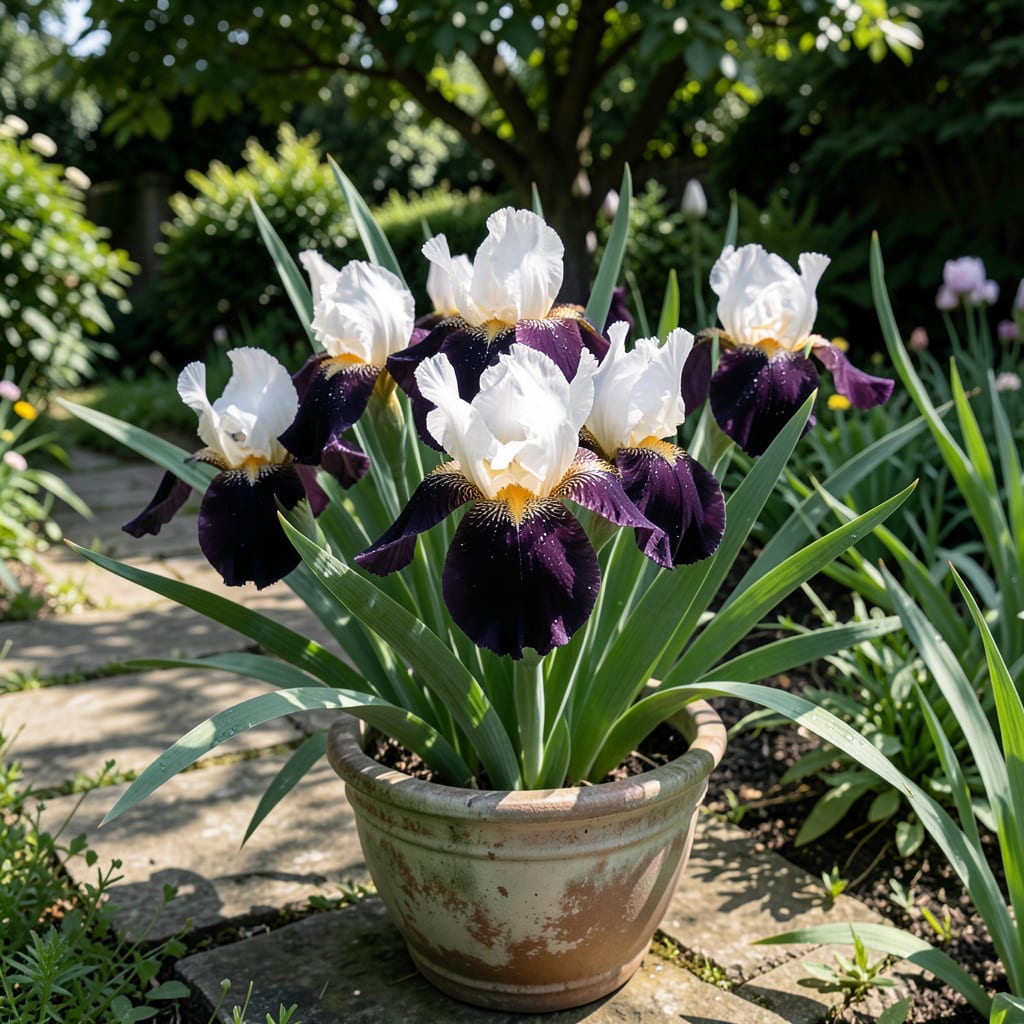
Black and white iris bring dramatic flair to any border. I planted my first clump three springs ago and they’ve spread into a stunning focal point that stops neighbors in their tracks.
They thrive in full sun to partial shade with well-draining soil. Give them consistent moisture early on, then step back—they’re low-maintenance once established. The contrast is pure garden elegance.
📚 In This Guide
This method ensures bold, dramatic blooms that stand out in any border arrangement.
Choose a site that receives full sun to partial shade, as black and white iris varieties thrive with 6+ hours of direct sunlight daily. The more sun they get, the more vibrant the contrast between the dark falls and white standards will appear.
Ensure the soil is well-draining—iris rhizomes rot easily in soggy conditions. If your garden has heavy clay, amend with compost or plant in raised beds. A slight slope helps prevent water from pooling around the roots during heavy rains.
Work the soil to a depth of 12-15 inches, removing weeds and breaking up clumps. Iris prefer slightly acidic to neutral soil (pH 6.8-7.0), so test your soil if you’re unsure. Mix in a handful of bone meal or superphosphate to encourage strong root development.
Real talk: Iris are low-maintenance, but they hate competition. Keep the planting area free of other aggressive plants that might steal nutrients or space.
Dig holes 4 inches deep and 12-24 inches apart, depending on the mature spread of your variety. Place each rhizome horizontally in the hole, with the top slightly exposed to sunlight—this prevents rot and encourages blooming.
Here’s the thing—iris need to bake a little. The exposed rhizome should be visible at soil level after planting. Water lightly after planting to settle the soil, but avoid overwatering. You’ll see new growth emerging in 2-3 weeks if conditions are right.
Water deeply once a week during the first growing season, providing about 1 inch of water per week. After establishment, iris are drought-tolerant and only need watering during extended dry spells.
I’ve found that morning watering works best—it allows foliage to dry before evening, reducing disease risk. If leaves begin to yellow, that’s your signal to check soil moisture—either too much or too little water causes this issue.
Remove spent blooms promptly to prevent seed formation, which diverts energy from next year’s flowers. In late fall, cut back foliage to 6 inches above the ground to reduce pest overwintering.
Divide clumps every 3-4 years when blooms decrease. This rejuvenates the plants and gives you more to expand your border. The best time for division is 6-8 weeks after blooming, when the rhizomes are storing energy for next year.
These insights will help you grow stunning blooms with minimal effort.
Sunlight Optimization: In Step 1, ensure your planting site truly gets those 6+ hours of direct sunlight daily. I’ve found that morning sun combined with afternoon shade works particularly well for maintaining that dramatic color contrast between the dark falls and white standards.
Soil Preparation Tip: When working the soil to 12-15 inches deep in Step 2, don’t skip testing the pH. Iris thrive in that 6.8-7.0 range, and I always amend with compost first if my soil test shows any extremes. This prevents nutrient lockout that can stunt growth.
Planting Depth Matters: For Step 3, remember that 4-inch depth is critical. I learned the hard way that planting too deep causes rot, while too shallow exposes rhizomes to winter damage. That slight exposure to sunlight mentioned in the instructions is actually the sweet spot for both health and blooming.
Watering Wisdom: The 1 inch per week guideline in Step 4 works perfectly, but here’s what nobody tells you—morning watering isn’t just about disease prevention. It also allows the plants to absorb moisture more efficiently before the day’s heat sets in.
Plant rhizomes in well-draining soil with full sun to partial shade. Water moderately and avoid overwatering. These irises thrive in USDA zones 3-9 and bloom best with occasional fertilizer in early spring.
The ideal time is late summer to early fall (August–September). This allows roots to establish before winter. For warmer climates, early spring planting also works.
Yes! Try Black Adder agastache or Queen of Night tulips for dark blooms. Pair with white daisies or lamb’s ear for a similar striking contrast.
Common issues include too much shade, overcrowded rhizomes, or poor drainage. Divide clumps every 3-4 years and ensure they get 6+ hours of sunlight daily.
Absolutely! Use a large pot with drainage holes and a well-draining potting mix. Water when the top inch of soil is dry, and move pots indoors in freezing winters.
