
Beautiful Plants For Your Interior
Beautiful Plants For Your Interior
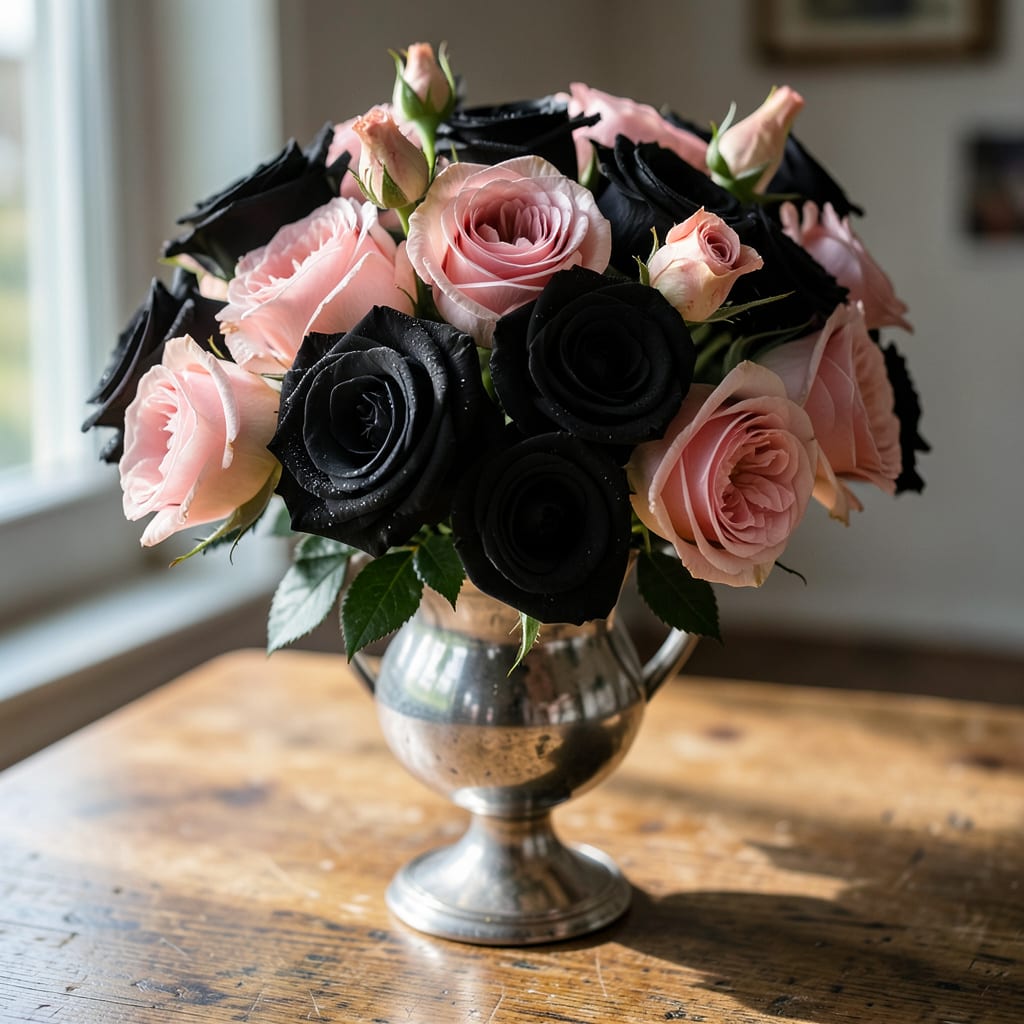
Black and pink roses create a bold, romantic statement in any garden. I’ve found this color combo adds depth and drama, especially when planted in clusters along walkways or near seating areas.
Pair them with white or silver foliage plants to make the colors pop, or use deep purple companions for a moody, elegant look. The contrast is stunning and works in both formal and cottage-style gardens.
📚 In This Guide
This dual-tone beauty is simpler to cultivate than it looks with the right approach.
Choose a black rose variety like ‘Black Baccara’ and pair it with a pink rose such as ‘Cecile Brunner’ for striking contrast. I’ve found that planting these together creates a dramatic visual effect without overwhelming the garden. Select a location with full sun (at least 6-8 hours daily) and well-draining soil.
Avoid low-lying spots where cold air settles or areas with heavy clay soil. The ideal spot feels warm to the touch by mid-morning and stays consistently moist but never soggy after watering.
Amend the soil with 2-3 inches of compost or well-rotted manure to improve fertility and drainage. Dig a hole twice as wide and deep as the root ball of each rose. This gives roots room to spread without crowding.
Space the black and pink varieties 18-24 inches apart to allow for air circulation and prevent disease. If planting multiple roses in a row, stagger them so the black and pink blooms alternate naturally.
Place each rose in its hole so the graft union (the bulge near the base) sits 1-2 inches below soil level in cold climates or at soil level in warmer zones. Backfill with the amended soil, pressing gently to eliminate air pockets.
Water deeply after planting, ensuring the soil is moist to a depth of 12 inches. For the first 2-3 weeks, keep the soil consistently damp but not waterlogged. You’ll know it’s right when the top inch of soil feels dry to the touch before the next watering.
Prune both varieties in early spring, just as new growth begins. Remove dead, diseased, or crossing canes first. Then shape the plant by cutting back one-third of the previous year’s growth to encourage vigorous blooming.
Deadhead spent blooms regularly by cutting just above a five-leaflet leaf. This redirects energy into new growth and more flowers. Watch for yellowing leaves or black spots, which signal overwatering or fungal issues—adjust care immediately if you notice these signs.
Apply a balanced rose fertilizer every 4-6 weeks during the growing season, following package instructions. I prefer organic options, which feed the soil as well as the plant. Stop fertilizing 6-8 weeks before the first frost to allow the roses to harden off for winter.
Check leaves weekly for aphids, thrips, or spider mites, especially on the undersides. A strong blast of water often dislodges pests early. For persistent issues, use insecticidal soap or neem oil, but avoid spraying when temperatures exceed 85°F to prevent leaf burn.
These practical insights will help you avoid common pitfalls when cultivating your dual-tone roses.
Sunlight Essentials: The 6-8 hours of daily full sun mentioned in Step 1 isn’t just a suggestion—it’s critical for vibrant blooms. I learned this the hard way when my first batch of roses produced weak, pale flowers in partial shade. Position your roses where they’ll get that morning sun, which is gentler than harsh afternoon rays.
Planting Depth Matters: In Step 3, when placing your roses in the hole, pay special attention to that 1-2 inch depth for the graft union in cold climates. Planting too shallow can expose the graft to winter damage, while too deep might smother the plant. I use a ruler to measure exactly—it’s worth the extra 30 seconds.
Watering Wisdom: Those first 2-3 weeks after planting are crucial, as noted in Step 3. The 12-inch moisture depth means you’ll need to water slowly and deeply rather than frequent shallow waterings. I check by pushing a wooden dowel into the soil—if it comes out clean below the top inch, it’s time to water again.
Pest Prevention Timing: The 85°F threshold in Step 5 for spraying pesticides isn’t arbitrary. I once ignored this and sprayed neem oil on a 90°F day, only to watch my rose leaves develop unsightly brown spots. Early morning or evening applications work best when temperatures are cooler.
Black roses often represent mystery, farewell, or rebirth, while pink roses symbolize love, gratitude, and admiration. Together, they create a striking contrast that conveys deep emotion and elegance, perfect for romantic or meaningful occasions.
Keep them in well-draining soil, water regularly (but avoid overwatering), and provide 6+ hours of sunlight daily. Prune dead blooms to encourage new growth. Black roses may need extra protection from harsh sunlight to maintain their deep hue.
Absolutely! Pairing them enhances visual contrast. Ensure both varieties have similar sunlight, water, and soil needs. Space them 2-3 feet apart to allow airflow and prevent disease. A mix of heights adds dimension to your garden.
Most “black” roses are deep burgundy or purple, like the ‘Black Baccara.’ True black roses don’t exist naturally—some florists dye white roses black. For a natural look, opt for dark varieties instead of dyed ones.
Try deep purple roses (e.g., ‘Night Owl’) or dark red varieties (e.g., ‘Onyx’) for a similar dramatic effect. Pair them with soft pink roses like ‘Sweet Drift’ for a balanced, elegant contrast.
