
Beautiful Plants For Your Interior
Beautiful Plants For Your Interior
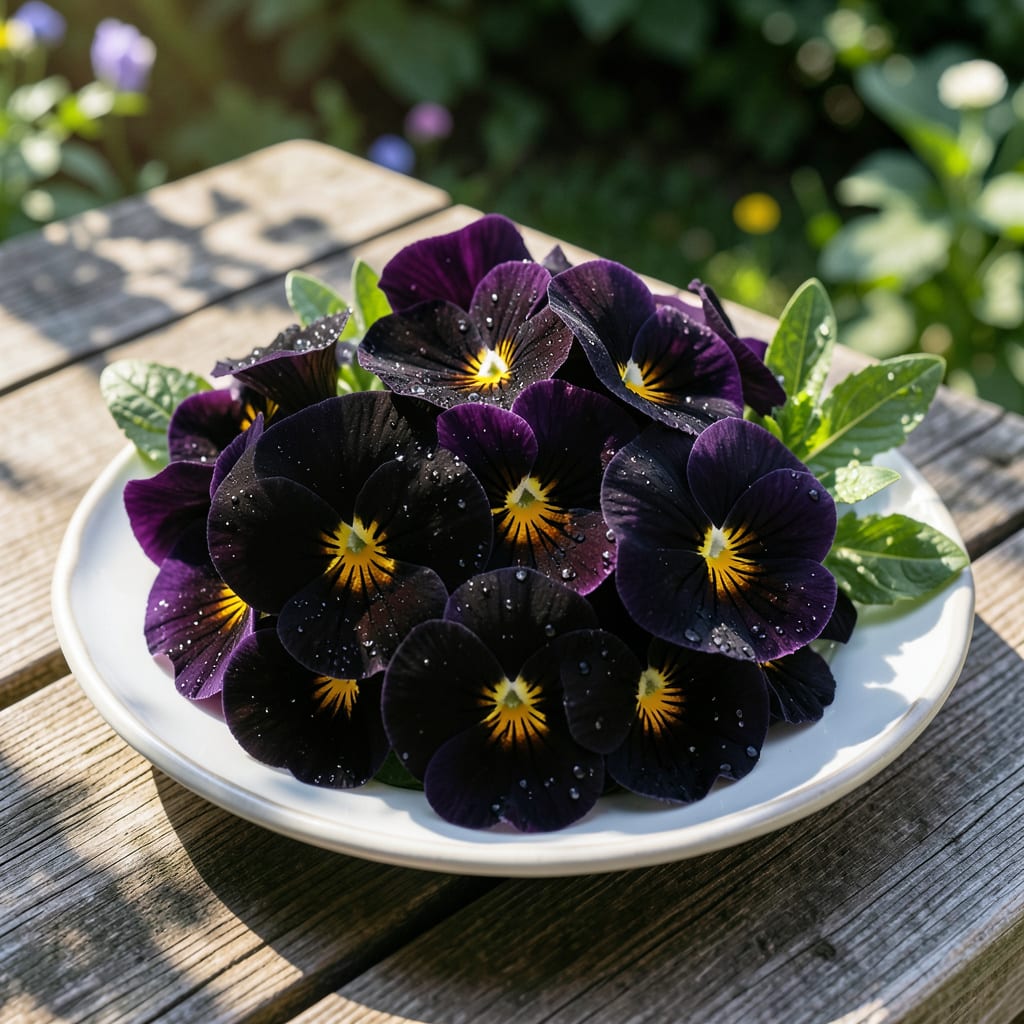
Black and gold pansies bring a touch of drama to any garden. I was skeptical at first—those deep purple-black petals with golden centers seemed too bold, but they quickly became my favorite for adding contrast to borders and containers.
These cold-hardy blooms thrive in partial shade and well-draining soil, rewarding you with vibrant color from early spring through fall. They’re low-maintenance, drought-tolerant once established, and perfect for adding a little elegance to your space.
📚 In This Guide
Here’s the method I rely on to grow these striking bicolor blooms with consistent success.
Choose a spot with full sun to partial shade, as these pansies thrive in 6-8 hours of sunlight daily. I’ve found they tolerate morning shade well, but too much afternoon shade leads to leggy growth and fewer flowers. Ensure the soil is well-draining—pansies hate soggy roots, which quickly rot in heavy or clay soils.
Test drainage by digging a 12-inch hole and filling it with water. If it drains within 1-2 hours, you’re good to go. If not, amend with compost or sand to improve structure. The pH should be slightly acidic to neutral (6.0-7.0), which most garden soils naturally provide.
Loosen the soil to a depth of 8-10 inches and mix in a 2-3 inch layer of organic matter like compost or well-rotted manure. This boosts fertility and improves moisture retention without waterlogging. I always rake the surface smooth to ensure even water distribution later.
If planting in containers, use a high-quality potting mix with perlite or vermiculite for drainage. Containers should be at least 6 inches deep with drainage holes. Space plants 6-8 inches apart to allow for air circulation, which prevents fungal issues like powdery mildew.
Dig a hole slightly larger than the root ball of your pansy starts. Place the plant in the hole so the top of the root ball sits just above the soil line—burying it too deep can cause stem rot. Gently firm the soil around the base to eliminate air pockets, which can dry out roots.
Water immediately after planting with 1 inch of water to settle the soil. I use a watering can with a rose attachment to avoid disturbing the soil or damaging delicate stems. Mulch with a 1-inch layer of organic material like straw or shredded bark to retain moisture and suppress weeds.
Keep the soil consistently moist but not soggy. Water at the base of the plant in the morning to allow foliage to dry before evening, reducing disease risk. During dry spells, you may need to water every 2-3 days, but always check the top inch of soil—if it’s dry, it’s time to water.
Fertilize lightly every 2-3 weeks with a balanced, water-soluble fertilizer (like 10-10-10). Deadhead spent blooms regularly by pinching them off at the base of the stem. This encourages continuous flowering and prevents the plant from putting energy into seed production instead of new blooms.
These pansies are cold-hardy and can tolerate light frosts, but extreme cold (below 25°F) may damage them. If a hard freeze is forecasted, cover plants with a frost cloth or old bedsheet overnight. In hot climates, provide afternoon shade to prevent heat stress, which causes wilting and reduces flowering.
Watch for pests like aphids or slugs, which are attracted to tender pansy foliage. A strong spray of water can dislodge aphids, while beer traps or diatomaceous earth work well for slugs. Regularly inspect the undersides of leaves for early signs of trouble.
These practical insights will help you grow healthy, vibrant blooms without the common pitfalls.
Sunlight Strategy: In Step 1, those 6-8 hours of sunlight daily are non-negotiable for compact, floriferous plants. I learned the hard way that more than 4 hours of afternoon shade creates leggy, sparse specimens. Morning sun with afternoon dappled shade works best in hotter climates.
Drainage Test: The 1-2 hour drainage test in Step 1 is your best insurance against root rot. Dig that 12-inch hole, fill it with water, and time it precisely. If water remains after 2 hours, amend with compost—not sand alone, which can create concrete-like conditions.
Planting Depth: Step 3’s instruction to keep the root ball slightly above soil level prevents stem rot. I’ve ruined plants by sinking them too deep, thinking it would stabilize them. Firm the soil gently but never pack it down—pansy roots need oxygen as much as moisture.
Cold Protection: The below 25°F threshold in Step 5 is critical. Don’t wait until frost arrives to cover plants—check the forecast and act preemptively. A simple old bedsheet works in a pinch, but frost cloth breathes better and prevents condensation damage.
Plant them in well-draining soil with partial to full sun. Keep the soil moist but not waterlogged, and fertilize lightly every 2-3 weeks for vibrant blooms.
Sow seeds indoors 8-10 weeks before the last frost, or plant transplants in early spring or fall. They thrive in cooler temperatures (50-70°F).
Yes! Use a container with drainage holes and potting mix. They’re perfect for adding color to patios, balconies, or window boxes.
Wilting often signals underwatering or heat stress. Water consistently and provide afternoon shade in hot climates to revive them.
Try violas, like ‘Blackout’ or ‘Molly Sanderson,’ for deep purples and yellows. Marigolds or petunias also offer bold, contrasting colors.
