
Beautiful Plants For Your Interior
Beautiful Plants For Your Interior
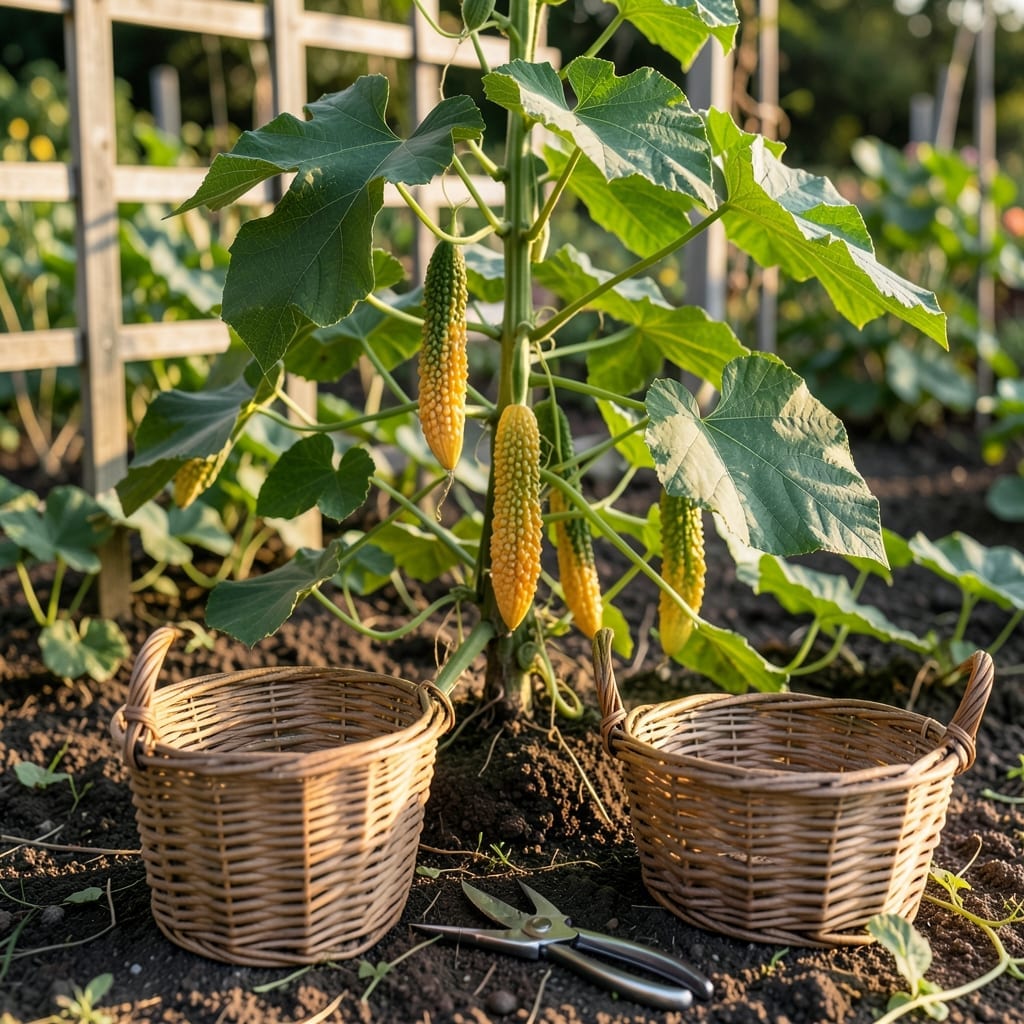
There’s nothing more disappointing than cutting into a bitter melon only to find it’s not quite ready. The 🥒Bitter Melon can be a finicky fruit when it comes to ripeness.
Timing your harvest perfectly ensures the best flavor and texture. In Zone 6, the window is narrow, and missing it means wasted effort.
I’ll show you the key visual cues—color shifts, bumpy textures, and subtle changes—that signal your bitter melons are at their peak.
Discover how to avoid the common pitfalls of picking too early or too late, so every harvest is just right.


The bitter melon goes through distinct color changes as it ripens, starting from a deep green and transitioning to a vibrant yellow or orange. This progression is your first visual clue.
I always check the surface texture too. A ripe bitter melon develops pronounced bumps and ridges, which become more defined as it matures.
| Ripeness Stage | Color | Texture |
|---|---|---|
| Unripe | Dark green | Smooth |
| Ripening | Bright green | Bumpy |
| Ripe | Yellow/orange | Very bumpy |
The size of the fruit also matters. Most varieties reach 4-6 inches long at peak ripeness. Smaller fruits may still be developing.
Another telltale sign is the stem near the fruit. When it begins to yellow slightly, your bitter melon is likely ready for harvest.
I’ve noticed that varietal differences can affect these cues. For example, Indian bitter melons tend to stay greener longer, while Chinese varieties often turn yellow more quickly.
The sheen of the skin can also indicate ripeness. A ripe bitter melon often has a slightly dull finish rather than a glossy appearance, which is common in unripe fruits.
If you’re growing multiple plants, compare fruits across vines. This helps you spot the subtle differences between nearly ripe and fully ripe melons.
Remember, the bumpy texture is a key indicator. The more pronounced the bumps, the closer the fruit is to its peak ripeness. 🌿
For the best results, I recommend checking your plants every 2-3 days once fruits start to form. This way, you won’t miss the optimal harvest window. 🌱
While color and appearance are great indicators, the tactile test is just as important for determining ripeness. I always start by gently squeezing the fruit to check its firmness.
A ripe bitter melon should feel firm but slightly yielding. If it’s rock hard, it’s not ready yet. If it’s soft or squishy, it’s likely overripe.
🌱 Key Takeaway: A ripe bitter melon feels firm with slight give when pressed. Overripe fruits become soft and mushy, while unripe ones stay very hard.
The skin texture also changes as the fruit ripens. Early on, the skin is smooth and waxy. As it matures, the bumps become more pronounced and the surface develops a slightly rough feel.
I pay attention to the sound it makes when tapped. A ripe bitter melon produces a hollow sound, while an unripe one sounds more solid. This is a quick test I use in the garden.
Another good check is the stem end. When the fruit is ripe, the area around the stem often yellows slightly and may feel a bit softer than the rest of the fruit.
For the most accurate results, I combine the tactile test with visual cues. This way, I’m confident I’m harvesting at the perfect stage for the best flavor and texture. 🌿