
Beautiful Plants For Your Interior
Beautiful Plants For Your Interior
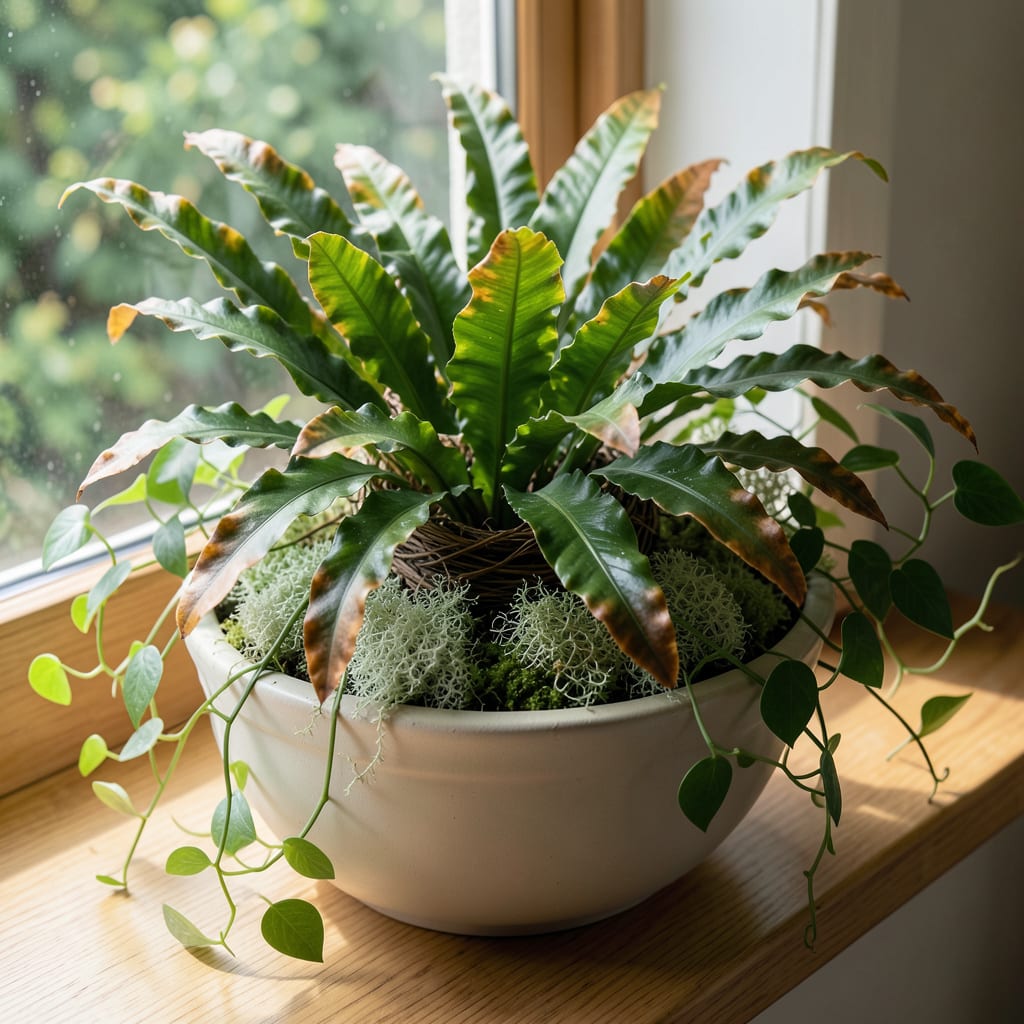
Brown tips on your bird’s nest fern always mean one thing: your plant is talking to you. I learned to listen the hard way after killing two ferns before figuring out their simple language.
The usual suspects are low humidity, inconsistent watering, or too much fertilizer. These tropical natives hate dry air and soggy roots equally. Get either wrong and those crispy tips appear like clockwork.
Fixing it starts with matching their natural conditions. A pebble tray with water boosts humidity, while letting the top inch of soil dry between waterings prevents rot. Most ferns bounce back within 2-3 weeks of consistent care.
Prevention is simpler than cure. Once you nail the balance, those fronds stay lush and green with almost no effort. Here’s how to get it right the first time.
The brown tips on your bird’s nest fern (Asplenium nidus) are often a sign of stress, usually tied to environmental or care imbalances. Below are the most common causes, explained with actionable insights to help you diagnose and fix the issue.
Bird’s nest ferns are tropical plants that thrive in 60-80% humidity. Dry air—common in heated or air-conditioned homes—causes the leaf edges to desiccate, turning crispy and brown. This happens because the plant loses moisture faster than it can absorb it from the soil. A humidity tray or room humidifier can quickly restore balance.
Inconsistent watering disrupts the fern’s root health. Overwatering suffocates roots, leading to rot and nutrient uptake failure, while underwatering starves the plant of essential moisture. Aim for evenly moist (not soggy) soil—water when the top 1-2 inches feel dry. Use a well-draining potting mix with perlite or orchid bark to prevent waterlogging.
Tap water often contains chlorine, fluoride, or dissolved salts that accumulate in the soil over time, burning the delicate root tips. This toxicity manifests as brown, crispy leaf edges. Switch to filtered, distilled, or rainwater for irrigation, and flush the soil every few months to leach out excess minerals.
Direct sunlight or proximity to heat sources (radiators, vents) scorches the fern’s foliage, causing localized browning. Bird’s nest ferns prefer bright, indirect light and temperatures between 60-75°F (15-24°C). Move the plant to a shadier spot and keep it away from drafts or hot surfaces.
Sap-sucking pests like spider mites or mealybugs weaken the plant by extracting fluids, leaving behind brown, dried-out tips. Inspect the fronds (especially the undersides) for webbing or cottony clusters. Treat infestations with neem oil or insecticidal soap, and isolate the plant to prevent spread.
Addressing brown tips on your bird’s nest fern starts with identifying the root cause and applying the right fix. Here’s how to tackle the most common issues:
If dry air is the culprit, increase humidity around your fern. Mist the fronds daily with room-temperature water, or place a pebble tray filled with water beneath the pot. For a hands-off approach, use a humidifier set to 50-60%. Prevention tip: Group humidity-loving plants together to create a microclimate. 💡
Revive a thirsty fern by soaking the soil until water drains from the bottom. Let the top inch of soil dry out between waterings, but never let it dry completely. Use a moisture meter to take the guesswork out of timing. Prevention tip: Water deeply but less frequently—consistency is key. ✨
If soggy soil is the issue, repot the fern in fresh, well-draining mix (add perlite or orchid bark). Trim any black, mushy roots with sterilized scissors. Prevention tip: Always use pots with drainage holes and empty saucers after watering. 🎯
Move your fern to bright, indirect light—east or north-facing windows are ideal. If tips crisp under harsh sun, add a sheer curtain as a filter. Prevention tip: Rotate the pot weekly for even exposure. 🌿
White crust on the soil or pot edges signals salt buildup. Flush the soil by running water through it for 5 minutes, letting it drain freely. Repeat every 2-3 months. Prevention tip: Use distilled or rainwater to avoid mineral buildup. 💦
Mist daily if humidity is below 50%, or use a pebble tray. Focus on the air around the leaves, not just the soil.
No, once the tips are brown and crispy, they won’t recover. Trim them off with clean scissors to help the plant focus on new growth.
Use filtered, distilled, or rainwater to avoid mineral buildup. Tap water can cause tip burn if it’s high in chlorine or salts.
Check for soggy soil, yellowing fronds, or a foul smell. Let the top 1-2 inches of soil dry before watering again.
