
Beautiful Plants For Your Interior
Beautiful Plants For Your Interior
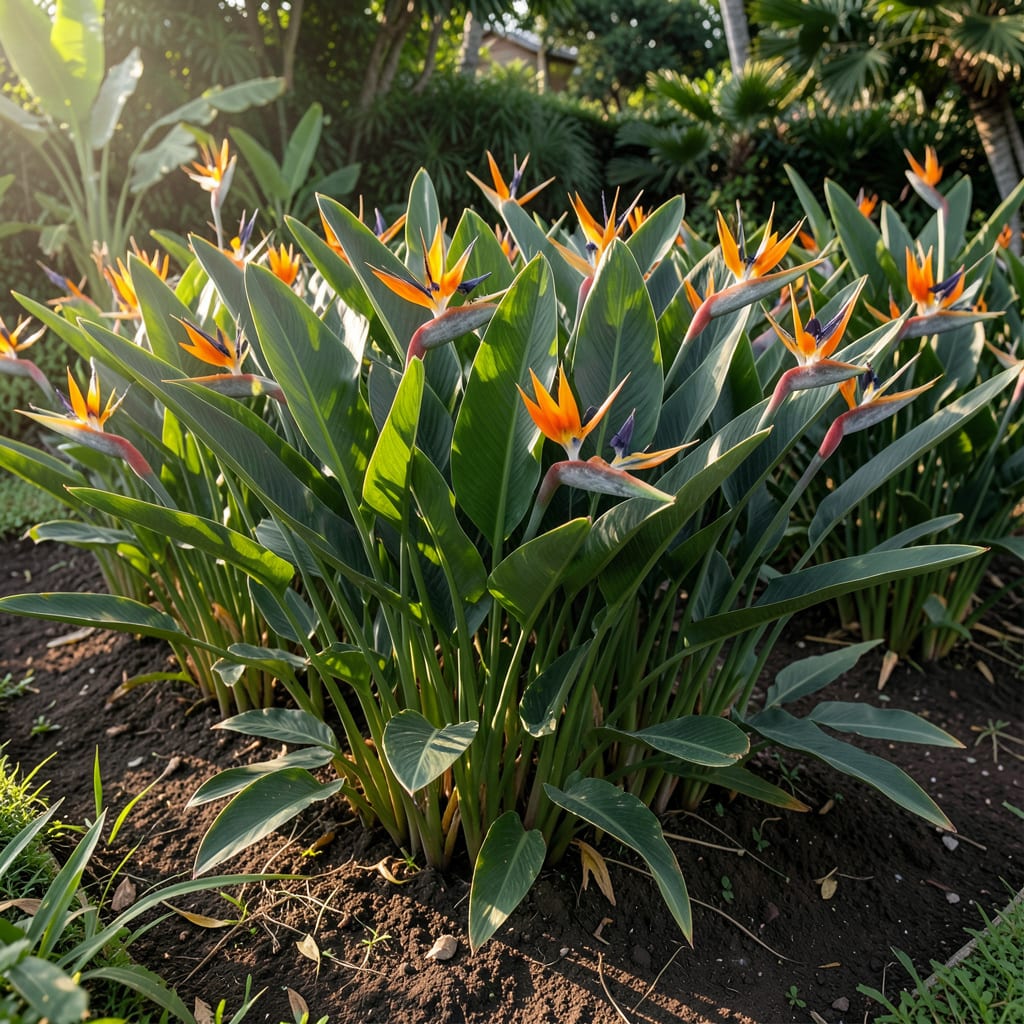
I transformed my boring fence line into a lush tropical barrier with bird of paradise. These plants create privacy with their bold, architectural leaves while adding exotic flair to any yard.
Spacing them 3-4 feet apart gives dense coverage in 2-3 years. Regular pruning keeps the height manageable and encourages that signature fan shape that makes these hedges so striking.
📚 In This Guide
Here’s the method I rely on for creating a lush, tropical privacy screen.
Select a site with full sun to partial shade—these plants thrive in bright conditions but tolerate some afternoon shade in hotter climates. The area should have well-draining soil, as bird of paradise roots rot easily in waterlogged conditions. I always test drainage by digging a 12-inch hole and filling it with water; if it drains within 1-2 hours, you’re good to go.
Space plants 3-4 feet apart to create a dense hedge as they mature. Mark the positions with stakes to visualize the layout before planting. This spacing accounts for their eventual 6-8 foot spread at maturity.
Dig holes that are twice as wide and just as deep as the root ball. For container-grown plants, this usually means holes about 18-24 inches wide. Loosen the soil at the sides of each hole to encourage root expansion into the surrounding earth.
Remove plants from their containers and gently tease apart any circling roots. This prevents girdling as the plant establishes. If roots are tightly bound, make three vertical cuts through the root ball with a clean knife—it sounds drastic, but it stimulates outward growth.
Place each plant in its hole so the top of the root ball sits 1-2 inches above the surrounding soil level. This slight elevation prevents settling that could bury the stem too deeply. Bird of paradise stems are prone to rot if planted too low.
Backfill with native soil, tampering gently as you go to remove air pockets. Water thoroughly after planting, using 5-10 gallons per plant to settle the soil. You’ll know it’s working when the water pools briefly then disappears within minutes.
Water deeply 2-3 times weekly for the first month, then reduce to once weekly once established. The goal is to keep soil consistently moist but not soggy. I check by inserting my finger 2-3 inches deep—if it feels dry, it’s time to water.
Fertilize monthly during the growing season with a balanced 10-10-10 formula. Apply according to package instructions, but always water before and after to prevent root burn. You’ll see new growth respond within 2-3 weeks of the first application.
Begin shaping your hedge after the first growing season. Use clean, sharp pruners to remove any damaged or crossing branches first. Then trim the outer growth to encourage bushier development. I prune in early spring before new growth begins.
Make cuts at a 45-degree angle just above a leaf node to direct new growth outward. Never remove more than one-third of the plant at a time. Regular light pruning produces denser foliage than infrequent heavy cuts.
These insights will help you avoid pitfalls and grow a thriving tropical privacy screen.
Drainage Test: In Step 1, that 12-inch hole drainage test is non-negotiable. If water doesn’t disappear within 1-2 hours, amend the soil with compost or sand before planting. I’ve seen more bird of paradise plants die from soggy roots than any other issue. Between us, I learned this the hard way after losing three plants my first year.
Root Preparation: For Step 2, don’t skip teasing apart those circling roots. Make those three vertical cuts through the root ball if it’s tightly bound—this isn’t just advice, it’s a necessity. The cuts force roots to grow outward into the surrounding soil rather than continuing to circle, which eventually chokes the plant.
Planting Height: In Step 3, planting the root ball 1-2 inches above soil level prevents stem rot. I use a level across the hole to ensure consistency. Trust me on this: burying the stem too deeply is the second most common reason these plants fail.
Bird of paradise plants grow moderately fast, typically adding 1-2 feet per year under ideal conditions. With proper care, sunlight, and watering, they can reach hedge height (6-8 feet) in 3-5 years.
Plant in early spring or fall to avoid extreme heat or cold. This gives roots time to establish before summer stress or winter dormancy. Warm climates allow year-round planting with extra watering.
Yes! Consider clumping bamboo, hibiscus, or croton for similar tropical vibes. Each has unique care needs, so choose based on your climate, sunlight, and maintenance preferences.
Yellow leaves often signal overwatering, poor drainage, or nutrient deficiencies. Check soil moisture (let it dry slightly between waterings) and ensure proper fertilization with a balanced, slow-release product.
Prune 1-2 times yearly to maintain shape and density. Remove dead or damaged fronds anytime, and trim back overgrowth in early spring before new growth starts. Always use clean, sharp tools!
