
Beautiful Plants For Your Interior
Beautiful Plants For Your Interior
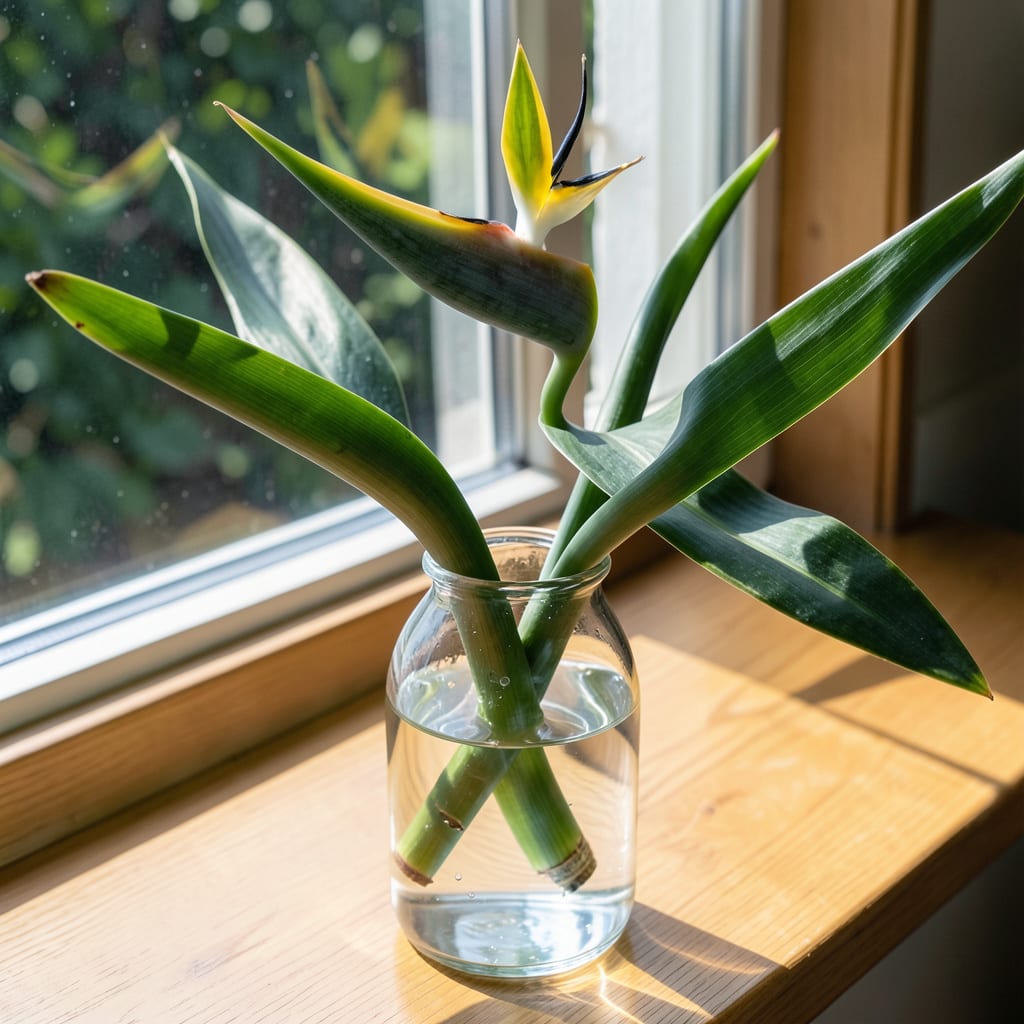
Last summer, I turned one Bird of Paradise into five with just a few snips. The process is simpler than it looks, and the reward is watching those dramatic leaves unfurl all over again.
You’ll need sharp tools, a little patience, and the right conditions to coax those cuttings into roots. I’ve learned the hard way which steps make or break the process—now my success rate is near 100%.
📚 In This Guide
Here’s the method I rely on for propagating bird of paradise from cuttings—it works every time.
Choose a mature stem with at least two to three nodes (the small bumps where leaves emerge). I look for a stem that’s 12-18 inches long and healthy, with no signs of disease or damage. The best time to take cuttings is in spring or early summer when the plant is actively growing.
Using clean, sharp pruning shears, make a 45-degree cut just below a node. This increases the surface area for rooting and helps the cutting absorb water more efficiently. Remove any lower leaves, leaving only the top two to three to reduce stress on the cutting while it roots.
Dip the cut end of the stem into rooting hormone (optional but highly recommended for faster results). Tap off any excess powder—too much can inhibit rooting rather than help it. I’ve found that this step significantly boosts success rates, especially for slower-rooting plants like bird of paradise.
Place the cutting in a well-draining rooting medium, such as perlite or a mix of peat and sand. Insert it about 2 inches deep and firm the medium gently around the stem to hold it upright. Keep the medium consistently moist but not soggy—overwatering will cause the cutting to rot.
Cover the cutting with a clear plastic bag or place it in a propagator to maintain high humidity. This mimics the tropical conditions bird of paradise thrives in. I always use a warm spot (around 70-75°F) with bright, indirect light—direct sun can scorch the cutting.
Mist the cutting occasionally to keep humidity levels high, and check the medium every few days. You should see roots forming in 4-8 weeks, depending on the temperature and light conditions. A gentle tug on the stem will let you know it’s ready—if it resists, roots are growing.
Once the roots are 2-3 inches long, it’s time to transplant. Choose a pot with drainage holes and fill it with a well-draining potting mix. I like to add a bit of perlite or coarse sand to improve drainage, as bird of paradise hates soggy roots.
Carefully remove the cutting from the rooting medium and plant it at the same depth it was rooted. Water lightly to settle the mix around the roots, then place the pot in bright, indirect light for the first week. After that, gradually introduce more light to help the plant acclimate.
Keep the soil consistently moist but not waterlogged for the first 2-3 weeks as the plant establishes. After that, you can water when the top 1-2 inches of soil feel dry. Bird of paradise prefers full sun to partial shade, so find a sunny spot once it’s fully adjusted.
Fertilize lightly with a balanced liquid fertilizer after 4-6 weeks to encourage growth. With proper care, your cutting will grow into a thriving plant, and you’ll see new leaves unfurling within a few months.
Small details make the difference between a cutting that thrives and one that struggles.
The Cutting Selection: In Step 1, always choose a stem that’s 12-18 inches long with at least two to three nodes. Confession: I skipped this step for years and wondered why my cuttings never took. The nodes are where roots will form, so more nodes mean better chances of success.
Rooting Medium Tip: For Step 2, perlite or a peat-sand mix works best because it drains well. I learned the hard way that regular potting soil holds too much moisture and causes rot. Insert the cutting 2 inches deep—any shallower and it won’t anchor properly.
Temperature Matters: In Step 3, that 70-75°F range is critical. Below 70°F and rooting slows dramatically; above 75°F and you risk heat stress. A seedling heat mat can help maintain consistent warmth if your home runs cool.
Transplant Timing: Don’t rush Step 4. Wait until roots are truly 2-3 inches long before transplanting. I’ve tried moving cuttings too soon, and they always struggle to establish. Patience here ensures a stronger plant.
Yes! While soil propagation is common, you can root cuttings in water. Change the water every few days to prevent bacteria, and transfer to soil once roots are 2-3 inches long.
Spring or early summer is ideal, as the plant is in active growth. Avoid winter, when lower light and temperatures slow rooting.
Check for rot, insufficient light, or low humidity. Ensure the cutting has at least one node, and use a rooting hormone for stubborn stems.
No, a single leaf won’t root. You need a stem cutting with at least one node (where leaves or roots emerge) for successful propagation.
