
Beautiful Plants For Your Interior
Beautiful Plants For Your Interior
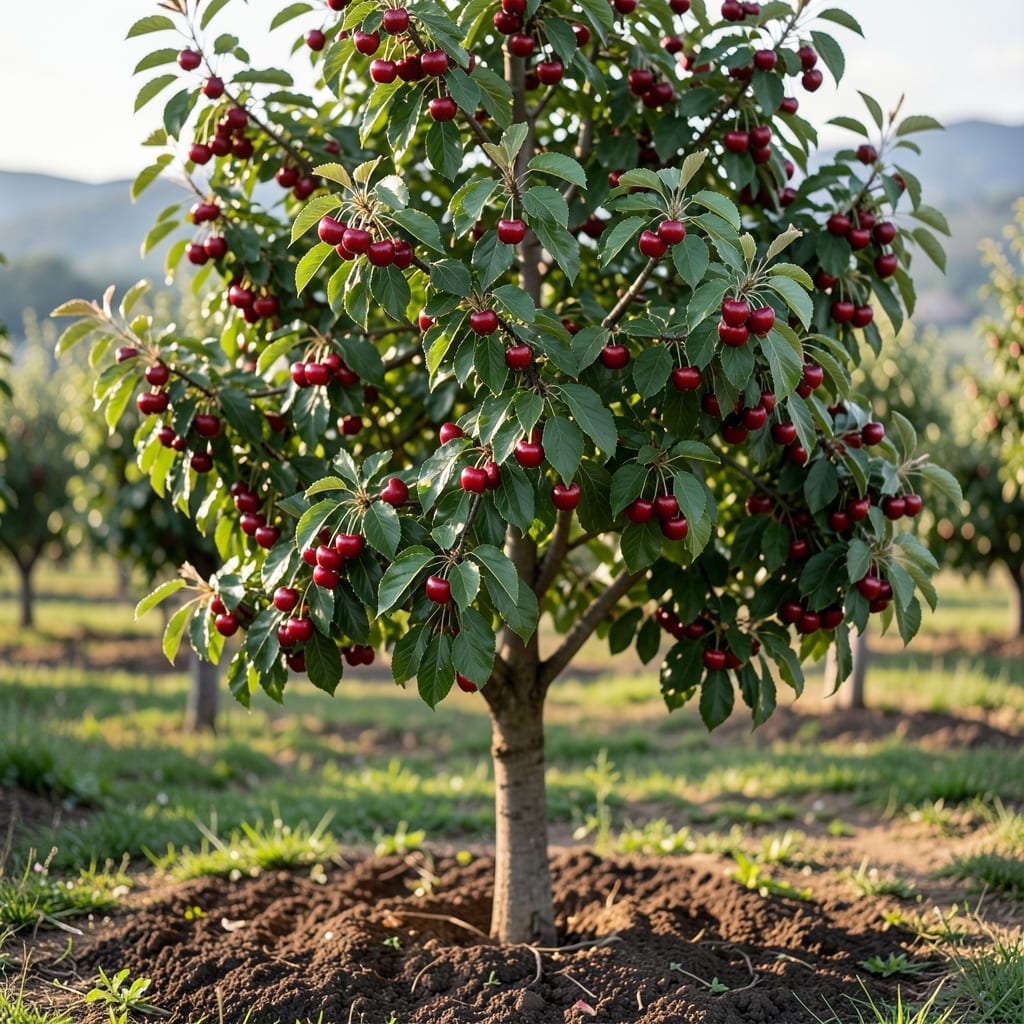
Ever wonder why your Bing cherry 🍒 tree isn’t producing fruit despite your best efforts? The answer might surprise you – it’s not just about soil or sunlight.
These popular sweet cherries need 700-1,000 hours of cold weather to break dormancy and set fruit. It’s the most overlooked factor in successful cultivation.
Discover how to track these critical chill hours and ensure your tree gets exactly what it needs for a bountiful harvest.
If you’re growing Bing cherries and wondering why they’re not fruiting, chill hours might be the missing piece. These are the cumulative hours between 32°F and 45°F that your tree experiences during dormancy.
For Bing cherry trees, this cold period is non-negotiable. Without enough chill hours, the tree won’t break dormancy properly, leading to poor bud development and little to no fruit.
🌱 Chill Hours Explained
Bing cherries require 700-1,000 chill hours annually. This cold exposure triggers the biochemical process that allows the tree to set fruit the following season.
During winter dormancy, your Bing cherry tree is essentially in hibernation. The cold hours accumulate like a battery charging, preparing the tree for spring growth and fruit production.
Without sufficient chill, you might see delayed blooming or irregular fruit set. In worst cases, the tree may not produce at all, no matter how well you care for it during the growing season.
The 700-1,000 hour range isn’t arbitrary. Bing cherries have been bred to thrive in regions with these specific winter conditions, typically found in USDA zones 5-8.
I’ve seen gardeners in warmer climates struggle with Bing cherries because their winters don’t provide enough cold. If you’re in zone 9 or higher, you might need to consider low-chill varieties instead.
Remember, chill hours are about temperature range, not just cold. Hours below 32°F don’t count, and hours above 45°F won’t contribute to the total either.
This is why tracking is crucial. A mild winter with temperatures mostly in the 50s won’t give your Bing cherry the chill it needs, even if it feels cold to you.
In my experience, the most successful Bing cherry growers are those who monitor their local chill hours and choose planting locations that consistently meet these requirements.
Understanding this concept can transform your approach to fruit tree cultivation, especially with varieties as specific as Bing cherries 🌳
To ensure your Bing cherry tree gets its needed 700-1,000 chill hours, you’ll need to track temperatures between 32°F and 45°F during dormancy. This isn’t guesswork—precise tracking makes the difference.
I recommend using a chill hour calculator from your local agricultural extension office. These tools automatically compile data from nearby weather stations, giving you accurate counts for your specific area.
| Requirement | Specification |
|---|---|
| Chill Hour Range | 700-1,000 hours |
| Temperature Range | 32°F to 45°F |
| Tracking Tools | Chill calculators, weather stations |
| Best Tracking Time | November to February |
If you prefer a hands-on approach, you can manually track chill hours. Purchase a maximum/minimum thermometer and record hours when temperatures fall within the 32°F-45°F range.
Many gardeners make the mistake of counting all cold hours. Remember, only hours within this specific range count toward your Bing cherry’s requirements. Hours below 32°F or above 45°F don’t contribute.
For the most accurate results, track temperatures at your specific location. Microclimates can create significant variations, even within the same neighborhood. Your backyard might have different chill hour accumulation than your neighbor’s.
I’ve found that Bing cherry growers in borderline zones often benefit from planting in slightly cooler spots, like north-facing slopes, to maximize their chill hour accumulation 🌳