
Beautiful Plants For Your Interior
Beautiful Plants For Your Interior
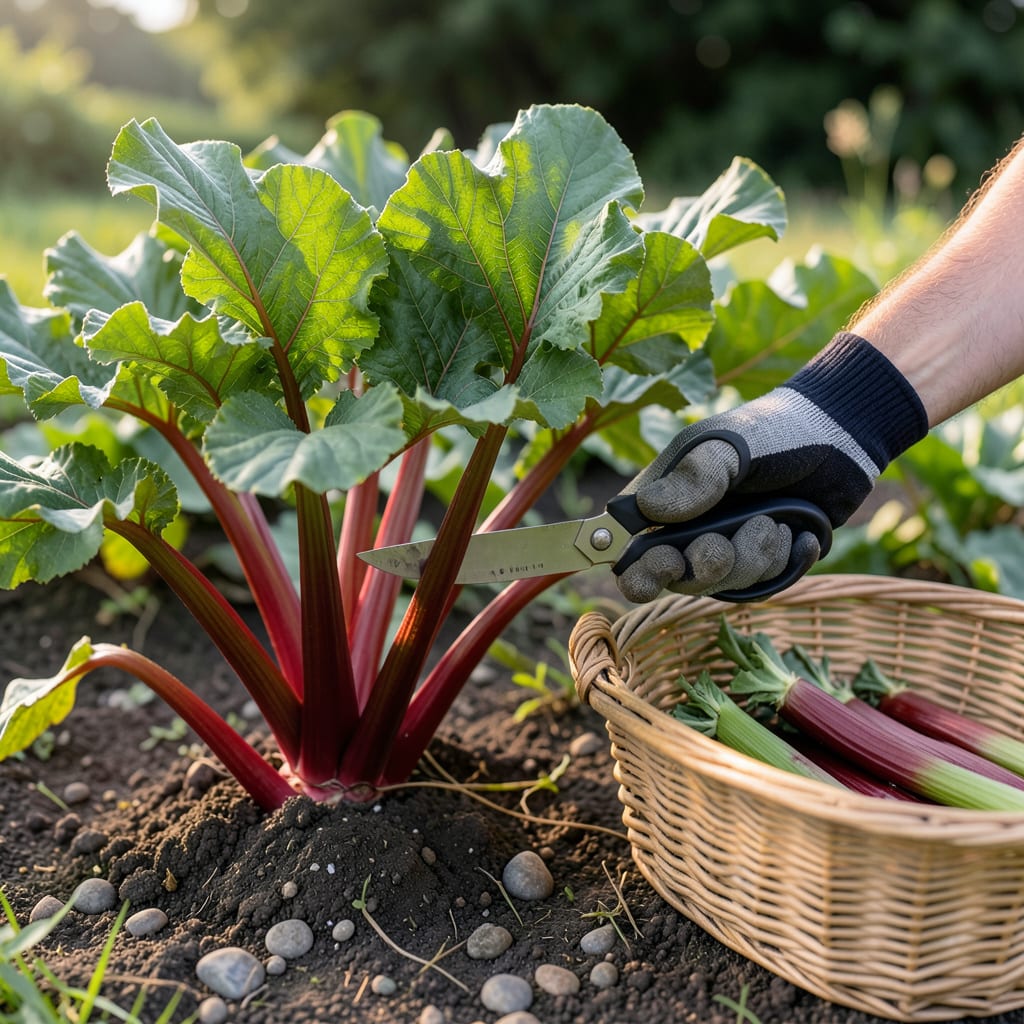
Nothing beats the satisfaction of pulling fresh 🥬 Rhubarb stalks from your garden, but timing is everything. Picking too early or incorrectly can harm your plant and ruin the harvest.
I’ll show you the easiest method to get the sweetest, most tender stalks while keeping your Rhubarb healthy for years to come.


Timing your rhubarb harvest perfectly ensures the sweetest stalks and a healthy plant for years. The best window is spring to early summer, typically April through June, depending on your climate.
I wait until stalks reach 10-15 inches long and feel firm to the touch. Thin, spindly stalks or those still tightly rolled aren’t ready yet. The color should be vibrant red or green, depending on the variety.☀️
| Sign | Ready | Not Ready |
|---|---|---|
| Stalk Length | 10-15 inches ✅ | Under 10 inches 📏 |
| Stalk Texture | Firm and crisp ✅ | Soft or floppy 🤏 |
| Leaf Condition | Fully unfurled ✅ | Tightly rolled 🌱 |
| Color | Deep and consistent 🎨 | Pale or uneven |
Early morning is my preferred harvest time because stalks are most hydrated and crisp. Avoid picking during extreme heat or after heavy rain, as this can stress the plant.
Late-season harvests can weaken your rhubarb. After early summer, I limit picking to allow the plant to store energy for next year. This ensures a stronger comeback in the following season.
For the best flavor, I focus on mature stalks that snap easily when bent. If they bend without breaking, they’re not ready. Also, always leave at least 1/3 of stalks unharvested to support plant health.
In colder climates like USDA zones 3-5, the harvest window may start later in spring. Warmer zones, such as 6-8, might see stalks ready earlier. Adjust based on your local conditions.
If your plant is newly planted, resist the urge to harvest in the first year. Letting it establish a strong root system will pay off with bigger yields later.
Watch for seed stalks—these appear as tall, flowering stems. If you spot them, remove them immediately to redirect energy to stalk production rather than seeds.
Finally, consistency is key. I check my rhubarb every few days during peak season. Stalks can grow incredibly fast in ideal conditions, so don’t miss the perfect harvest window!🌱
The right harvesting technique keeps your rhubarb plant thriving for years. I always use the twist-and-pull method—grab the stalk near its base and gently twist while pulling upward.
This approach prevents damage to the plant’s crown and reduces disease risk. Never use a knife to cut stalks, as this can introduce bacteria or fungi to the plant.☀️
⚠️ Warning: Cutting rhubarb stalks with a knife can expose the plant to disease. Always use the twist-and-pull method to keep your plant healthy.
I always leave at least 1/3 of stalks on the plant to ensure it has enough foliage for photosynthesis. This helps the plant recover and regrow for future harvests.
Avoid harvesting small or weak stalks, as they won’t contribute much to your yield and can stress the plant. Focus on the thickest, most mature stalks for the best flavor and texture.
After harvesting, I remove any yellowing or damaged leaves to keep the plant healthy. This also improves airflow, reducing the risk of fungal diseases like powdery mildew.
If your rhubarb plant is young (1-2 years old), limit your harvest to just a few stalks. This allows the plant to establish a strong root system for better yields in future years.
Finally, water your plant deeply after harvesting to help it recover. I aim for 1-2 inches of water per week, especially during dry spells. This keeps the soil consistently moist but not waterlogged.🌱
Even experienced gardeners make rhubarb harvesting mistakes that can reduce yields or harm the plant. I’ve learned the hard way that patience and technique matter just as much as timing.
One of the biggest errors is harvesting in the first year. New plants need time to establish a strong root system. Pulling stalks too soon can stunt growth and delay future harvests.
Another common mistake is taking too many stalks at once. I always leave at least 1/3 of stalks on the plant to ensure it can photosynthesize effectively and recover for future growth.
Pulling small or weak stalks is also problematic. These won’t give you much yield and can stress the plant. Instead, focus on the thickest, most mature stalks for the best flavor and texture.
Finally, avoid harvesting during extreme heat or drought. Stressing the plant in these conditions can weaken it long-term. Always check the weather and pick during cooler, milder days for the best results.🌱
Look for stalks that are 10-15 inches long, firm, and snap easily when bent. Leaves should be fully unfurled, and color deep and consistent.
Cutting can introduce bacteria or fungi to the crown. Always use the twist-and-pull method to protect the plant’s health.
No, wait until the second year. Harvesting too soon weakens the plant and reduces future yields. Patience pays off!
Never remove more than 1/3 of stalks at a time. This ensures the plant retains enough foliage for photosynthesis and recovery.
