
Beautiful Plants For Your Interior
Beautiful Plants For Your Interior
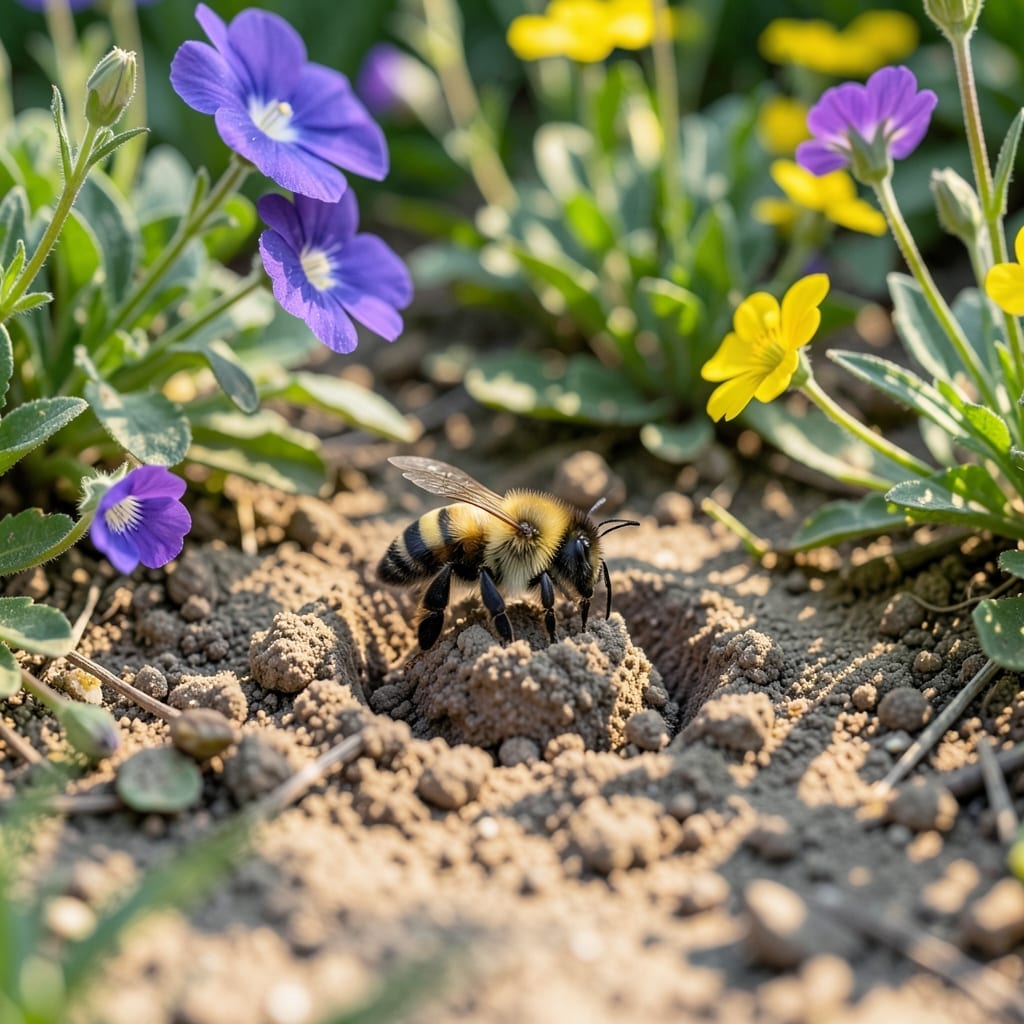
About 70% of native bee species nest underground, creating tunnels in bare soil or sandy areas to raise their young. These solitary bees are vital pollinators for gardens and wild ecosystems.
I’ve noticed these ground-nesters thrive in well-drained, sunny spots where soil remains loose and undisturbed. Unlike honeybees, they don’t form colonies, so each female builds and provisions her own nest. 🔥 Supporting them means preserving patches of bare earth and avoiding heavy mulching in your garden.
💡 In This Article
The primary driver is survival. Underground tunnels offer stable temperatures between 50-75°F, protecting developing larvae from extreme heat or cold above ground. The soil’s natural insulation maintains humidity levels critical for egg development, typically around 60-70% relative humidity. 🔥
These bees prefer well-drained, sandy or loamy soils that are easy to excavate. A single female can dig tunnels up to 3 feet deep in just a few hours using her mandibles and legs. The ideal soil pH ranges from 6.0-7.5, slightly acidic to neutral, which supports both bee health and microbial activity.
Protection from predators is another key advantage. The intricate tunnel systems, often with multiple branches, make it difficult for ants, birds, or mammals to access the nests. Each cell within the tunnel is carefully lined with waterproof secretions to prevent flooding during rain. ✨
Unlike social honeybees, ground-nesters are solitary. This means each female builds, provisions, and guards her own nest without help from other bees. She collects pollen and nectar to create a nutritious paste, providing enough food for her offspring to develop from egg to adult without additional care.
These underground habitats also offer protection from wind and rain. The entrance holes, typically 0.2-0.4 inches in diameter, are often concealed by vegetation or soil particles, making them nearly invisible to both predators and casual observers. 💫
The nesting season varies by species but often aligns with spring bloom. In North America, many ground-nesting bees emerge in early spring when soil temperatures reach about 55°F, coinciding with the first flower blooms they’ll pollinate.
They thrive in well-drained, loose soils like sand or loam. Avoid heavy clay or compacted earth, which are too difficult to dig through. A slightly acidic to neutral pH of 6.0-7.5 is ideal.
A single female can excavate tunnels up to 3 feet deep in just a few hours. Each tunnel contains multiple branches with individual cells for her eggs, all carefully lined to protect from moisture.
No, these solitary bees are very docile and rarely sting. They focus on nesting and foraging, not defending a colony. You can safely observe them without fear of being stung.
Most emerge in early spring when soil temps hit 55°F. They’re active during warm, sunny days, often coinciding with the first blooms they pollinate. Look for small entrance holes in bare soil.
Avoid tilling or disturbing bare soil patches during nesting season. Mark areas with small signs or rocks to prevent accidental damage. Plant native flowers nearby to provide food.