
Beautiful Plants For Your Interior
Beautiful Plants For Your Interior
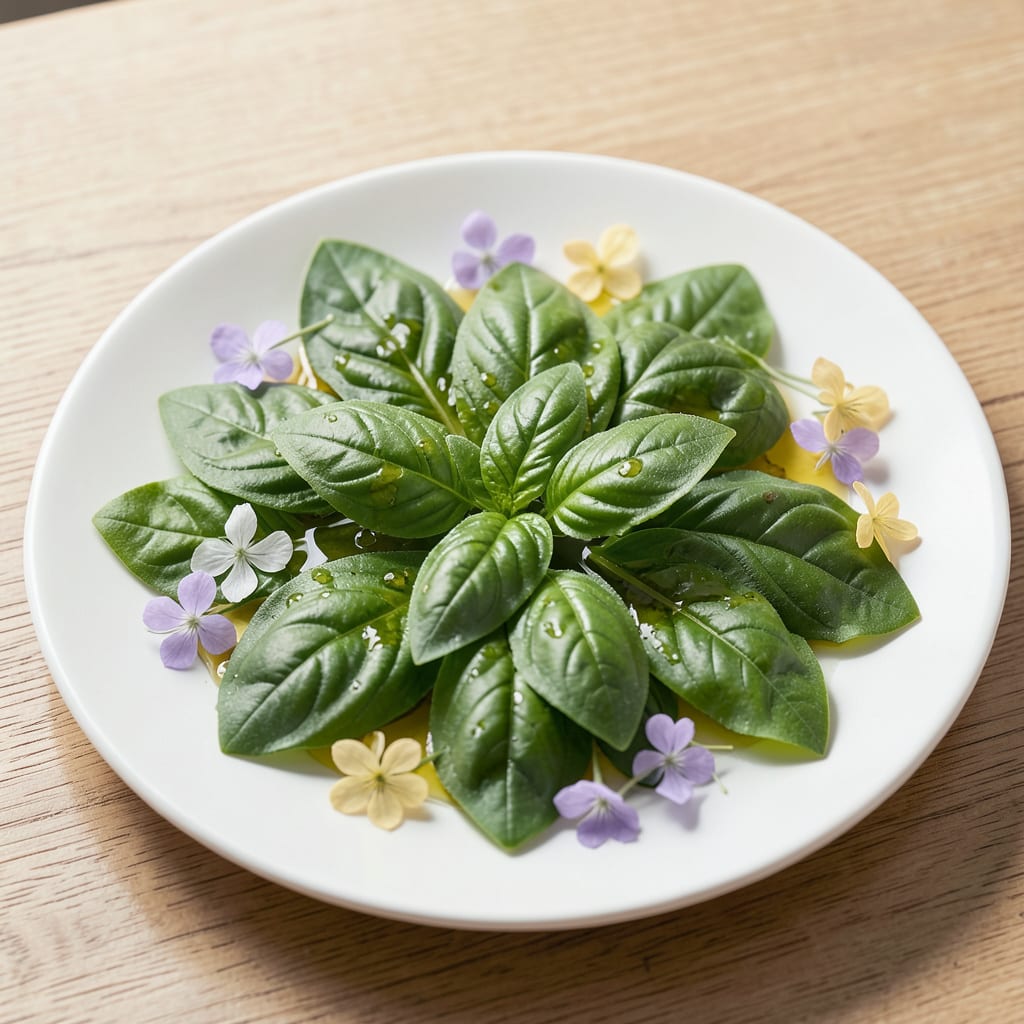
Those first true leaves on basil seedlings are your green light. They look different from the initial round cotyledons—more oval, with that classic basil scent when you rub them.
Here’s the thing—this is when you start pinching to encourage bushier growth. Skip this step and you’ll end up with leggy plants that flop over. 2-3 weeks after germination is your window to shape them right.
📚 In This Guide
Here’s the method I use to transform sparse basil seedlings into dense, productive plants ready for harvest.
Don’t confuse the initial seed leaves (cotyledons) with the first true leaves. Cotyledons appear as a pair of smooth, round leaves right after germination. The first true leaves emerge 7-14 days later as slightly textured, pointed pairs that look like miniature basil leaves.
You’ll know they’re ready when these leaves are fully unfurled and measure about ½ inch across. This stage signals the plant has developed enough energy reserves to recover from pruning. I check daily once cotyledons are 1 inch wide—true leaves often appear overnight.
Use clean, sharp scissors or your fingernails to make a precise cut. Sterilize tools with rubbing alcohol to prevent disease transmission. I keep a small spray bottle nearby to mist the plants afterward, as pinching can stress the seedlings slightly.
Work in good morning light when plants are turgid (firm with water). Avoid pinching in the evening when leaves may be limp from the day’s heat. Position yourself so you can clearly see the stem’s growth nodes where the true leaves emerge.
Locate the stem just above the second set of true leaves (counting from the bottom). With your thumb and forefinger, gently pinch off the top growth, removing the central stem and the uppermost pair of leaves. This forces the plant to branch from the leaf nodes below.
Make the cut 1/4 inch above the leaf pair—close enough to encourage branching but not so close you damage the nodes. I’ve found that pinching too low can cause rot at the wound site. The remaining stem should have 2-3 sets of leaves left intact.
Mist the plants lightly with room-temperature water immediately after pinching. Keep the soil consistently moist (but not soggy) for the next 3-5 days as the plant recovers. You’ll see new side shoots emerging from the leaf nodes within 5-7 days.
Maintain 65-75°F temperatures and 12-14 hours of light daily. The combination of warmth and light accelerates the branching process. I notice plants pinched under these conditions develop nearly double the foliage of unpinched seedlings by transplant time.
Resist the urge to fertilize immediately after pinching. Wait until you see new growth appearing—this usually indicates the plant has recovered enough to benefit from additional nutrients without risk of burning tender new shoots.
Small details make all the difference when encouraging your seedlings to branch out.
Timing Secret: The 7-14 day window after cotyledons appear is critical. I check daily once cotyledons reach 1 inch wide because true leaves often emerge overnight. Pinching too early or too late can stress the plant or reduce branching effectiveness.
The Pinching Technique: In Step 3, make sure to cut 1/4 inch above the second set of true leaves. Pinching too low can damage the growth nodes and lead to rot, while cutting too high may not encourage the branching you want. Trust me on this.
Post-Pinching Care: After pinching, maintain those 65-75°F temperatures and 12-14 hours of light daily as mentioned in Step 4. The combination of warmth and consistent light accelerates new growth from the leaf nodes, giving you that bushier plant we’re aiming for.
Avoiding Common Pitfalls: Don’t fertilize immediately after pinching—wait until you see new growth, which usually appears within 5-7 days. Fertilizing too soon can burn tender new shoots and set back your progress.
Basil first true leaves typically emerge 2-3 weeks after germination, following the initial cotyledons (seed leaves). Ensure warm temperatures (70-80°F) and bright light to encourage healthy growth.
No, wait until your basil has 4-6 sets of true leaves before pinching. Pinching too early can stress the plant. This encourages bushier growth once the plant is established.
Cotyledons are the first rounded leaves that appear from the seed, providing initial nutrients. True leaves, which look like mini basil leaves, follow and are responsible for photosynthesis.
Slow growth can be due to low light, cold temperatures, or poor soil quality. Move seedlings to a sunnier spot or use a grow light, and ensure the soil stays moist but not soggy.
Avoid strong fertilizers on young seedlings. Once true leaves appear, use a diluted, balanced liquid fertilizer (e.g., 10-10-10) every 2-4 weeks to support healthy development without burning tender roots.
