
Beautiful Plants For Your Interior
Beautiful Plants For Your Interior
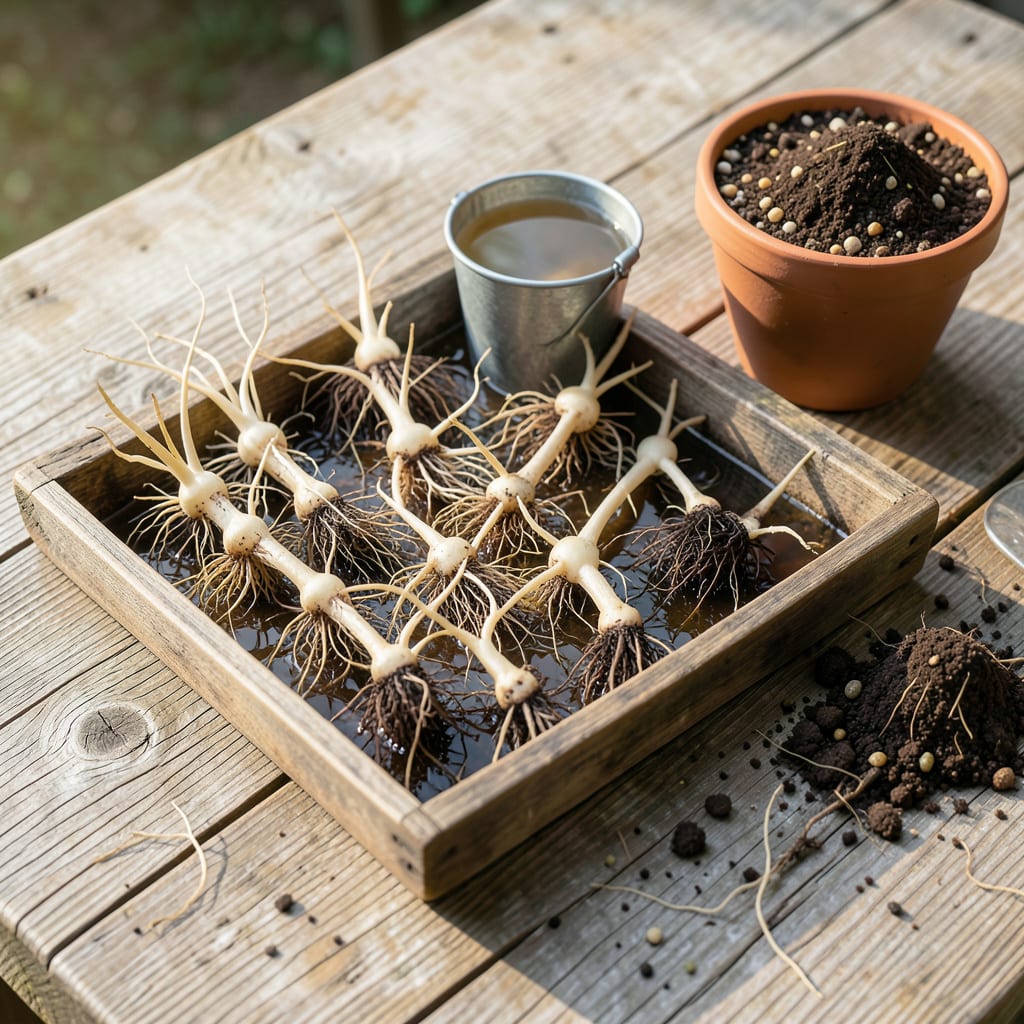
Bare root strawberry crowns changed my spring gardening game. These dormant plants arrive ready to establish quickly, giving you a head start on the growing season with minimal effort.
You’ll get strong, productive plants that often outperform potted strawberries. The key is proper planting depth—too deep and they rot, too shallow and they dry out. First harvest arrives in about 60 days with the right care.
📚 In This Guide
Here’s the method I use to get strong, productive strawberry plants from bare root stock every time.
Submerge the bare root crowns in a bucket of lukewarm water for 1-2 hours before planting. This rehydrates the roots and jumpstarts the growth process. I never skip this step—dry roots struggle to establish and can delay production by weeks.
You’ll see the roots plump up as they absorb moisture. If any roots appear black or mushy, trim them back to healthy white tissue with clean shears. This prevents rot from spreading once the crowns are in the ground.
Choose a location with full sun (at least 6-8 hours daily) and well-draining soil. Strawberries thrive in slightly acidic soil with a pH between 5.5-6.5. Work in 2-3 inches of compost to improve fertility and drainage.
Space the plants 12-18 inches apart in rows that are 2-3 feet apart. This gives them room to spread via runners while allowing airflow to prevent disease. I mark my rows with stakes first to keep spacing consistent.
Dig a hole wide enough to spread the roots out naturally—never bend or crowd them. The crown (where the roots meet the stem) should sit just above the soil surface. Burying it too deep causes rot, while planting it too high exposes roots and dries them out.
Backfill the hole, gently firming the soil to eliminate air pockets. Water each plant immediately with 1 pint of water to settle the soil. You’ll know it’s done right when the crown remains visible and the roots are fully covered.
Apply a 2-3 inch layer of straw or pine needle mulch around each plant, keeping it 1 inch away from the crown. This conserves moisture, suppresses weeds, and protects the shallow root system. I use straw because it breaks down slowly and doesn’t mat like grass clippings.
For the first 7-10 days, check soil moisture daily. Newly planted crowns need consistently moist (not soggy) soil to establish. If your area has frost warnings, cover the plants with frost cloth at night until danger passes.
After 2-3 weeks, you’ll see new leaves emerging from the crown. This is your signal that the plants are established. Reduce watering to 1 inch per week, including rainfall, once growth begins. Drip irrigation works best to keep foliage dry and prevent disease.
Remove any flowers that appear in the first season for June-bearing varieties. This directs energy into root and foliage growth, resulting in a stronger harvest next year. For everbearing or day-neutral types, you can allow some fruit to develop.
Here’s what I’ve learned through trial and error to ensure your plants thrive from day one.
Soaking Success: Don’t rush Step 1—those 1-2 hours in lukewarm water are non-negotiable. I once skipped this and lost nearly a third of my crowns to poor establishment. The roots must plump up fully before planting to avoid stress and delayed growth.
Sun and Spacing: In Step 2, the 6-8 hours of daily sun isn’t just ideal—it’s essential for sweet, productive berries. I learned the hard way that even partial shade leads to leggy plants with lackluster fruit. Also, stick to the 12-18 inch spacing; crowding invites disease and weakens yields.
Crown Placement: Step 3 is where most beginners fail. Plant the crown just above the soil surface—burying it even a half-inch too deep causes rot, while planting too high dries out the roots. I use a ruler to check depth until it became second nature.
Early Care: During the first 7-10 days after planting, keep the soil consistently moist but never waterlogged. I set a daily reminder to check moisture levels, and it made all the difference in root establishment. After 2-3 weeks, scale back to 1 inch of water per week to encourage deep root growth.
Early spring or fall is ideal, when temperatures are mild (50–60°F). This gives roots time to establish before extreme heat or frost. Avoid planting in summer or deep winter.
Place the crown just above soil level—burying it too deep can cause rot. Spread roots outward and cover them lightly, leaving the crown (where leaves emerge) exposed.
Yes! Use a well-draining pot (at least 8–12 inches deep) with potting mix. Ensure containers have drainage holes to prevent waterlogging.
Check for overwatering, poor soil contact, or frost damage. Keep soil moist (not soggy) and ensure crowns weren’t buried. Patience helps—growth may take 2–3 weeks.
Bare root crowns are cost-effective and easy to ship, but require careful handling. Potted plants offer a head start but cost more. Both thrive with proper care!
