
Beautiful Plants For Your Interior
Beautiful Plants For Your Interior
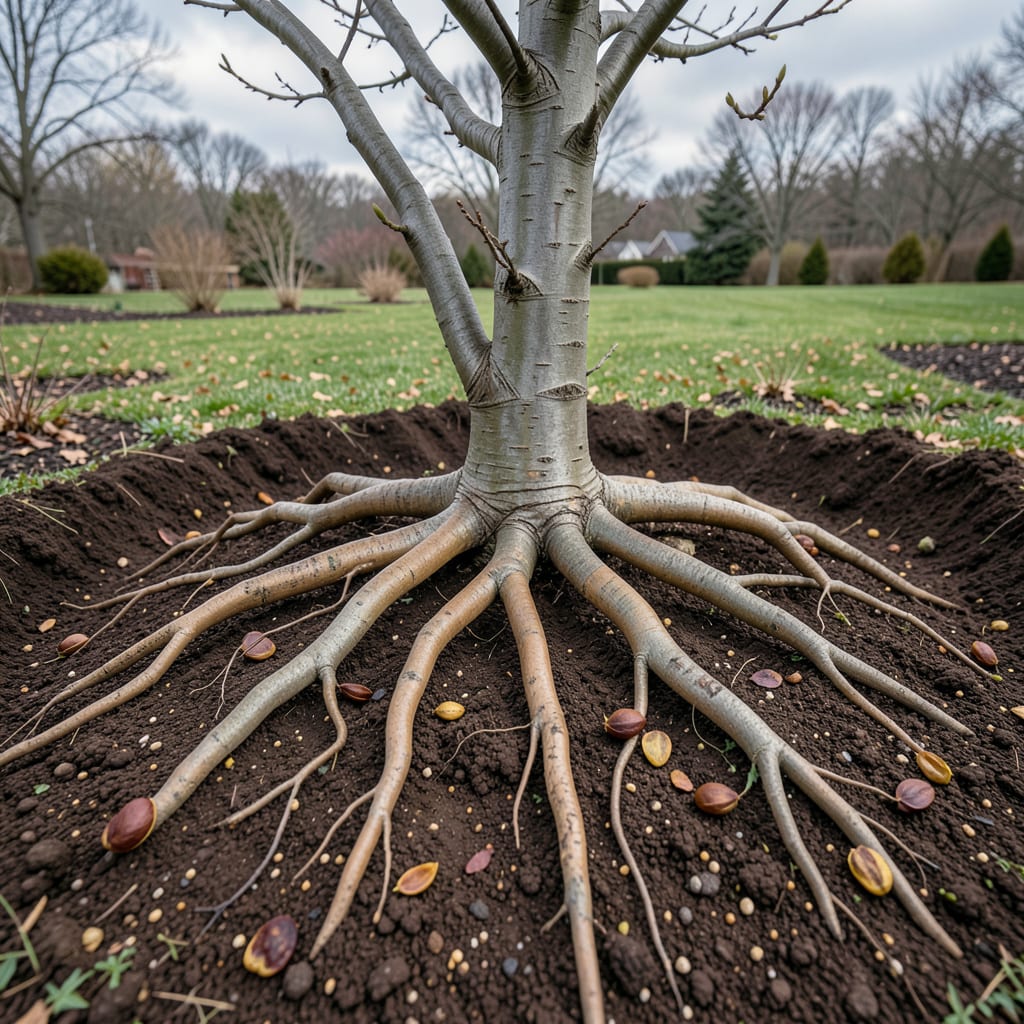
Planting a bare root magnolia tree changed my spring landscape forever. The first blooms appear when you least expect them, transforming your yard into a fragrant paradise.
This method saves money and ensures a stronger root system. With the right soil prep and timing, you’ll see growth within weeks, not months. Here’s how to make it thrive.
📚 In This Guide
Here’s the method I rely on for establishing these trees with minimal transplant shock.
Begin by soaking the bare roots in a bucket of lukewarm water for 2-4 hours to rehydrate them after their dormant storage. This step is crucial—the roots will appear plump and flexible when properly hydrated rather than brittle or shriveled.
While they soak, inspect for any damaged or broken roots. Use clean pruners to trim away any blackened, mushy, or excessively long roots. Aim for a balanced root system with 6-8 healthy primary roots radiating outward. This prevents future dieback and encourages even establishment.
Dig a hole that’s twice as wide as the root spread and just as deep as the root length. The sides should slope gently to allow roots to spread naturally. I always rough up the edges of the hole with my shovel—this prevents the roots from circling and encourages outward growth.
Remove any grass, weeds, or debris from the area. If your soil is heavy clay, mix in 20-30% compost to improve drainage. Magnolias despise waterlogged roots, so avoid any low-lying spots where water might pool after rain.
Test the depth by placing the tree in the hole. The root collar (where roots meet the trunk) should sit 1-2 inches above the surrounding soil level. This accounts for settling and prevents burying the trunk too deeply, which can lead to rot.
Create a small mound of soil in the center of the hole and spread the roots evenly over it. This ensures they grow outward rather than tangling. Hold the tree steady while you begin backfilling with the native soil, gently tamping it down as you go to eliminate air pockets.
Once the hole is half-filled, water thoroughly to settle the soil around the roots. This is your only chance to correct the tree’s position—adjust it now if it’s leaning or too deep. Finish backfilling, then create a 3-inch tall watering ring around the perimeter of the hole to help direct water to the roots.
Water deeply immediately after planting, giving the tree 5-10 gallons of water. The soil should be moist but not soggy. I check by pushing my finger 2-3 inches into the soil—if it feels dry at that depth, it’s time to water again.
Apply a 2-3 inch layer of organic mulch (wood chips or shredded bark) over the planting area, keeping it 3-4 inches away from the trunk. This conserves moisture, suppresses weeds, and insulates the roots from temperature swings. You’ll know it’s working when the soil stays consistently damp between waterings.
For the first 2-3 weeks, water every 2-3 days unless rain provides at least 1 inch per week. After that, gradually reduce frequency but water deeply each time to encourage deep root growth.
These insights will help you avoid common pitfalls and ensure your magnolia thrives.
Soaking Essentials: In Step 1, don’t rush the soaking process. The 2-4 hour soak is critical for rehydrating dormant roots—any less and they won’t absorb enough moisture to prevent transplant shock. I learned this the hard way after losing a tree that only soaked for 30 minutes.
Root System Balance: When trimming in Step 1, resist the urge to over-prune. Those 6-8 healthy primary roots are your tree’s lifeline. Removing too many weakens the tree’s ability to establish itself, while keeping them balanced ensures even water and nutrient uptake.
Planting Depth Precision: Step 2’s instruction to place the root collar 1-2 inches above soil level isn’t arbitrary. This accounts for natural settling. I’ve seen too many magnolias struggle because they were planted too deep, leading to trunk rot. Use a ruler to measure if you’re unsure.
Watering Ring Strategy: The 3-inch watering ring from Step 3 serves a vital purpose. Without it, water tends to run off rather than soaking down to the roots. Position it carefully at the drip line to maximize moisture delivery where it’s needed most.
The ideal time is late winter to early spring while the tree is still dormant. This allows roots to establish before summer heat. Avoid planting during freezing weather or extreme heat.
Keep the roots moist and store the tree in a cool, shaded area (32–40°F). Heel the roots into damp soil or mulch, and avoid direct sunlight. Plant as soon as possible for best results.
Yes, but choose a large container (20+ gallons) with good drainage. Use well-draining soil and water regularly. Container-grown magnolias may need winter protection in colder climates.
This could signal transplant shock or under/overwatering. Ensure consistent moisture (not soggy) and protect from harsh sun/wind. Trim damaged leaves and monitor recovery over 2–3 weeks.
Yes! Potted magnolias offer year-round planting flexibility but cost more. Ball-and-burlap trees are another option, though heavier to handle. Bare root remains the most budget-friendly choice.
