
Beautiful Plants For Your Interior
Beautiful Plants For Your Interior
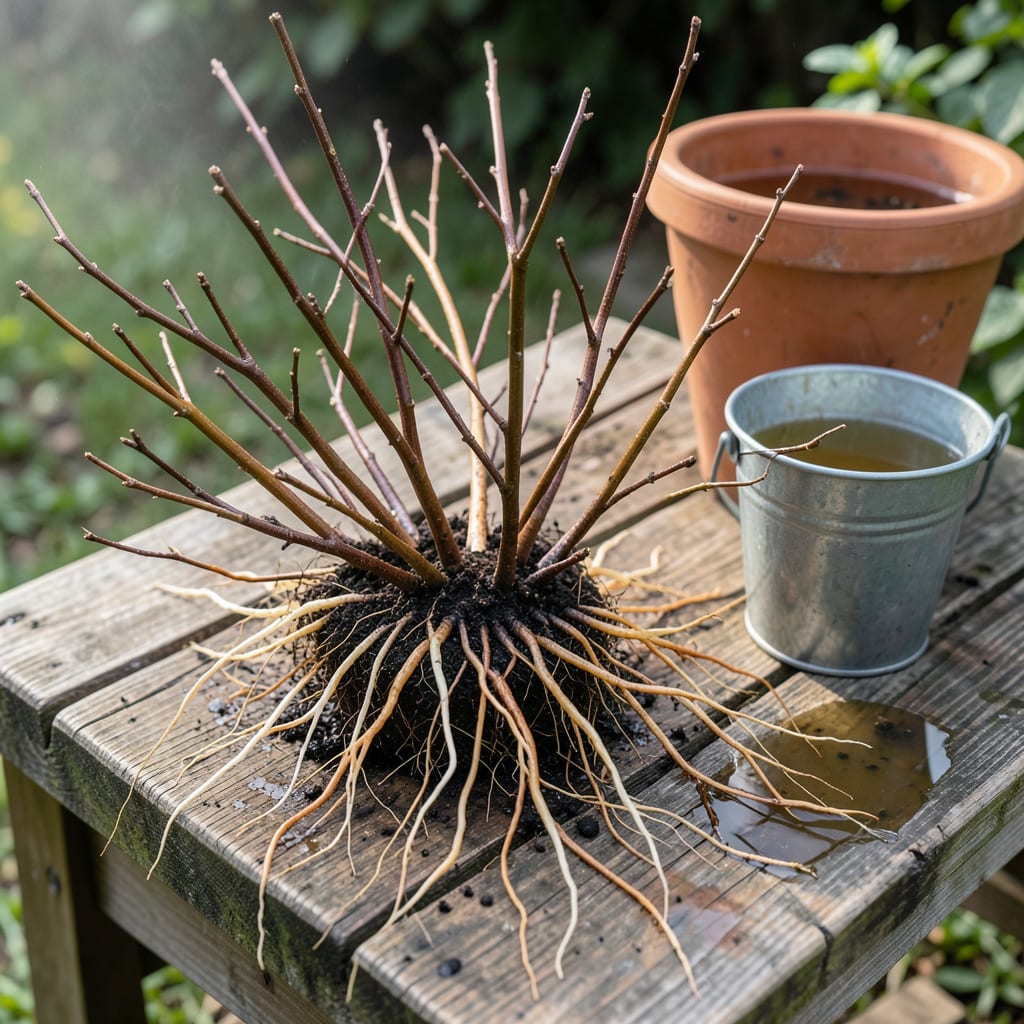
Bare root blueberries arrive looking like sticks, but I’ve seen them transform into fruit-loaded bushes within two seasons. The key is giving those dormant roots the right start.
Soak them for 1-2 hours before planting, then set them in acidic soil with plenty of organic matter. Proper care now means buckets of berries later.
📚 In This Guide
Here’s the approach I use to get bare root blueberry bushes established and producing fruit within a few seasons.
Start by soaking the bare root blueberry bush in a bucket of lukewarm water for 1-2 hours. This rehydrates the roots and helps the plant transition from dormancy to active growth. I’ve found that skipping this step often leads to slower establishment and weaker initial growth.
While the roots soak, inspect them for any damage or dryness. Trim away any broken or overly long roots with clean pruners to encourage healthy new growth. The roots should look plump and flexible after soaking, not brittle or shriveled.
Dig a hole that is 18-24 inches wide and 12-18 inches deep, ensuring it’s large enough to accommodate the spread of the roots without crowding. Blueberries thrive in well-draining, acidic soil with a pH between 4.5 and 5.5, so amending the soil with peat moss or sulfur may be necessary if your soil isn’t naturally acidic.
Loosen the soil at the bottom and sides of the hole to help roots penetrate easily. If your soil is heavy clay, consider mixing in some sand or organic matter to improve drainage. A well-prepared hole sets the stage for strong root development and long-term health.
Place the bush in the hole, spreading the roots outward and downward to prevent them from circling. Position the plant so the crown (where the roots meet the stem) sits 1-2 inches above the soil line. This prevents settling, which can bury the stem too deeply and suffocate the plant.
Backfill the hole with the amended soil, gently tamping it down as you go to eliminate air pockets. Once the hole is filled, create a small watering basin around the base of the plant to help direct water to the roots during the first few waterings.
After planting, water the bush deeply with 1-2 gallons of water to settle the soil and remove any remaining air pockets. This initial watering is critical for helping the roots make contact with the soil. Keep the soil consistently moist but not waterlogged during the first few weeks after planting.
Apply a 2-3 inch layer of organic mulch, such as wood chips or pine needles, around the base of the plant to retain moisture and suppress weeds. Mulch also helps maintain the acidic soil conditions that blueberries love. Just be sure to keep the mulch a few inches away from the stem to prevent rot.
Check the plant regularly for the first few weeks to ensure the soil stays moist. Blueberries are shallow-rooted, so they benefit from frequent, light watering rather than occasional deep soaking. You’ll know the plant is settling in when you see new growth emerging from the stems.
Protect the bush from strong winds or late frosts, which can damage new growth. If you notice yellowing leaves or stunted growth, it may be a sign that the soil pH is off or that the plant isn’t getting enough water. Adjust as needed to keep your blueberry bush on track for a fruitful future.
Small details make the difference between a struggling plant and a thriving blueberry bush.
The Soaking Step: Don’t rush the 1-2 hour root soak in lukewarm water. I learned the hard way that skipping or shortening this leads to stressed plants. The roots need this time to rehydrate fully and transition from dormancy. Plump, flexible roots are your goal—brittle roots mean you need more soaking time.
Soil Preparation: For Step 2, test your soil pH before digging. Blueberries absolutely require that 4.5 to 5.5 pH range. If your soil isn’t acidic enough, mix in peat moss or sulfur as you prepare the 18-24 inch wide by 12-18 inch deep hole. This is non-negotiable for long-term success.
Planting Depth: In Step 3, resist the urge to plant deeper for stability. Positioning the crown 1-2 inches above soil level accounts for settling. I’ve seen too many bushes suffocate from being planted too deep. The crown should stay visible above the soil line after watering.
Initial Watering: After planting in Step 4, use the full 1-2 gallons of water for that first deep watering. This isn’t excessive—it’s critical for removing air pockets and ensuring root-to-soil contact. Then maintain consistent moisture, not sogginess, for those first few weeks.
The ideal time is late winter to early spring while the plant is still dormant, or in fall before the first frost. This allows roots to establish before extreme temperatures.
Yes! Blueberries thrive in acidic soil (pH 4.5–5.5). Amend your soil with peat moss, pine bark, or sulfur to lower pH if needed.
Water deeply 2–3 times per week for the first few months, keeping the soil moist but not soggy. Reduce frequency once established.
Common reasons include young age (most fruit in 2–3 years), poor pollination, or incorrect pruning. Ensure proper care and cross-pollination with compatible varieties.
