
Beautiful Plants For Your Interior
Beautiful Plants For Your Interior
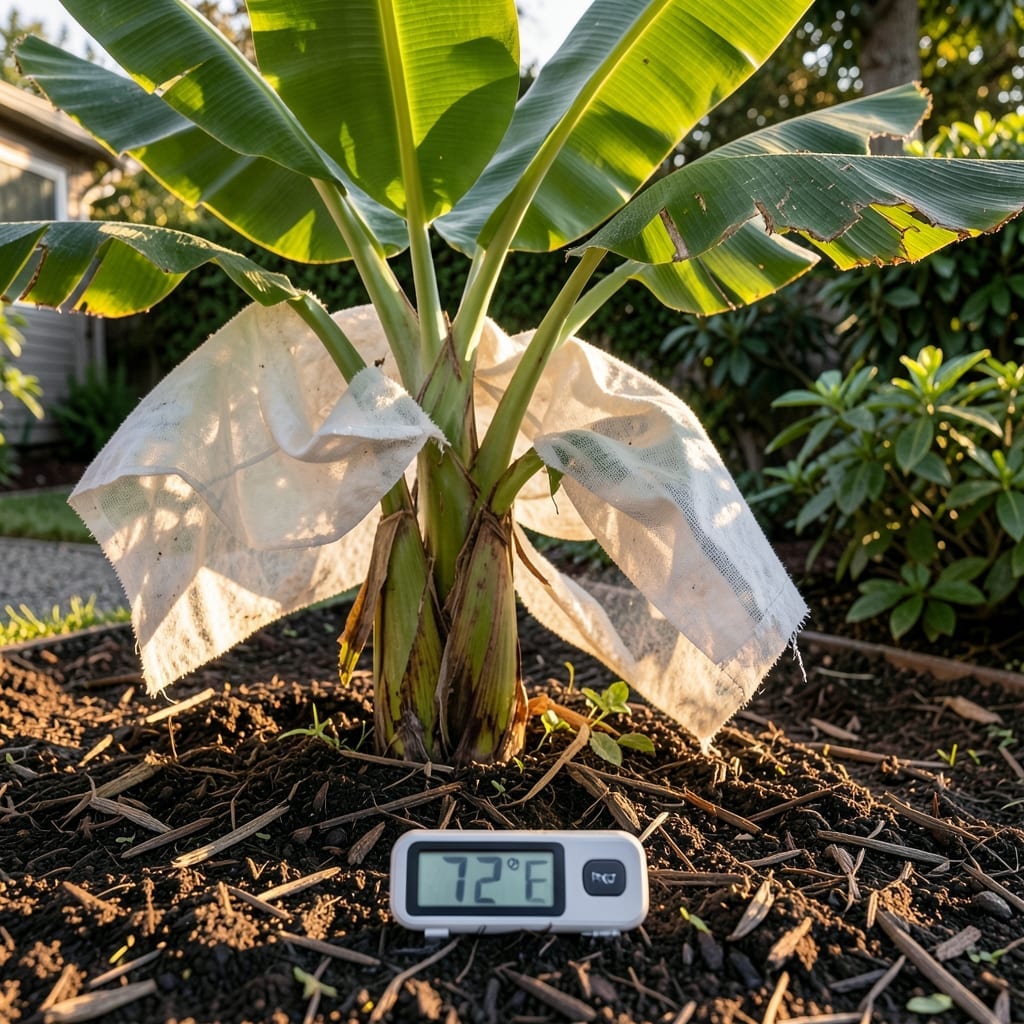
Most banana plants tolerate temperatures down to 28°F for short periods, but sustained cold below 32°F damages leaves and stems. Cold-hardy varieties like Musa basjoo survive brief dips to 15°F with proper protection.
I’ve found that tropical banana varieties often struggle when temperatures drop, as their cells aren’t built for frost. The key difference with hardy types like Musa basjoo is their ability to regrow from underground rhizomes even after above-ground damage. In my experience, proper mulching and trunk wrapping can make all the difference during unexpected cold snaps. ✨
💡 In This Article
Banana plants are tropical by nature, which means their cells contain high water content. When temperatures drop below 32°F, this water freezes and expands, rupturing cell walls in leaves and stems. This is why you’ll often see blackened, mushy foliage after a frost event—it’s the plant’s version of frostbite.
The damage starts at the cellular level and quickly becomes visible. 🔥
What most people don’t realize is that the root system is even more vulnerable than the leaves. While above-ground parts may die back, the underground rhizomes store energy and nutrients. In cold-hardy varieties like Musa basjoo, these rhizomes can survive temperatures as low as 15°F if properly insulated.
The roots, however, stop absorbing water and nutrients below 50°F, which stunts growth even without freezing. ⚡
The plant’s vascular system also suffers in cold weather. Phloem and xylem—the plant’s nutrient and water transport systems—slow down dramatically below 50°F. This means even if the plant isn’t freezing, it can’t efficiently move resources to where they’re needed. New growth often emerges stunted or deformed because of this reduced circulation. ✨
Cold stress triggers a survival response in banana plants. They’ll often divert energy from leaf production to root storage, which is why you might see yellowing leaves before a cold snap. This is the plant’s way of conserving resources. The more severe the cold, the more dramatic this response becomes, sometimes leading to complete defoliation.
💫
Microclimates make a surprising difference. A banana plant against a south-facing wall can experience temperatures 5-10°F warmer than one in an open area. This is why gardeners in marginal zones often plant bananas near buildings or other heat-retaining structures. Even a small temperature buffer can mean the difference between survival and severe damage. ⚡
Most varieties survive brief exposure to 28°F, but sustained temps below 32°F cause leaf and stem damage. Cold-hardy types like Musa basjoo can endure dips to 15°F with root protection.
Cover it with a frost blanket or old sheet, ensuring it touches the ground to trap heat. Add a 4-6 inch mulch layer around the base for rhizome insulation. Remove covers during the day.
Blackened leaves result from frozen cell rupture. The high water content in tropical foliage expands when frozen, damaging cell walls. This is often irreversible, but the plant may regrow from healthy rhizomes.
Yes, with cold-hardy varieties and proper winter care. Plant near heat-retaining structures, mulch heavily, and wrap trunks. Expect die-back above ground, but rhizomes often survive to regrow.