
Beautiful Plants For Your Interior
Beautiful Plants For Your Interior
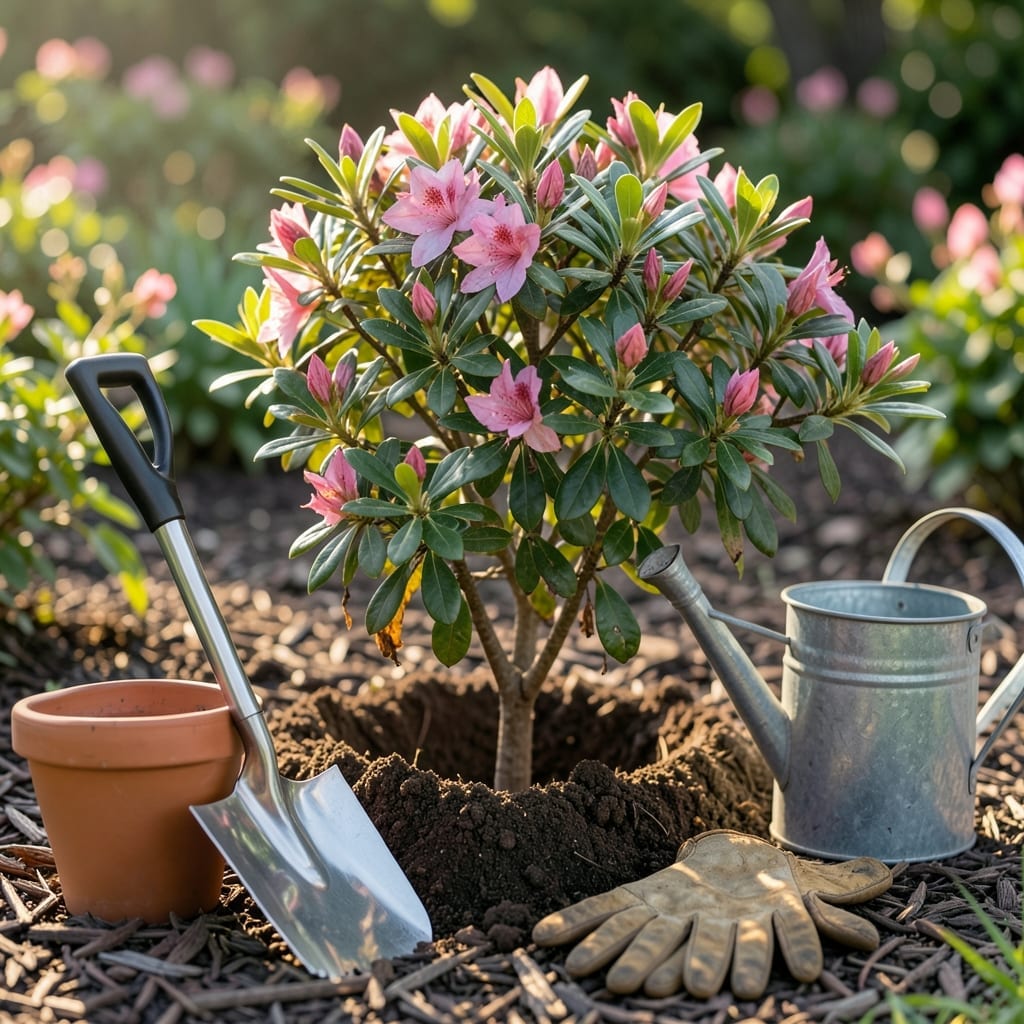
Azalea leaves wilted and drooping after the move? That’s transplant shock, and it’s fixable. I’ve saved dozens of azaleas from this exact crisis with a few simple steps.
It happens when roots struggle to adjust to their new home. Too much sun, not enough water, or rough handling during the move can all trigger it. The key is acting fast before the plant gives up.
With the right care—shade, consistent moisture, and a little patience—your azalea will bounce back. You’ll see new growth within 2-3 weeks if you follow the revival steps.
Prevention is even easier. Proper timing, gentle handling, and the right aftercare make all the difference. Here’s how to do it right from the start.
Transplant shock in azaleas occurs due to disruptions in their delicate root systems and environmental changes. Below are the primary causes, explained with actionable insights to help you prevent or address them.
Azaleas have fibrous, shallow root systems that are highly sensitive to damage. When dug up, these roots lose fine feeder hairs responsible for water and nutrient absorption. Even careful handling can sever critical connections, leaving the plant unable to sustain itself immediately after transplanting. Minimize root disturbance by digging a wide berme around the plant and keeping the root ball intact.
Inconsistent moisture levels before, during, or after transplanting trigger stress. Azaleas require evenly moist (not soggy) soil to recover. Underwatering leads to wilting, while overwatering suffocates roots and promotes rot. Water deeply 1–2 days before transplanting and maintain consistent soil moisture for 4–6 weeks post-move.
Azaleas are acid-loving plants that thrive in partial shade and specific soil pH (4.5–6.0). Transplanting to a sunnier spot, heavier soil, or an alkaline environment disrupts their ability to absorb iron and other nutrients, causing chlorosis (yellowing leaves). Test soil pH at the new site and amend with sulfur or peat moss if needed.
Sudden changes in temperature—such as moving azaleas during extreme heat or cold—shock the plant’s metabolic processes. Ideal transplanting times are early spring or fall, when temperatures are mild (50–70°F). Avoid transplanting during summer heatwaves or frost periods to reduce stress.
Transplant shock in azaleas is reversible with the right care. Address each cause directly to help your plant recover and thrive in its new home.
If your azalea looks limp, it’s likely thirsty. Water deeply right after transplanting to saturate the root ball, then keep the soil consistently moist (but not soggy) for the first 2–3 weeks. Use a moisture meter to check soil dampness 1–2 inches down. Prevention tip: 💡 Water the plant thoroughly 1–2 days before moving it to reduce stress.
Yellow leaves often signal shock from light or temperature changes. Shade the plant for 1–2 weeks with a shade cloth or by placing it in partial shade. Avoid fertilizing immediately—wait until new growth appears (usually 4–6 weeks). Prevention tip: 🌡️ Transplant on a cool, cloudy day to minimize heat stress.
Slow growth means the roots need a helping hand. Apply a root stimulator (like a seaweed-based solution) to encourage new root development. Mulch around the base with 2–3 inches of pine bark to retain moisture and regulate soil temperature. Prevention tip: ✨ Loosen the root ball gently before planting to prevent circling roots.
Stressed azaleas attract pests like lace bugs or spider mites. Inspect leaves weekly and treat with neem oil or insecticidal soap at the first sign of infestation. Prevention tip: 🎯 Keep the area around the plant clean and free of debris to deter pests.
Most azaleas show new growth within 2-3 weeks of proper care. Full recovery may take 6-8 weeks, depending on the plant’s size and health before transplanting.
No, avoid pruning for at least 4-6 weeks after transplanting. Pruning adds stress and reduces the plant’s ability to recover. Only remove dead or broken branches.
Early morning or late afternoon is ideal to avoid midday heat. Cloudy days are even better, as they reduce stress from direct sunlight.
Avoid fertilizers until new growth appears (usually 4-6 weeks). Fertilizing too soon can burn delicate roots still adjusting to their new home.