
Beautiful Plants For Your Interior
Beautiful Plants For Your Interior
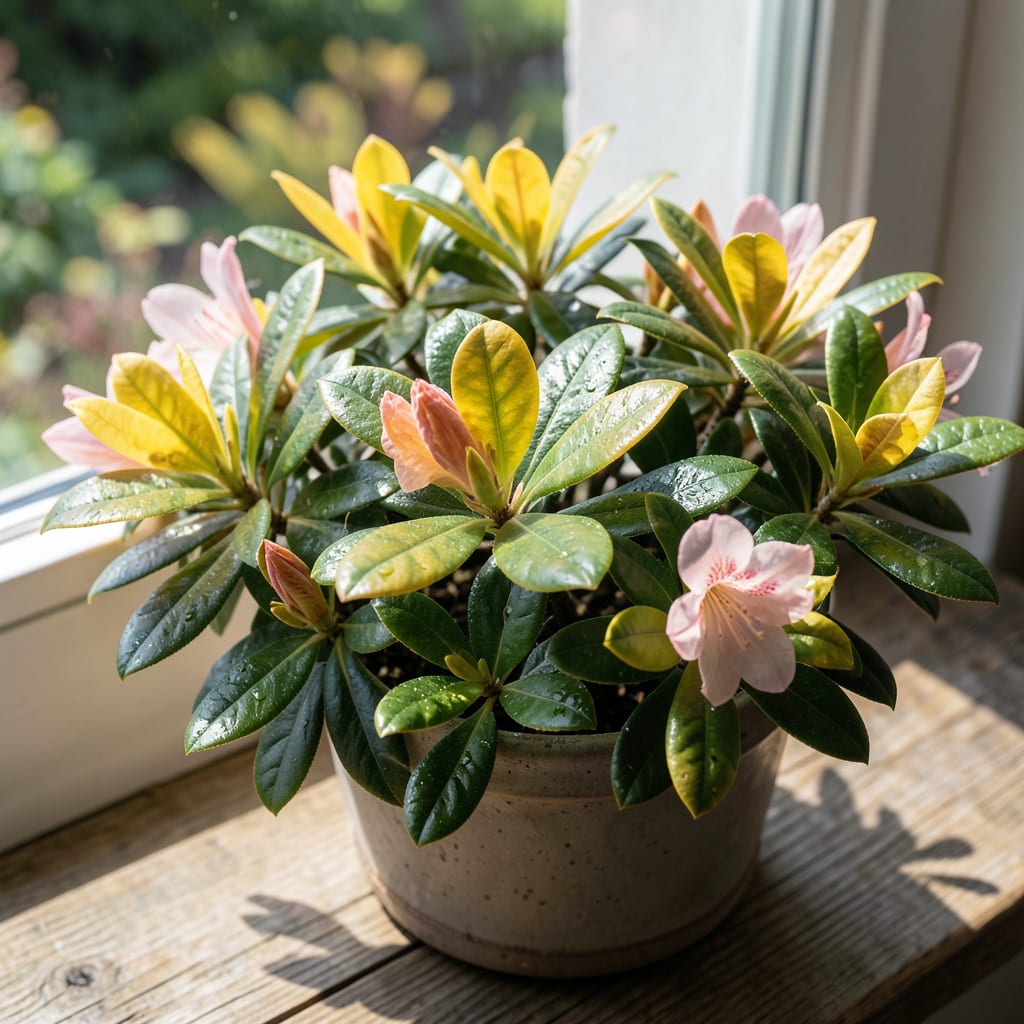
Yellow leaves on your azalea don’t mean it’s doomed. I’ve brought back more shrubs from the brink than I’d like to admit, and the fix is usually simpler than you think.
Most of the time, it’s about water—not too much, not too little. Or maybe the soil’s too alkaline, starving the plant of iron. Sometimes it’s just hungry for nitrogen. The leaves tell you exactly what’s wrong if you know how to listen.
You’ll spot the difference within 2-3 weeks of the right treatment. New growth comes in green, and the shrub starts looking like itself again. No fancy tools or chemicals required.
Works for potted azaleas, garden beds, or that sad-looking bush from last year’s sale. Here’s how to play plant detective.
Azalea leaves turn yellow due to several stress factors, often tied to environmental imbalances, nutrient deficiencies, or pests. Below are the most common causes, explained with actionable insights.
Azaleas thrive in partial shade and moderate temperatures (60–70°F). Exposure to intense sunlight or cold drafts disrupts chlorophyll production, leading to yellowing (chlorosis). Too much heat can also cause leaf scorch, where edges brown before yellowing.
Overwatering suffocates roots, preventing nutrient uptake, while underwatering deprives the plant of essential moisture. Both trigger stress responses, with leaves yellowing first at the tips or margins. Azaleas prefer consistently moist but well-drained soil—soggy or bone-dry conditions are red flags.
Yellowing often signals a lack of iron, magnesium, or nitrogen. Iron deficiency (interveinal chlorosis) causes leaves to yellow between veins, common in alkaline soils (pH > 6.5). Magnesium shortage yellows older leaves first, while nitrogen deficiency leads to uniform pale yellowing across the plant.
Sap-sucking pests like spider mites, lace bugs, or aphids drain nutrients from leaves, causing stippling, yellowing, or premature drop. Check leaf undersides for tiny webs, black specks (frass), or sticky residue (honeydew)—telltale signs of an active infestation.
Phytophthora root rot or leaf gall can turn leaves yellow before they wilt or drop. Root rot thrives in poorly drained soil, while leaf gall (caused by Exobasidium fungi) creates thickened, pale yellow growths. Fungal issues often spread rapidly in humid, crowded conditions.
Once you’ve identified the cause, these targeted fixes will help nurse your azaleas back to vibrant green health.
Overwatered: Let the top 1–2 inches of soil dry out before watering again. Improve drainage by mixing in compost or pine bark fines. Position pots on feet or a rack so excess water can escape.
Underwatered: Water deeply once a week during dry spells, ensuring the root zone gets moisture. Apply a 2–3 inch layer of mulch to retain soil moisture and keep roots cool.
Prevention tip: 💡 Use your finger as a soil meter—only water when the topsoil feels dry.
Test your soil with a home kit. If pH is above 6.0, lower it by amending with elemental sulfur or cottonseed meal according to package directions. For container plants, repot using an acidic pH mix labeled for azaleas and camellias.
Prevention tip: ✨ Retest soil every spring and top-dress with pine needles to maintain acidity naturally.
Apply a slow-release, acid-forming fertilizer (look for formulations with iron and magnesium) in early spring and again after blooming. For quick correction of iron chlorosis, use a chelated iron foliar spray or soil drench.
Prevention tip: 🎯 Avoid high-nitrogen fertilizers that can raise soil pH and worsen deficiencies.
For lace bugs, spray under leaves with horticultural oil or insecticidal soap at first sight. For root rot, stop watering immediately, prune affected roots, and repot in fresh, sterile acidic mix.
Prevention tip: 🌡️ Encourage beneficial insects by planting companion flowers like marigolds and avoiding broad-spectrum pesticides.
Move potted azaleas to a location with dappled shade, especially in hot afternoon sun. In gardens, plant under high canopy trees or use shade cloth during heatwaves. Protect from cold drafts or frost with burlap wraps in winter.
Prevention tip: 🔥 Monitor leaf color—pale yellow in full sun or dark edges in cold often signal stress before full yellowing appears.
Water when the top 1-2 inches of soil feel dry. Deep watering once a week is better than frequent light watering. Always check soil moisture first to avoid overwatering.
Severely yellow leaves won’t recover, but new growth will be green once you fix the underlying issue. Address the problem quickly to prevent further damage.
Azaleas thrive in acidic soil with a pH between 4.5-6.0. Test your soil and amend with sulfur or pine needles if needed to maintain acidity.
Check leaf undersides for tiny webs, black specks, or sticky residue. Sap-sucking pests like spider mites or lace bugs often cause yellow stippling.
