
Beautiful Plants For Your Interior
Beautiful Plants For Your Interior
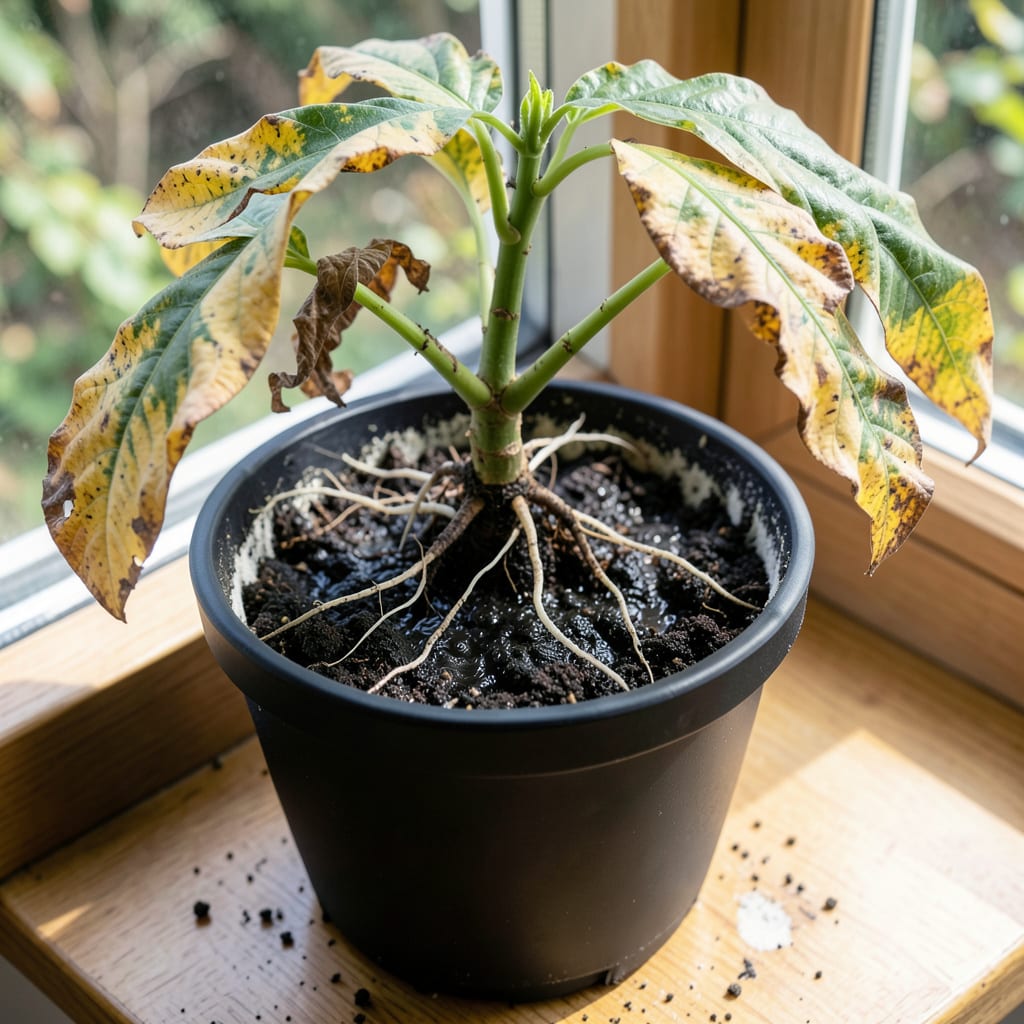
That sinking feeling when your avocado plant’s leaves turn yellow overnight. I’ve been there—watching a thriving plant decline because of something invisible underground.
Root rot sneaks up fast, turning healthy roots into mushy brown strands. The culprit is usually overwatering or poor drainage, but the fix isn’t complicated. Catching it early makes all the difference between rescue and regret.
You can revive most plants with a few simple steps: better drainage, adjusted watering, and some careful root inspection. The transformation from drooping to thriving can happen in 2-3 weeks.
Works for potted avocados indoors or outdoor plants in heavy soil. Here’s exactly how to diagnose and treat it.
Root rot in avocado plants is a frustrating problem, but understanding its causes can help you prevent it. Here are the primary culprits behind this issue:
Avocado plants thrive in well-draining soil, and excessive moisture is the most common cause of root rot. When the roots sit in waterlogged soil, they’re deprived of oxygen, creating the perfect anaerobic environment for Phytophthora and other water-borne fungi to thrive. Compacted or clay-heavy soils worsen the problem by trapping water around the roots.
Root rot is often caused by soil-borne pathogens like Phytophthora cinnamomi, Fusarium, and Pythium. These microorganisms attack the roots when conditions are favorable—typically in warm, wet, and poorly aerated soil. Once infected, the roots turn mushy and dark, unable to absorb nutrients or water effectively.
Using unsterilized potting mix or gardening tools can introduce harmful fungi or bacteria directly to your avocado plant. Even healthy-looking soil may harbor dormant pathogens that activate under stressful conditions, such as overwatering or root injury.
Plants in non-draining pots or planted in low-lying areas where water pools are at high risk. Without proper drainage holes or elevated planting beds, water accumulates at the root zone, accelerating rot. Additionally, reusing old pots without cleaning can carry over pathogens from previous plants.
Root rot in avocado plants can be reversed if caught early. Below are targeted solutions for each common cause, along with prevention tips to keep your plant thriving.
Let the top 1–2 inches of soil dry out before watering again. Use your finger to test moisture—if it feels damp, hold off. Switch to a well-draining pot with drainage holes and a sandy or perlite-rich soil mix to improve aeration. For severe cases, repot the plant in fresh, sterile soil after trimming away any black, mushy roots.
If your avocado is in a pot without drainage holes, transfer it immediately to one that does. Mix in 30% perlite or coarse sand to break up dense soil. Elevate pots on saucers with pebbles to prevent waterlogging. For garden-planted avocados, amending the soil with compost and gypsum can enhance drainage.
Remove infected roots with sterilized pruning shears and apply a copper-based fungicide or a hydrogen peroxide solution (3%) to the remaining roots. Soak the root ball for 10 minutes to kill pathogens. Always disinfect tools between cuts to avoid spreading the disease. For prevention, avoid overcrowding plants and ensure good air circulation.
Look for yellowing leaves, wilting, or stunted growth. The most telling sign is black, mushy roots that fall apart when touched. Healthy roots should be firm and white or light tan.
Yes, if caught early! Trim affected roots, repot in fresh, well-draining soil, and adjust watering habits. Recovery typically takes 2-3 weeks with proper care.
Use a mix with 30% perlite or coarse sand for drainage. Avoid dense, water-retentive soils like pure clay or peat. A cactus/succulent mix works well for potted avocados.
Water deeply but only when the top 1-2 inches of soil are dry. For most climates, this means watering once a week. Always check moisture first!
