
Beautiful Plants For Your Interior
Beautiful Plants For Your Interior
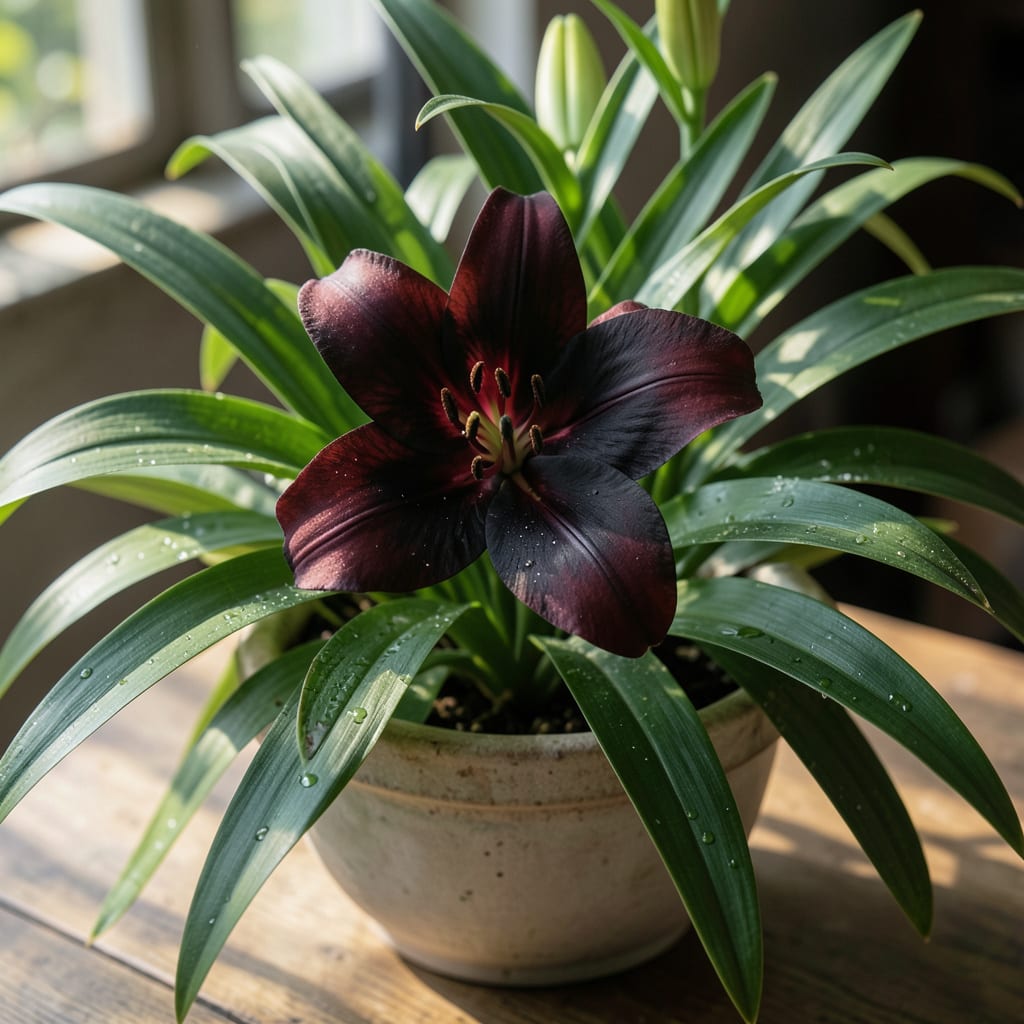
Dark, velvety blooms that stop neighbors in their tracks. Asiatic Lily ‘Black Out’ delivers that dramatic contrast every garden needs without demanding constant attention.
I planted these in partial shade last spring and they still outshone everything else. They thrive in well-drained soil, need 6-8 hours of sun, and return bigger each year with almost zero effort from me.
📚 In This Guide
Here is the method I use to cultivate these dramatic, near-black blooms with reliable success every season.
Choose a location with full sun to partial shade, though Asiatic Lily Black Out performs best with at least 6 hours of direct sunlight daily. The darker the blooms, the more light they need to maintain their deep color intensity. Test your soil pH—these lilies thrive in slightly acidic to neutral conditions, ideally between 6.0-7.0.
Amend the planting area with plenty of organic matter to improve drainage. Lilies despise waterlogged roots, so if your soil is heavy clay, work in 2-3 inches of compost or well-rotted manure to a depth of 12 inches. This creates the loose, fertile environment their bulbs demand.
Plant bulbs in early spring or fall, positioning them 4-6 inches deep with the pointed end facing upward. Deeper planting provides winter protection in colder zones. Space bulbs 8-12 inches apart to allow for mature plant spread and airflow, which prevents fungal issues.
After placing the bulb, backfill with the amended soil and firm gently to eliminate air pockets. Water thoroughly to settle the soil around the bulb. I always mark the planting spot with a stake—it’s surprisingly easy to forget where you’ve planted bulbs when they’re dormant for months.
Maintain evenly moist soil during the growing season, particularly during bulb establishment and bud formation. Water at the base of the plant to keep foliage dry, which prevents disease. Aim for 1-1.5 inches of water weekly, adjusting based on rainfall and soil drainage.
Apply a 2-3 inch layer of organic mulch around the plants after planting. Mulch retains moisture, suppresses weeds, and insulates the soil. Straw or shredded bark work well, but avoid heavy mulches that might smother the emerging shoots in spring.
Feed Black Out lilies with a balanced, low-nitrogen fertilizer in early spring when shoots emerge, and again after flowering. I use a 5-10-10 or 10-10-10 formula applied at half the recommended strength. Too much nitrogen produces lush foliage at the expense of blooms.
These lilies typically reach 2-3 feet tall and may need staking, especially in exposed positions. Install supports early in the season before stems become top-heavy with buds. Use green garden stakes or decorative metal supports that blend with the foliage.
After the stunning dark blooms fade, resist the urge to cut back the foliage. The plant needs these leaves to photosynthesize and store energy for next year’s display. Only remove the flower stems once they’ve turned brown, but leave the foliage until it yellows naturally, usually by late summer.
Divide clumps every 3-4 years in early fall when the foliage begins to die back. This rejuvenates the planting and increases your stock of these dramatic blooms. Dig carefully to avoid damaging the bulbs, then replant the healthiest ones immediately at the proper depth.
These practical insights will help you cultivate the deepest, most dramatic blooms possible.
Sunlight Strategy: The 6 hours of direct sunlight mentioned in Step 1 is non-negotiable for maintaining that intense near-black color. I’ve found that morning sun with afternoon shade works best in hotter climates to prevent petal scorch while still delivering the light these dramatic blooms crave.
Soil Preparation Secret: When amending your soil as described in Step 1, don’t just focus on the 2-3 inches of compost—work it into that full 12-inch depth. I learned the hard way that surface-level amendments won’t reach the bulb’s root zone, leading to poor drainage despite your best efforts.
Planting Precision: The 4-6 inch depth in Step 2 isn’t arbitrary. In colder zones, aim for the full 6 inches for winter protection. I always plant the deeper end of the range and have never lost a bulb to frost. Also, that 8-12 inch spacing prevents fungal issues by ensuring proper airflow between mature plants.
Watering Wisdom: The 1-1.5 inches weekly guideline in Step 3 is your baseline, but here’s what nobody tells you—these lilies are more drought-tolerant than you’d think. It’s better to water deeply once a week than shallowly every day. Always water at the base as instructed to keep foliage dry and disease-free.
The deep, near-black hues come from high anthocyanin pigments in the petals. This natural compound intensifies under full sun, creating the dramatic, almost velvety appearance. Proper soil pH (slightly acidic) also enhances the color.
Plant bulbs in early spring or fall, 4-6 weeks before the ground freezes. This gives roots time to establish. In warmer climates, fall planting works best to avoid summer heat stress.
Yes! Try ‘Queen of Night’ tulips, ‘Onyx Odyssey’ calla lilies, or ‘Black Baccara’ roses for similar drama. Each offers deep tones but varies in care needs and bloom time.
Common issues include insufficient sunlight, overcrowded bulbs, or poor drainage. Ensure they get 6+ hours of sun daily, divide bulbs every 3-4 years, and plant in well-draining soil.
