
Beautiful Plants For Your Interior
Beautiful Plants For Your Interior
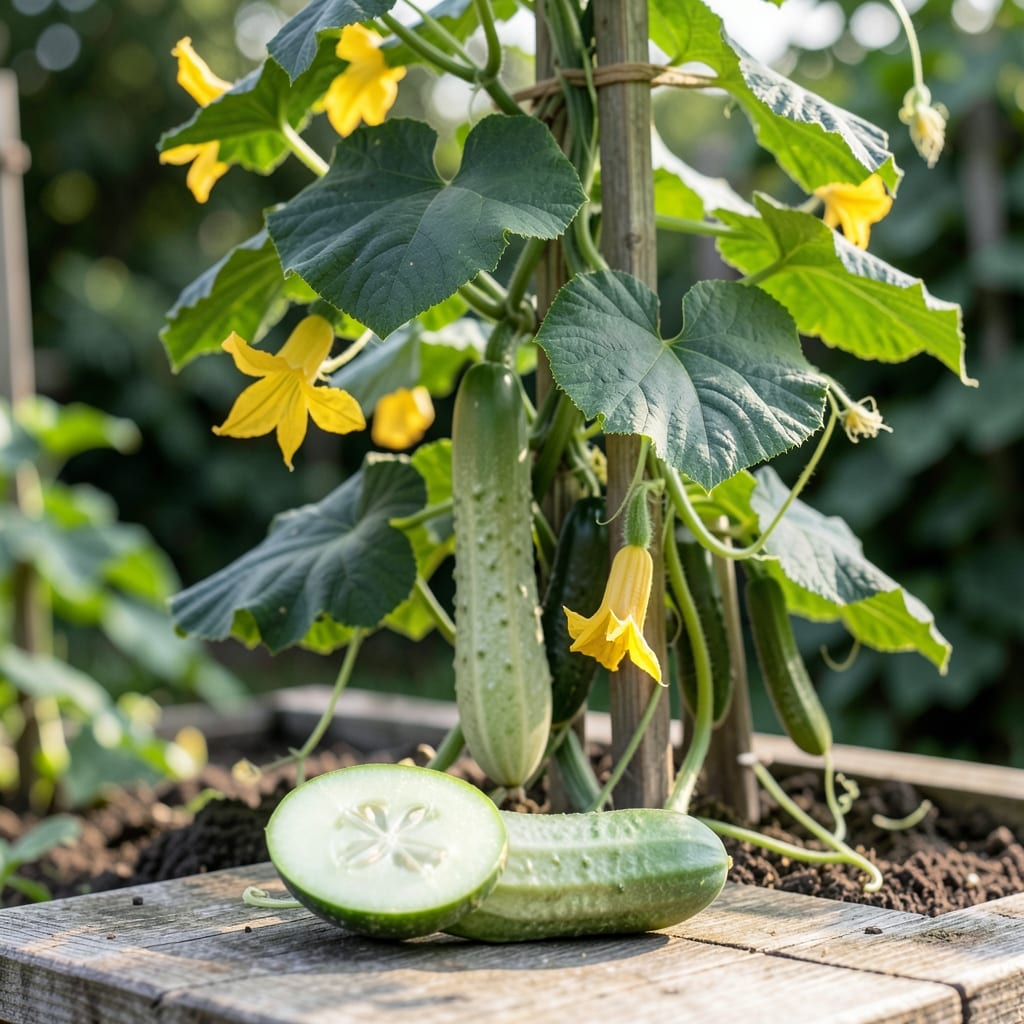
Armenian cucumbers offer a mild, refreshing flavor with subtle sweetness and a crisp, juicy texture that’s never bitter, even when fully ripe.
What sets these cucumbers apart is their low cucurbitacin levels, the compounds that cause bitterness in other varieties. 🔥 Their thin, tender skin and high water content make them exceptionally refreshing, especially in hot weather. I love using them in salads or as a crunchy snack because their delicate flavor pairs well with almost anything.
💡 In This Article
The secret lies in their unique chemistry. Armenian cucumbers contain up to 95% water, creating that signature crispness. Their thin, edible skin lacks cucurbitacins—the compounds that make other cucumbers bitter—even at full maturity. This genetic trait makes them naturally sweeter and more palatable raw.
Growing conditions amplify their flavor. These long, ribbed cucumbers thrive in warm climates with consistent hydration, which concentrates their mild sweetness. Unlike traditional varieties, they don’t develop bitterness under stress. The flesh stays uniformly juicy from seed to tip, with a texture closer to melon than standard cucumbers. 🔥
Their seed cavity is smaller too, meaning less watery pulp and more firm flesh. This structural difference contributes to their clean, refreshing taste. When harvested young, the flavor is almost like a cross between cucumber and honeydew, with a subtle vegetative note that’s never overpowering.
Temperature affects their crispness. Storing at 45-50°F preserves texture for up to 10 days, while room temperature speeds up softening. The thin skin also absorbs flavors quickly, making them ideal for marinades or infusions. ✨
What most people don’t realize is that their low acidity (pH 5.1-5.7) pairs perfectly with dairy. This explains why they’re a staple in tzatziki and yogurt-based sauces. The mild flavor acts as a blank canvas, enhancing other ingredients without competition.
No, their naturally low cucurbitacin levels mean they stay sweet and fresh, even when mature. This makes them perfect for eating whole, skin and all.
Their flesh is firmer and juicier, with a crispness closer to melon. The thin skin and small seed cavity also make them less watery than standard varieties.
The skin is tender and edible, adding to their refreshing crunch. Just give them a quick rinse before eating.
Their low acidity (pH 5.1-5.7) complements creamy ingredients like yogurt and feta, making them ideal for dips and sauces.