
Beautiful Plants For Your Interior
Beautiful Plants For Your Interior
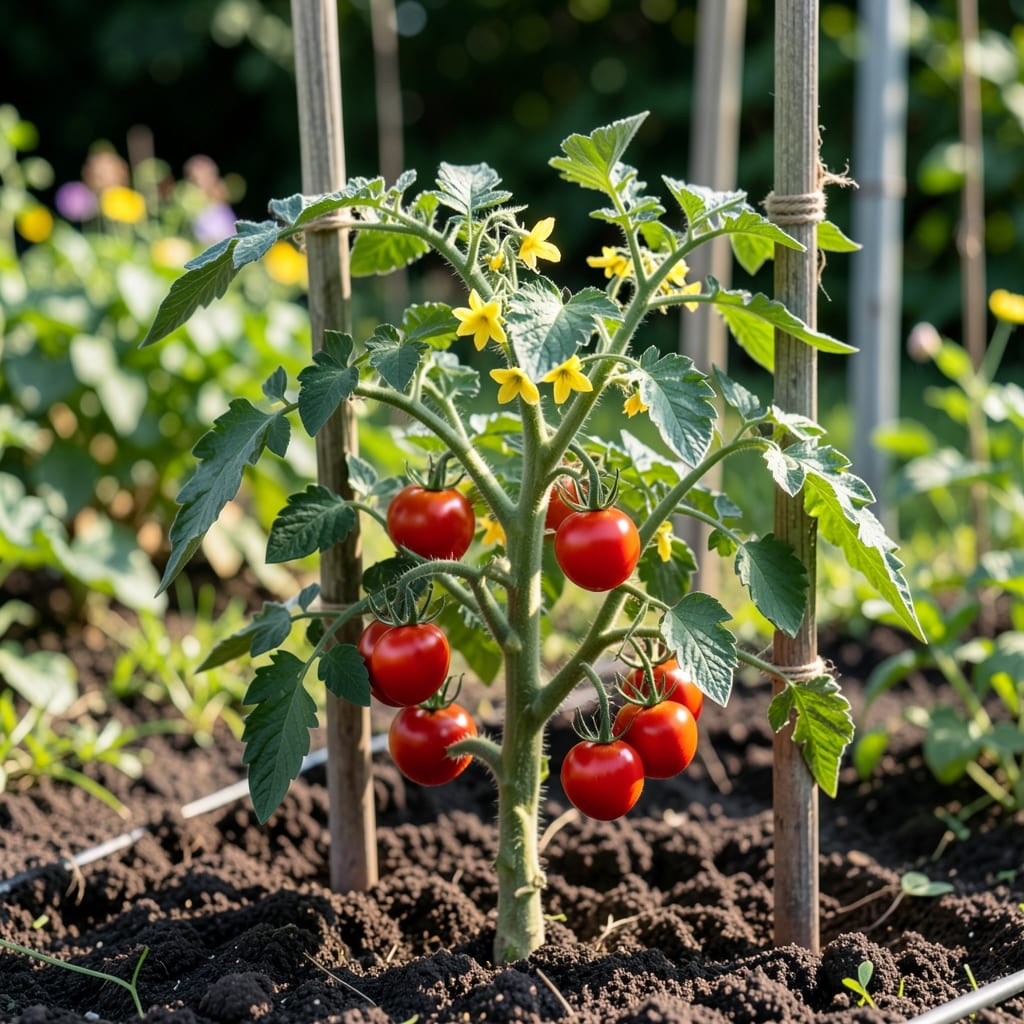
Tomatoes are primarily self-pollinating, with flowers containing both male and female parts. Pollen transfers within the same bloom, though wind or bees can assist in some cases.
This self-sufficiency comes from their “perfect” flowers that house both reproductive structures. I’ve noticed gardeners often overlook the subtle vibration needed to release pollen, which can happen naturally from wind or buzzing insects. For greenhouse growers, a gentle shake of the plant or using a small brush can mimic this effect. ✨
What makes tomatoes so reliable is their ability to set fruit with minimal external help, though cross-pollination does occur occasionally in open gardens. 🌟
💡 In This Article
Tomato flowers are “perfect,” meaning each bloom contains both male (stamens) and female (pistil) parts. The stamens form a cone around the pistil, with pollen grains resting on their tips. When mature, these grains are released and fall directly onto the pistil’s stigma, enabling fertilization within the same flower.
This process typically occurs during midday when humidity drops below 70% and temperatures reach 70-85°F. 🔥
The key trigger for pollen release is vibration. In natural settings, wind or buzzing bees create the necessary movement at frequencies around 200-400 Hz. This vibration causes the stamens to shake, dislodging the pollen. Without this, pollen may remain stuck, which is why greenhouse tomatoes often need manual assistance.
The pollen itself is relatively heavy, so it doesn’t travel far through air currents alone.
What’s fascinating is the flower’s structure prevents most cross-pollination. The stigma is positioned lower than the anthers, so pollen from other plants rarely lands on it. This design ensures about 90-95% of tomato pollination happens self-sufficiently.
Even in open gardens, the chance of cross-pollination between different tomato varieties stays below 5%, making seed saving quite reliable. ✨
For gardeners, this means most heirloom tomatoes will produce true-to-type seeds if isolated by just 10-20 feet from other varieties. However, bumblebees performing “buzz pollination” can occasionally transfer pollen between plants. The process is so efficient that a single tomato flower can produce 100-200 seeds when successfully self-pollinated. 💫
This natural efficiency explains why tomatoes thrive in diverse conditions, from backyard gardens to controlled indoor environments. The plant’s evolutionary design ensures reproduction with minimal external dependencies, making it one of the most dependable crops for home growers.
The only limitation comes when environmental factors like extreme humidity or lack of vibration interfere with the process.
Each tomato bloom contains both male and female parts. The stamens release pollen that lands directly on the pistil within the same flower, enabling fertilization without external pollinators. This design allows 90-95% self-pollination.
Occasionally, yes. Bumblebees can transfer pollen between plants during buzz pollination, but it’s rare—typically under 5%. For seed saving, keep varieties 10-20 feet apart to minimize mixing.
Without wind or bees, pollen may not release. Gently shaking plants or using a brush mimics natural vibration. A small fan for 1-2 hours daily can also trigger pollen drop.
Ideal temperatures are 70-85°F with humidity below 70%. Midday is prime time for pollen release. Extreme heat or humidity can prevent proper pollen transfer.