
Beautiful Plants For Your Interior
Beautiful Plants For Your Interior
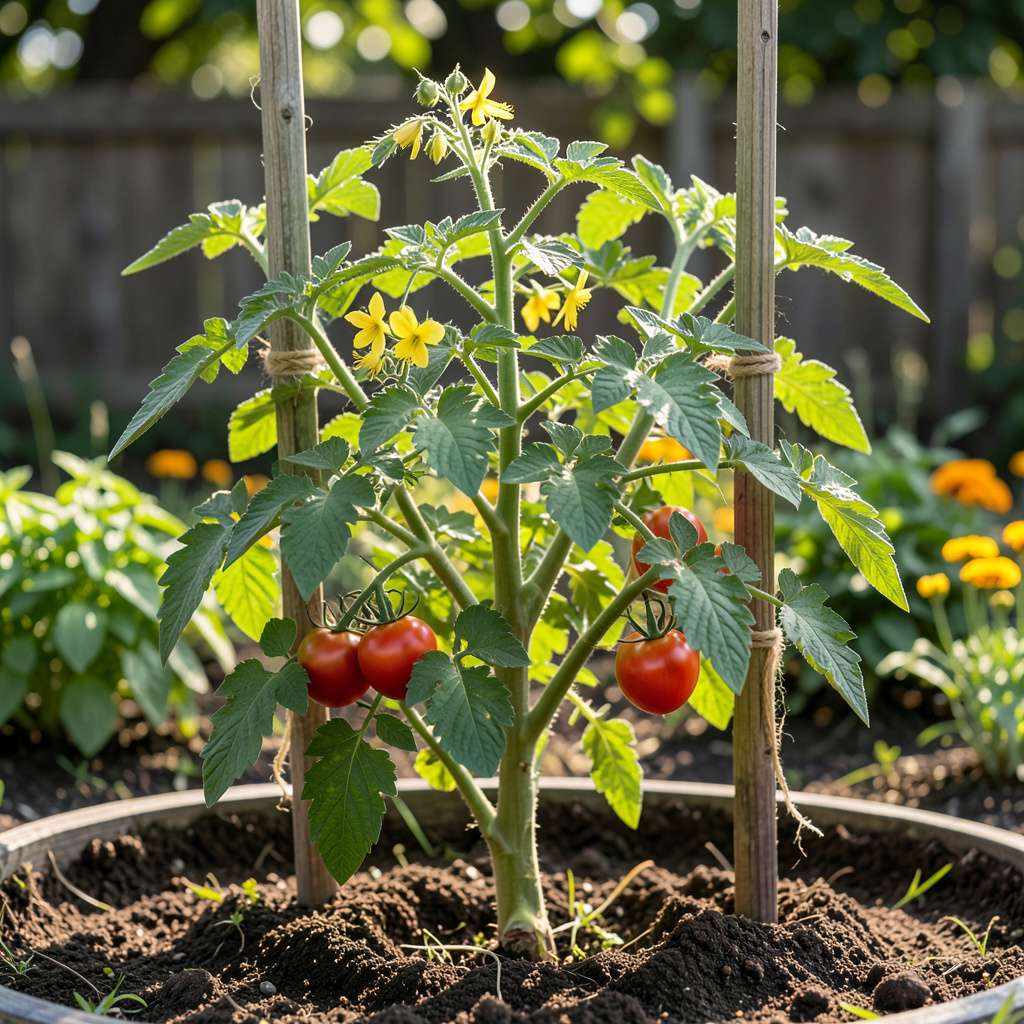
Tomato plants are technically tender perennials in their native tropical climate but are grown as annuals in most regions because they cannot survive frost. Gardeners replant them each year for optimal fruit production.
This might seem confusing at first, but it all comes down to their tropical origins. 🌱 In places like the Andes where tomatoes originated, they grow year-round as woody perennials. But in cooler climates, even a light frost turns their leaves to mush overnight. I’ve seen gardeners try to overwinter them indoors, but the real secret lies in understanding their growth cycle—most varieties put all their energy into fruit production during that first warm season, making replanting the practical choice for most of us.
What’s fascinating is how this annual approach actually benefits fruit quality. 🍅 By starting fresh each spring, we avoid the disease buildup and reduced vigor that comes with aging plants. The first-year growth always yields the most flavorful tomatoes, which is why even in mild climates, many growers prefer treating them as annuals for that burst of peak productivity.
💡 In This Article
Tomatoes actually belong to the Solanum lycopersicum species, which evolved in the tropical Andes where temperatures rarely dip below 50°F. In this native environment, they grow as woody perennials that can live for years, developing thick stems and producing fruit continuously.
The key factor is their complete frost intolerance—cell damage begins at 32°F, and anything below 28°F turns leaves black within hours. This biological vulnerability forces the annual approach in all but the warmest growing zones.
What most gardeners don’t realize is that tomato plants have two distinct growth patterns that affect their lifespan. Determinate varieties (like Roma tomatoes) grow to a fixed size, produce one large harvest, then decline—typically within 90-120 days. Indeterminate varieties (like heirloom beefsteaks) keep growing and producing until frost kills them, often reaching 6-10 feet tall in a single season.
This growth strategy explains why even indeterminate plants rarely survive multiple years outside their native climate.
The temperature requirements are surprisingly specific. Tomatoes thrive between 70-85°F during the day and 55-68°F at night. Below 50°F, pollen becomes sterile and flowers drop without fruiting. Above 90°F, the plants stop setting fruit entirely.
These narrow parameters make year-round outdoor cultivation impossible in most U.S. regions, where even mild winters bring temperatures that would kill the plants. 🌡️
There’s also the productivity factor to consider. First-year tomato plants direct all their energy into establishing roots and producing fruit. By the second year, even in frost-free climates, yields typically drop by 30-50% as the plant focuses energy on maintaining its woody structure rather than fruit production.
Commercial growers in tropical regions often replace plants every 18-24 months for this exact reason—older plants become less productive and more disease-prone.
The soil-borne disease accumulation presents another challenge. Tomatoes are susceptible to verticillium wilt, fusarium wilt, and early blight—pathogens that build up in the soil over time. A fresh planting each year in rotated locations helps break these disease cycles.
I’ve seen gardeners attempt to overwinter plants in greenhouses, only to battle constant fungal issues that make the effort hardly worthwhile compared to starting fresh each spring. 🍄
Even the plant’s natural defense mechanisms work against long-term survival in non-tropical areas. Tomatoes produce tomatine, a toxic alkaloid that deters pests but also makes the plant more susceptible to cold damage. This compound concentration increases as the plant ages, creating a vicious cycle where older plants become both more bitter and more frost-vulnerable.
The annual replanting approach neatly sidesteps all these biological limitations while maximizing fruit quality and quantity.
In most climates, no—they won’t survive winter frost. Even if roots remain alive in mild winters (zones 9-11), the plants become less productive after the first year. Most gardeners replant annually for best yields and disease prevention.
In frost-free tropical climates, tomato plants can live 2-5 years as woody perennials. However, fruit production declines after 18-24 months as energy shifts to stem growth. Commercial growers often replace them annually even in warm zones for maximum yield.
Yes! Dig up healthy plants before frost, trim 1/3 of foliage, and repot in 5+ gallon containers. Place near a sunny window or under grow lights (12-16 hours/day). Reduce watering to monthly during dormancy.
Indeterminate varieties like ‘Sungold’ or ‘Cherry Tomatoes’ adapt best to multi-year growth. Their continuous production cycle and compact habit make them ideal for overwintering. Beefsteak types often struggle after the first year due to their heavy fruit load.
Three key reasons: frost sensitivity, disease buildup in soil, and declining productivity. First-year plants yield the most flavorful fruit. Starting fresh annually avoids fungal issues and ensures peak harvests without the hassle of overwintering.
