
Beautiful Plants For Your Interior
Beautiful Plants For Your Interior
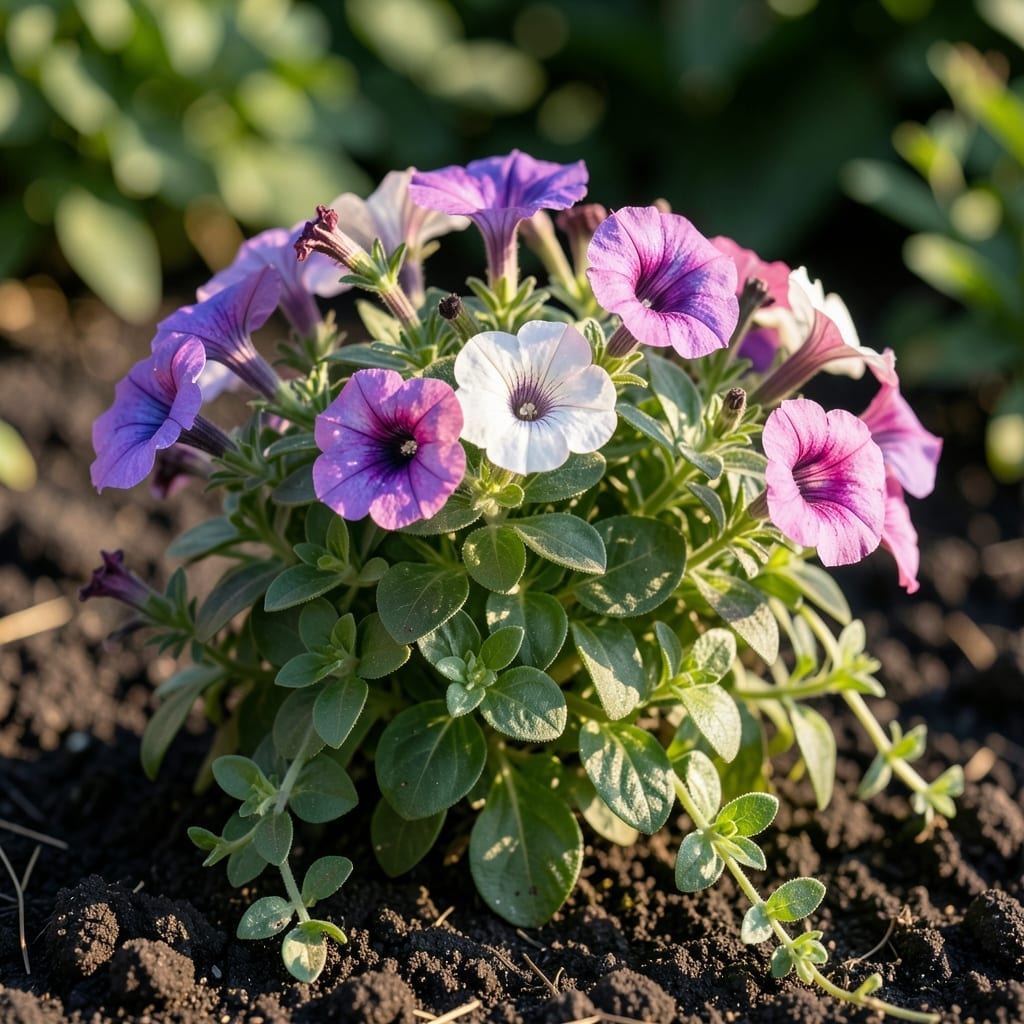
Petunias have moderate drought tolerance once established but require consistent moisture for optimal blooming. They can survive short dry spells but may wilt or drop flowers under prolonged stress.
I’ve found petunias develop deeper roots over time, which helps them access moisture from further down in the soil. Short dry periods won’t kill them, but you’ll notice their leaves start to droop as a warning sign. For best results, I water mine at the base in the early morning to prevent evaporation and fungal issues. 💫
💡 In This Article
Petunias survive dry spells through a combination of biological adaptations. Their fibrous root systems can extend 12-18 inches deep, accessing moisture below the surface. This root depth develops gradually, which is why established plants handle drought better than new seedlings. The roots store some water in their tissues, providing a buffer during short dry periods.
The leaves also play a role in water conservation. Petunia foliage has a slightly waxy coating that reduces water loss through evaporation. When moisture becomes scarce, the plant can temporarily close its stomata (tiny pores on leaves) to retain water. This is why you’ll often see leaves droop first—it’s a visual signal of water stress.
Another key factor is the plant’s ability to enter a state of dormancy. During prolonged dry conditions, petunias may drop flowers or slow growth to conserve energy and water. This survival mechanism allows them to bounce back quickly once water becomes available again. 🌟
However, this doesn’t mean they thrive without water. The trade-off for these adaptations is reduced flowering. Studies show that petunias receiving consistent moisture produce 30-50% more blooms than those subjected to drought stress. The flowers themselves are particularly sensitive to water deficits.
Temperature exacerbates water needs. In extreme heat (90°F+), petunias may require watering twice daily to prevent wilting. The combination of high temperatures and dry soil creates the most stress, as the plant loses water faster than it can absorb it. ✨
Container-grown petunias are especially vulnerable to drought. Their roots can’t spread as far, and soil in pots dries out 2-3 times faster than ground soil. This is why they often need more frequent watering than their in-ground counterparts.
Established petunias can typically survive 3-5 days without water in moderate temperatures. In extreme heat, this drops to 1-2 days before wilting occurs. Younger plants need more frequent watering as their root systems are less developed.
Underwatered petunias will first show drooping leaves, then develop crispy edges. Flowers may drop prematurely, and growth slows significantly. Prolonged drought can lead to permanent damage or death, especially in containers.
Yes! Spreading or trailing varieties like Wave petunias generally have better drought tolerance than grandifloras. Their smaller flowers and more extensive root systems help them conserve water more effectively.
Overwatering causes root rot and fungal issues. Always check soil moisture 1 inch down before watering. If it feels damp, wait another day—petunias recover better from slight underwatering than overwatering.