
Beautiful Plants For Your Interior
Beautiful Plants For Your Interior
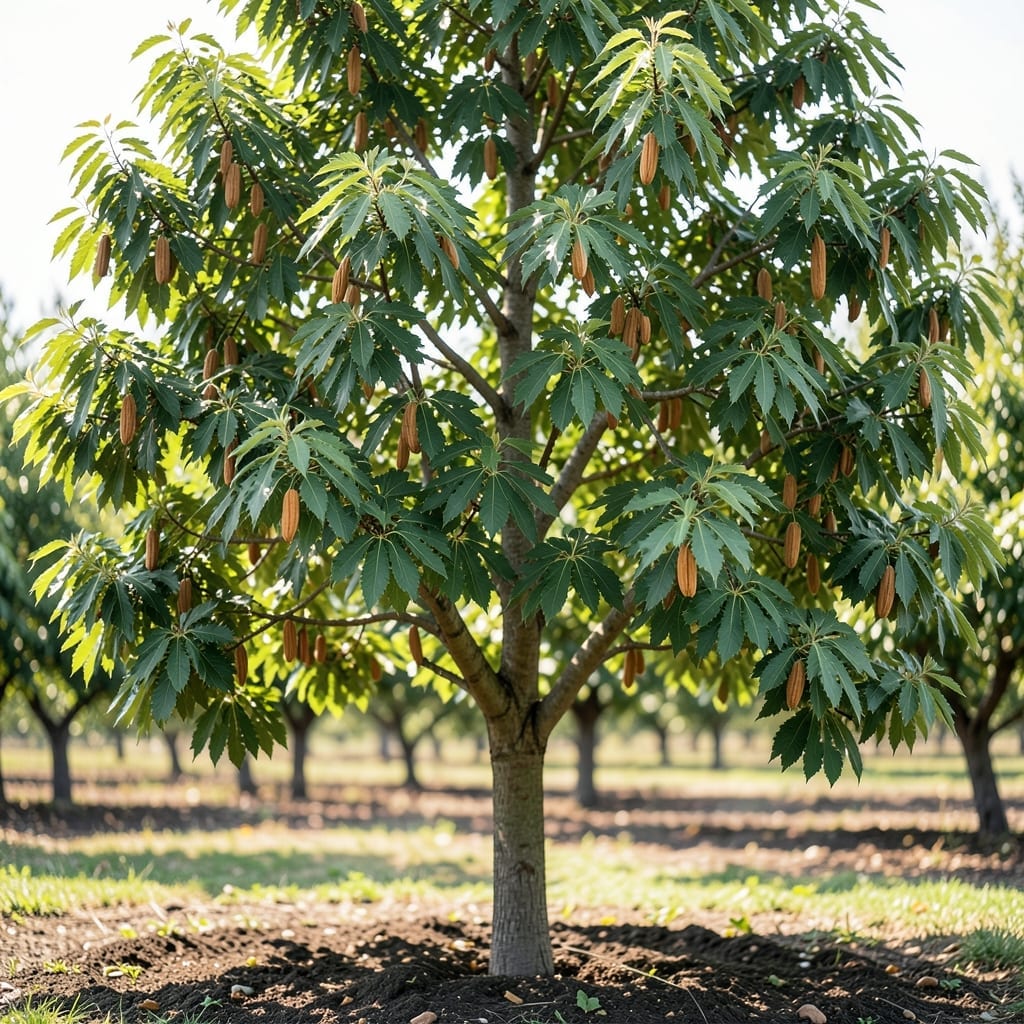
Pecan trees are not fully self-pollinating. They produce both male and female flowers, but cross-pollination between different varieties typically yields better nut production and quality.
I’ve learned that while pecan trees do have both male and female flowers on the same plant, their bloom cycles often don’t align perfectly. This timing mismatch means they rely heavily on wind to carry pollen from one tree to another. 🔥 Planting compatible Type I and Type II varieties together boosts your harvest significantly.
💡 In This Article
Pecan trees are monoecious, meaning each tree produces both male catkins and female flowers. However, their bloom cycles don’t always sync up perfectly. Male catkins typically release pollen 1-2 weeks before the female flowers become receptive, creating a natural barrier to self-pollination. This timing mismatch is nature’s way of encouraging cross-pollination. 🔥
Wind plays the starring role in this process. Male catkins release clouds of pollen that drift through the air, ideally landing on the feathery stigmas of female flowers on neighboring trees. The pollen grains must travel 50-100 feet or more to reach compatible flowers, which is why isolated trees often struggle to produce well.
The pollen itself remains viable for only 2-3 days in optimal conditions.
Horticulturists classify pecan varieties into two pollination types to address this timing issue. Type I trees release pollen before their female flowers open, while Type II trees do the opposite. Planting one of each within 150 feet of each other creates the perfect pollination partnership.
This strategic pairing can increase nut set by 30-50% compared to single-variety plantings. ✨
What many growers don’t realize is that even with perfect type pairing, environmental factors play a huge role. Temperatures below 50°F or above 90°F can render pollen sterile. Rain during pollination washes away pollen before it can reach female flowers. Ideal conditions include 60-80°F temperatures with gentle breezes to carry the pollen.
The science behind this involves the tree’s evolutionary strategy. By making self-pollination difficult, pecans encourage genetic diversity, which results in stronger, more adaptable offspring. This is why orchards with multiple compatible varieties not only produce more nuts but often have trees that are more resistant to diseases and pests. 💫
Plant compatible varieties within 150 feet of each other for best results. Closer spacing improves pollen transfer, but even trees 50-100 feet apart can work if wind patterns are favorable.
It may produce some nuts, but yields will be significantly lower. A single tree can self-pollinate to a limited extent, but cross-pollination with another variety boosts production by 30-50%.
They won’t pollinate each other effectively. Type I and Type II trees have staggered bloom times to prevent self-pollination. Two Type I trees release pollen at the same time, missing the female flower receptivity window.
No, pecans rely on wind, not insects. Male catkins release pollen that travels on air currents to female flowers. Bees play no significant role in pecan pollination.