
Beautiful Plants For Your Interior
Beautiful Plants For Your Interior
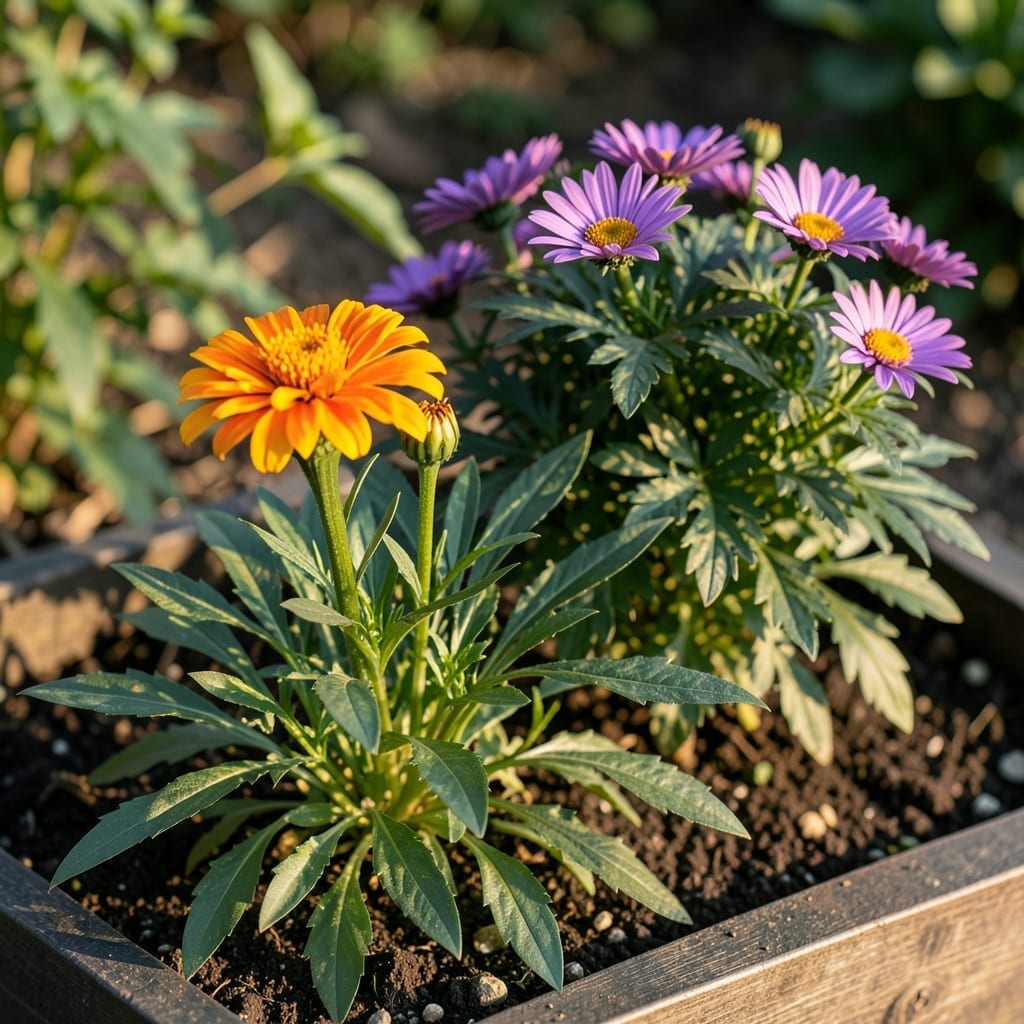
No, mums and marigolds are different plants. Mums are chrysanthemums with dense, pom-pom blooms, while marigolds have vibrant, daisy-like flowers and a distinct spicy scent.
These two popular garden flowers belong to entirely separate botanical families. I find mums thrive in cooler fall weather, while marigolds flourish in summer heat. Chrysanthemums often symbolize longevity, whereas marigolds represent passion and creativity in many cultures. Their care needs differ too—mums prefer well-drained soil and consistent moisture, while marigolds tolerate drier conditions. ✨
💡 In This Article
Mums belong to the Chrysanthemum genus in the Asteraceae family, originating from East Asia. They boast complex, layered petals forming dense, spherical blooms that can reach 2-6 inches in diameter. Their growth habit is bushy, with woody stems that can grow 1-3 feet tall, making them perfect for structured garden displays. 🌟
Marigolds, however, are part of the Tagetes genus, also in Asteraceae but with a completely different evolutionary path. Their flowers feature simple, flat petals radiating from a central disc, typically 1-3 inches wide. The plants grow 6 inches to 2 feet tall with a more open, airy structure that sways beautifully in breezes.
Here’s what’s happening at the cellular level: mums produce pyrethrins, natural insecticides in their leaves, while marigolds develop thiophenes in their roots that repel nematodes. This chemical difference explains why marigolds are often planted as natural pest deterrents, while mums are prized more for their ornamental value. ⚡
The leaf structures differ dramatically too. Mum leaves are deeply lobed with serrated edges, often 2-4 inches long and dark green. Marigold leaves are finely divided, almost fern-like, with a lighter green hue and a length of 1-3 inches. This variation in foliage affects how each plant photosynthesizes and conserves water.
Another key distinction lies in their scent profiles. Mums have a mild, slightly bitter fragrance that becomes more pronounced when crushed. Marigolds, however, emit a strong, spicy aroma from their leaves and flowers—so potent it’s used in some traditional medicines and as a food coloring.
The scent intensity varies by variety, with French marigolds being particularly pungent. 💫
Their growing seasons also set them apart. Mums are classic fall bloomers, with many varieties triggered by shorter daylight hours. Marigolds, conversely, thrive in summer heat and will often stop blooming during the hottest months, only to rebound when temperatures moderate. This seasonal difference makes them complementary plants for year-round garden color.
Mums have dense, layered petals forming 2-6 inch pom-pom blooms. Marigolds feature flat, daisy-like flowers with 1-3 inch widths. The structural difference is striking!
Yes! Mums thrive in cool fall weather, while marigolds prefer hot summer conditions. This makes them perfect for sequential garden color throughout the year.
but space them properly. Place marigolds 8-12 inches apart and mums 18-24 inches apart. Their different heights and seasons create beautiful contrast.
Marigolds produce a strong, spicy scent from their leaves and flowers. This natural trait helps repel pests, which is why they’re often planted near vegetables.