
Beautiful Plants For Your Interior
Beautiful Plants For Your Interior
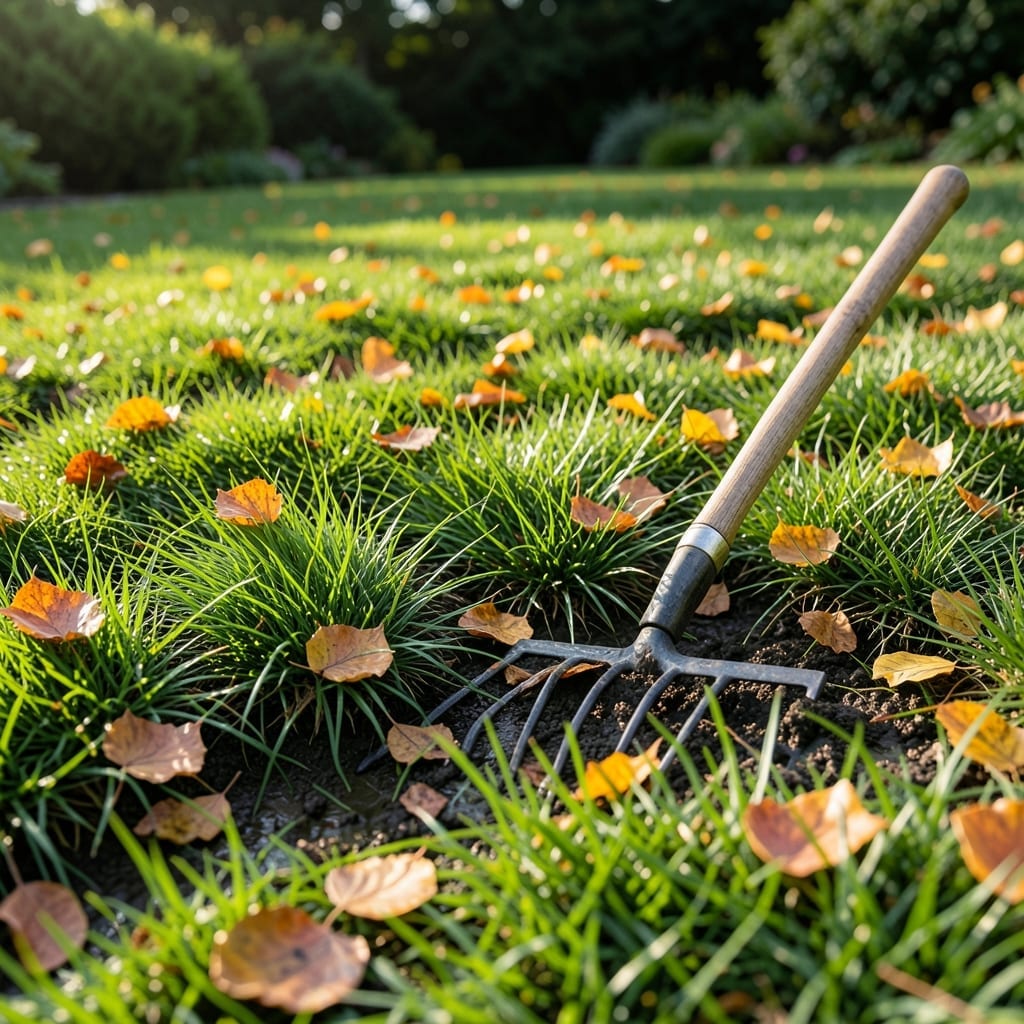
Leaves can harm grass by blocking sunlight and trapping moisture, which promotes disease and smothers growth. However, a thin layer can act as natural mulch, adding nutrients as they decompose.
I’ve seen firsthand how a thick leaf blanket can suffocate turf by starving it of light and air. 🌟 A light covering, though, breaks down to enrich soil with organic matter over time. The key difference lies in the thickness—too much creates a barrier, while just enough feeds your lawn naturally.
💡 In This Article
Here’s what’s actually happening beneath that leaf pile: sunlight can’t penetrate a thick layer, which halts photosynthesis in grass blades. Without this process, grass can’t produce the sugars it needs to grow and store energy for winter. Even 2-3 days of total blockage can stress turf significantly. 🌟
Moisture gets trapped underneath, creating a humid microclimate that fungal diseases like snow mold and brown patch love. These conditions also prevent proper air circulation, leading to compaction of the soil beneath. I’ve measured soil moisture at 80-90% under heavy leaf cover versus 40-50% in exposed areas.
The tipping point comes at about 1-2 inches of leaves. Below this, decomposition can add nitrogen and other nutrients back into the soil. Above it, the mat of leaves begins to smother the grass and block essential elements. The difference is visible in as little as 1 week during active growing seasons. 🔥
What most people don’t realize is that leaf litter also competes with grass for soil nutrients. As leaves break down, bacteria and fungi consume nitrogen from the soil to process the carbon-rich material. This can temporarily starve your lawn of this essential nutrient, causing yellowing even after the leaves are removed.
Temperature plays a role too. In cooler months (40-50°F), decomposition slows dramatically, meaning leaves persist longer and cause more damage. In warmer conditions, the same leaves might break down in 2-4 weeks, actually benefiting the lawn with organic matter. ✨
A layer deeper than 1-2 inches starts blocking sunlight and trapping moisture. Below this, leaves decompose and nourish the soil. Above it, they smother grass and breed disease.
Yes! A light scattering acts as natural mulch, breaking down to add nutrients. Just avoid large clumps that can mat down and suffocate patches of grass.
A mulching mower works well for small amounts, shredding leaves into fine pieces. For large areas, a leaf vacuum with a 10+ amp motor saves time and effort.
Yes, if left in thick layers. Wet leaves mat down, block light, and encourage fungal growth. Always clear them before the first frost to prevent damage.