
Beautiful Plants For Your Interior
Beautiful Plants For Your Interior
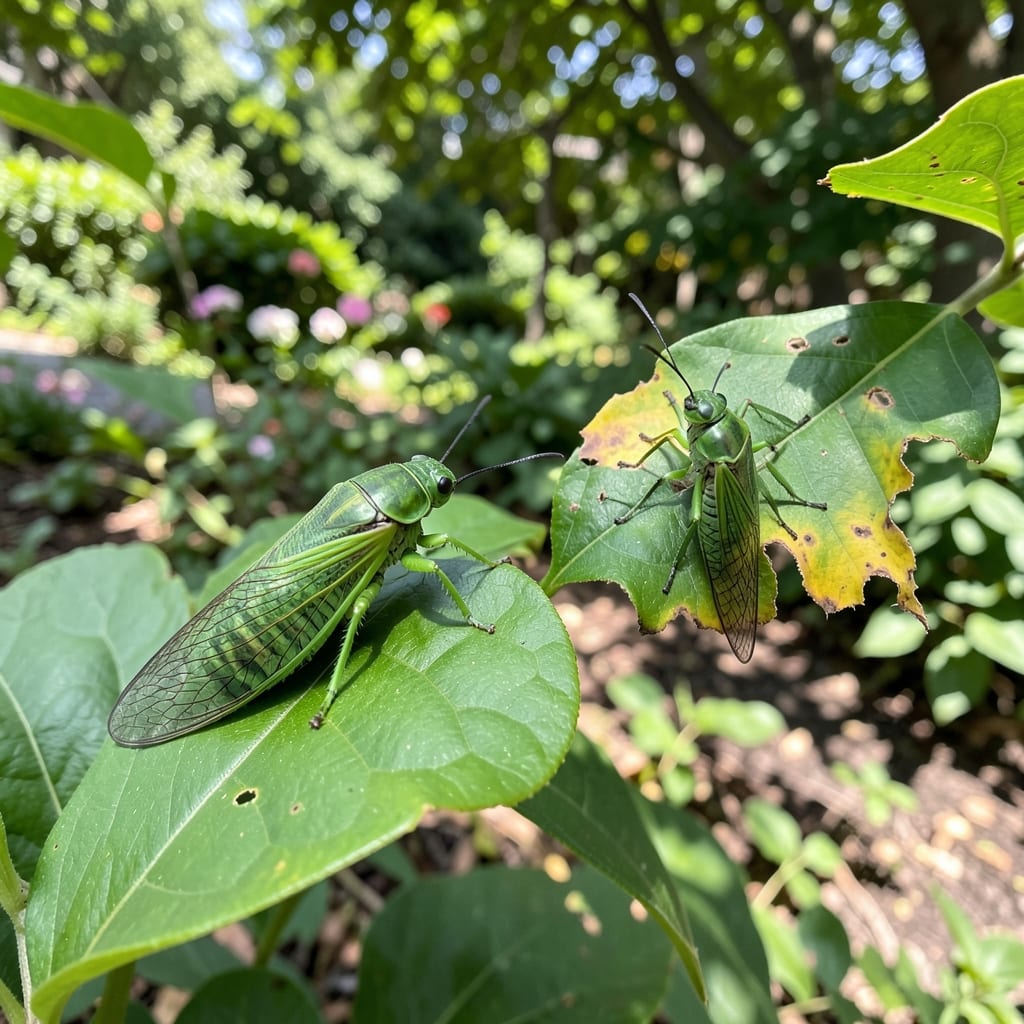
Green cicadas are not dangerous to humans. They do not bite or sting, pose no toxicity risk, and are generally harmless, though their loud noises may be startling.
These insects focus entirely on feeding and mating throughout their brief adult lives, lacking any aggressive instincts toward people. 🔥 Their loud chirping—produced by specialized sound organs—is purely for communication, not a threat. I’ve observed them in gardens for years, and they consistently prioritize escaping over confronting humans or pets.
💡 In This Article
Green cicadas lack physical defenses like venom or stingers, relying instead on camouflage and speed to evade predators. Their 1-2 inch bodies are designed for blending into foliage, not for combat. The mouthparts they do possess are adapted for piercing plant stems to feed on sap, not for biting human skin.
This dietary specialization means they have no need or ability to harm people. 🔥
What they do have are tymbals—specialized sound-producing organs on their abdomens. Male cicadas vibrate these at frequencies up to 120 decibels, equivalent to a rock concert. This ear-splitting chorus serves only to attract mates and establish territory. The noise, while jarring, is purely acoustic and poses no physical threat. ✨
Their life cycle reinforces their harmlessness. After spending 2-17 years underground as nymphs, they emerge solely to mate and lay eggs within 4-6 weeks. This brief adult phase leaves no time for aggressive behavior. When threatened, their instinct is to fly away rather than defend themselves. 💫
Even their eggs pose minimal risk. While females may lay 400-600 eggs in tree branches, the hatchlings (nymphs) simply drop to the ground to burrow. They don’t bite, sting, or carry diseases. The only potential issue is minor branch damage from egg-laying, which rarely harms healthy trees. ⚡
Scientifically, cicadas belong to the order Hemiptera, the same group as aphids and leafhoppers. Like their relatives, they’re herbivorous and chemically harmless. Their bodies contain no toxins that could affect humans, even if accidentally ingested by curious pets (though this isn’t recommended).
No, they lack the mouthparts or venom to bite or sting humans. Their tiny beaks are designed for drinking plant sap, not piercing skin. Even if one lands on you, it will simply fly away.
Their 120-decibel chirping comes from tymbals—special organs on their abdomen. Males use this to attract mates, not to threaten. It’s purely acoustic, like a natural mating call.
Green cicadas are non-toxic and pose no threat to dogs or cats. While curious pets might try to eat one, it won’t cause harm. Still, it’s best to discourage this behavior.
Minimal risk exists. Females may lay eggs in branches, causing minor damage, but healthy trees recover easily. Young plants can be protected with fine mesh netting.